Meal Planning for Childcare Centers: CACFP, Allergies, and Menus
Children in full-time care eat up to two-thirds of their daily calories at your center. Getting meal planning right affects their nutrition, development, and your compliance with federal food program requirements.
Why Meal Planning Matters in Childcare
Children typically eat two to three meals and one to two snacks during a full day of care. For many families, the meals served at their childcare center represent the majority of what their child eats on weekdays. That makes your center a primary influence on childhood nutrition.
Research consistently shows that proper nutrition in early childhood supports cognitive development, emotional regulation, and physical growth. Children who eat balanced meals are better able to focus, participate in activities, and regulate their behavior throughout the day.
For centers participating in the USDA Child and Adult Care Food Program (CACFP), meal planning is also a compliance requirement. CACFP reimburses providers for serving meals that meet specific nutritional standards, but those reimbursements depend on documented meal plans, accurate records, and adherence to meal pattern requirements.
Parents increasingly expect transparency about what their children eat during the day. A well-organized meal program builds trust with families and demonstrates your commitment to quality care.
CACFP Meal Pattern Requirements
The USDA sets specific food component requirements for each meal type served through CACFP. Every meal must include the required components in the correct serving sizes for each age group. Here is what each meal type requires:
Breakfast
Must include a grain component, a fruit or vegetable, and fluid milk. Meat or a meat alternate may be offered in place of the grain up to three times per week.
Lunch and Supper
Must include a meat or meat alternate, a grain, two different servings of fruits and/or vegetables (at least one of each across the week), and fluid milk.
Snacks
Must include two of the five food components: meat/meat alternate, grain, fruit, vegetable, or milk. Juice may count as a fruit or vegetable but is limited to once per day.
Age-Based Serving Sizes
Serving sizes differ for infants (0-5 and 6-11 months), children ages 1-2, 3-5, 6-12, and 13-18. Centers must serve the correct portion for each age group.
Additional rules apply: grain-based desserts are limited, cereal must contain no more than 6 grams of sugar per dry ounce, and breakfast cereals must be whole grain-rich or fortified. For a detailed breakdown of serving sizes, use the CACFP calculator to check your menus against requirements.
Building a Weekly Menu
A structured approach to menu planning saves time and reduces the likelihood of serving non-compliant meals. Here are practical steps for building menus that work:
- 1
Plan two to four weeks in advance
Write menus for a multi-week cycle. This gives you time to shop efficiently, ensure variety, and submit plans to your sponsoring organization if required by CACFP.
- 2
Rotate menus to provide variety
Avoid repeating the same meals week after week. A rotating menu exposes children to different foods and nutrients. Most programs rotate on a three- or four-week cycle.
- 3
Balance across food groups
Check that your weekly menu includes a range of protein sources, whole grains, and different colored fruits and vegetables. Avoid relying on the same grain or protein every day.
- 4
Use seasonal produce when possible
Seasonal fruits and vegetables are often more affordable and higher quality. Adjust your menu cycle with the seasons to keep costs manageable and food fresh.
- 5
Post menus for families
Share menus with parents at least a week in advance. Post them in the center and send them digitally. This helps families plan meals at home and builds confidence in your program.
- 6
Submit to your sponsoring organization
If you participate in CACFP through a sponsor, you may need to submit menus for approval before serving. Check your sponsor's requirements for submission timelines and format.
Managing Food Allergies
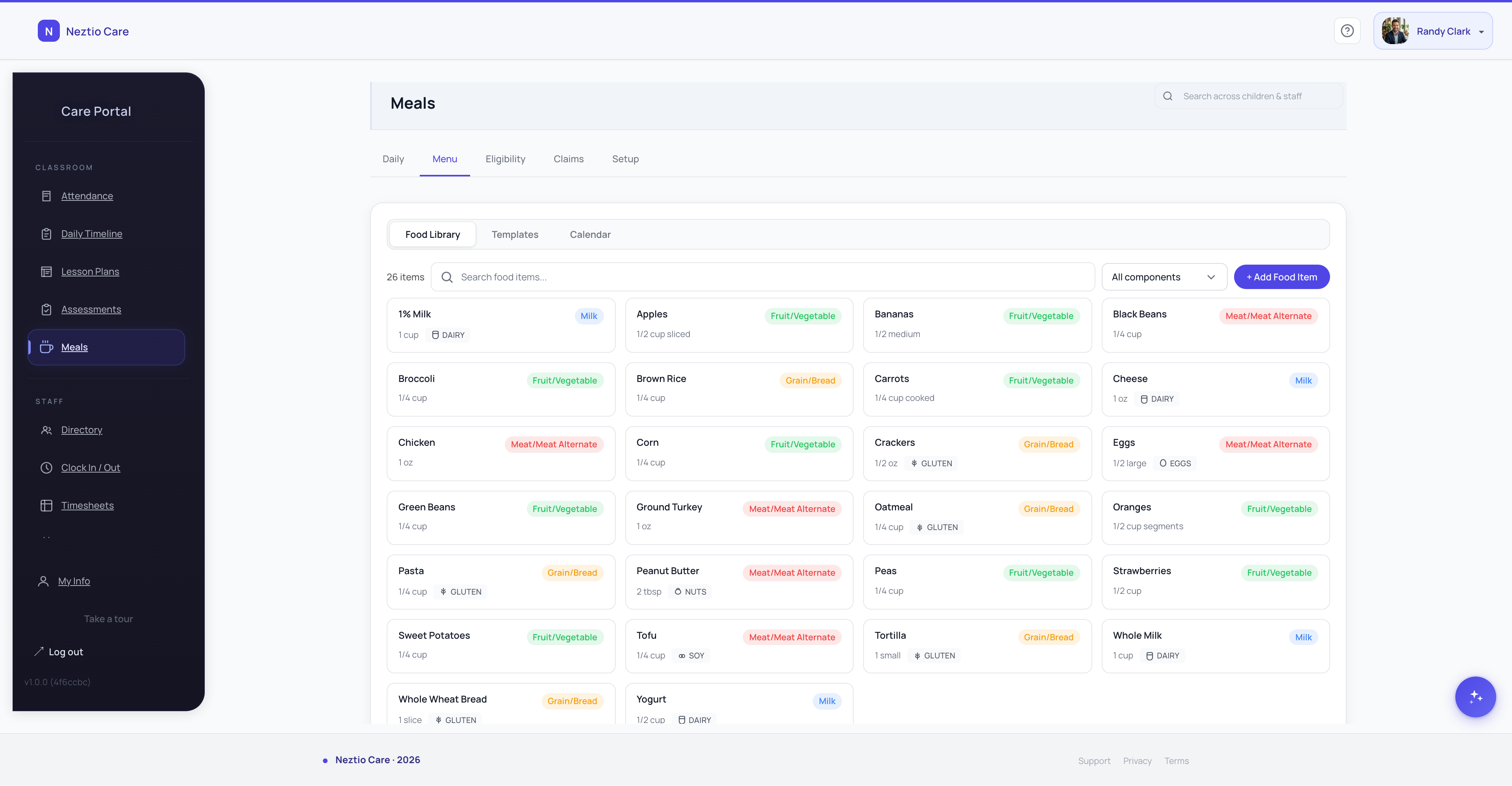
Food allergies are a serious safety concern in childcare settings. A child with a severe allergy can have a life-threatening reaction from even small exposure to an allergen. Every center needs clear policies and procedures for managing allergies.
Keep allergy action plans on file
Require a signed allergy action plan from the child's healthcare provider for every child with a diagnosed food allergy. This plan should specify the allergen, symptoms to watch for, and treatment steps including epinephrine administration.
Post allergy lists in the kitchen and classrooms
Every staff member who handles food or supervises meals needs to know which children have allergies. Post lists in food preparation areas and in each classroom where affected children are enrolled.
Have documented substitution procedures
For CACFP, if a child has a disability-related dietary restriction (as documented by a medical professional), the center must provide substitutions at no extra cost. Non-disability dietary preferences may be accommodated but are not required.
Train all staff on allergen awareness
Staff training should cover reading ingredient labels, preventing cross-contact during preparation, recognizing allergic reactions, and using epinephrine auto-injectors. Refresher training should happen at least annually.
Know the major allergens
The nine major food allergens recognized by federal law are: milk, eggs, peanuts, tree nuts, soy, wheat, fish, shellfish, and sesame. These must be clearly identified on food labels and in your ingredient records.
Infant Feeding
Infant feeding in childcare requires careful coordination with families and strict food safety practices. CACFP covers infant meals under a separate set of meal pattern requirements.
Breast milk and formula handling
Label all bottles with the child's name and date. Breast milk can be stored in a refrigerator for up to four days or frozen for longer storage. Never microwave breast milk or formula. Discard any unfinished portions after feeding.
Individual feeding plans
Work with each family to create a feeding plan that reflects the infant's schedule, formula brand, and any foods being introduced. Update the plan as the child grows and their diet changes.
Introducing solid foods
Follow guidance from the child's family and pediatrician when introducing solid foods. CACFP allows solid foods for infants six months and older. Introduce one new food at a time and watch for allergic reactions.
CACFP infant meal patterns
CACFP divides infants into two age groups: 0-5 months (breast milk or formula only) and 6-11 months (breast milk or formula plus age-appropriate solid foods). Infant meals are claimed separately from older children.
Food Safety and Kitchen Practices
Safe food handling protects children from foodborne illness. Childcare kitchens must follow food safety standards that are often regulated at the state level through licensing requirements.
Temperature control
Keep cold foods below 41 degrees F and hot foods above 135 degrees F. Use a food thermometer to verify temperatures. Log temperatures for refrigerators and freezers daily.
Handwashing and sanitization
Staff must wash hands before preparing food, between handling raw and cooked foods, and after any potential contamination. Sanitize food contact surfaces before and after each use.
Family-style vs. pre-plated service
Family-style service, where children serve themselves from shared dishes, is encouraged by CACFP as it teaches self-regulation. Pre-plated service may be easier for younger children or centers with allergy concerns. Both are acceptable.
Staff food handler certifications
Many states require at least one staff member on-site to hold a food handler's card or food safety certification. Check your state's licensing regulations for specific requirements and renewal timelines.
FIFO inventory management
Use the "first in, first out" method for storing food. Place newer items behind older ones so that older stock is used first. Check expiration dates regularly and discard expired items promptly.
Involving Children in Mealtime
Mealtime is more than nourishment. It is a learning opportunity and a chance to build social skills. Centers that treat meals as part of the curriculum see benefits in children's willingness to try new foods and in their overall development.
Family-style dining teaches self-regulation
When children serve themselves, they learn to assess how much food they need and practice fine motor skills. Staff should offer encouragement without pressuring children to eat specific amounts.
Age-appropriate self-service
Even toddlers can participate by using small pitchers for milk or scooping soft foods. Preschoolers can help set the table, pass dishes, and clean up afterward.
Teachers eat with children
When staff sit at the table and eat the same foods, they model healthy eating habits. This is also an opportunity for conversation, vocabulary building, and social interaction.
Mealtime as a learning opportunity
Use meals to explore colors, shapes, counting, and textures. Talk about where food comes from, the names of different vegetables, or the seasons when certain fruits grow. These conversations build vocabulary and science concepts naturally.
Documenting Meals
Accurate meal documentation is essential for CACFP compliance and for keeping families informed. Centers must record what was served, who was present, and whether children received the required components.
Record what is served and who ate
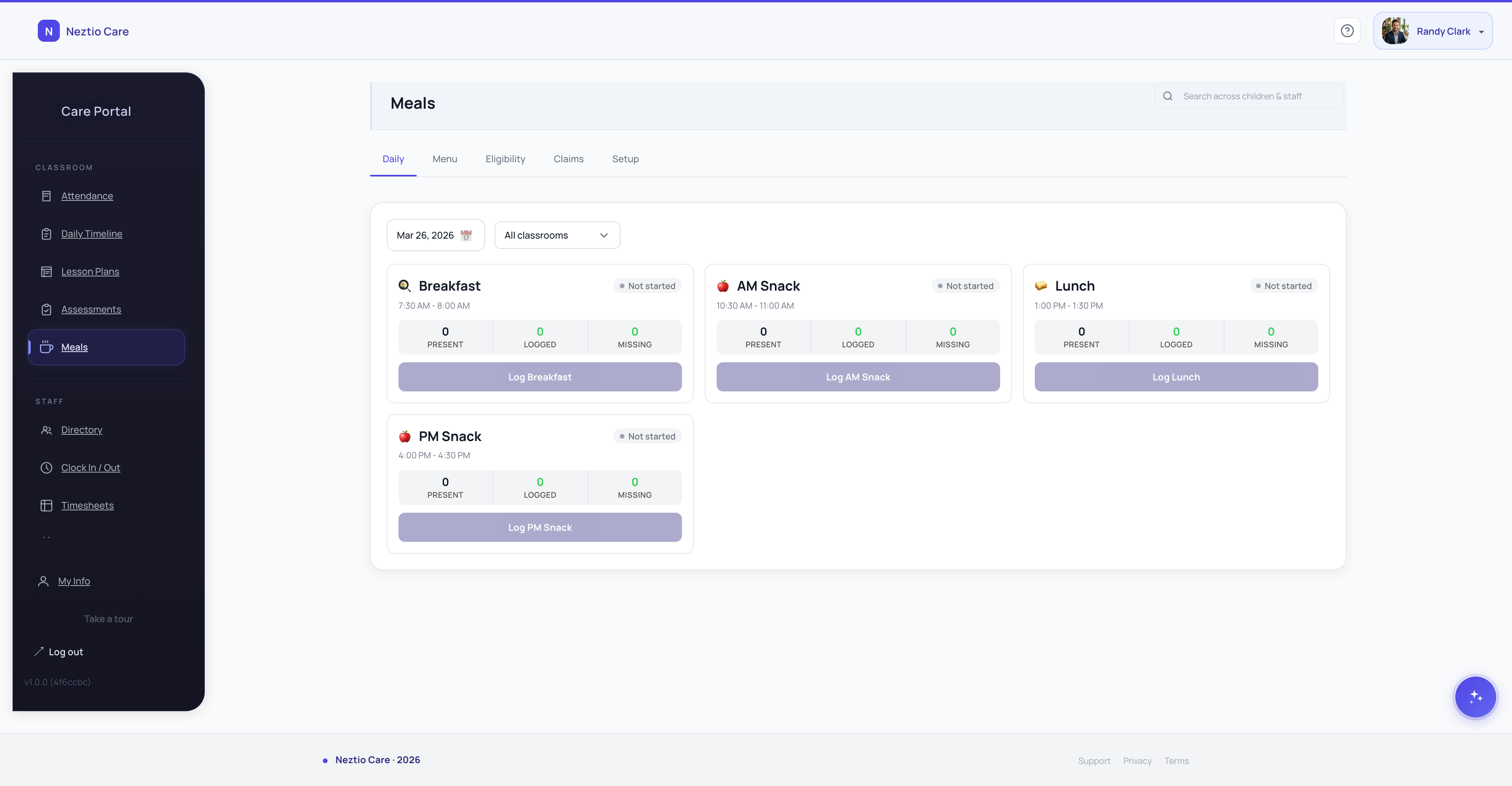
CACFP requires centers to document the specific menu items served at each meal and the number of children who received meals, broken down by eligibility category (free, reduced-price, or paid).
Point-of-service meal counts
Meal counts must be taken at the point of service, meaning at the time and location where meals are served. This ensures accuracy and prevents counting children who were absent or did not receive a meal.
Share meal information with families
Parents want to know what their child ate during the day. Sharing daily meal reports helps families plan dinner at home and gives them visibility into their child's nutrition throughout the week.
Use software to streamline meal tracking
Neztio's meal tracking feature lets staff log meals served, record point-of-service counts, and share meal information with families through daily reports in the parent app. This replaces paper meal count sheets and makes CACFP documentation more efficient.
The Bottom Line
Meal planning in childcare is where nutrition, safety, compliance, and family communication all intersect. A well-run meal program meets CACFP requirements, accommodates allergies safely, and turns mealtime into a positive part of each child's day. The key is having clear processes, trained staff, and consistent documentation.
Ready to simplify your meal tracking and CACFP documentation? See how Neztio's CACFP tracking tools can help your center stay compliant with less paperwork.
Glossary terms in this article
CACFP
The USDA Child and Adult Care Food Program that reimburses childcare providers for serving nutritious meals.
Meal Pattern Requirements
USDA-mandated food components and serving sizes for each meal type in CACFP.
Point-of-Service Meal Count
Recording meal counts at the time and place meals are served, as required by CACFP.
Licensing
State-issued permission to operate a childcare facility, requiring compliance with health, safety, and staffing standards.