Emergency Preparedness for Childcare Centers: Drills, Plans, and Procedures
When an emergency strikes, there is no time to figure out what to do. Childcare centers are responsible for the safety of children who cannot protect themselves, and that responsibility demands thorough planning, regular practice, and clear communication. This guide covers the emergency preparedness essentials that every licensed childcare center must have in place.
Why emergency preparedness is non-negotiable
Every state licensing agency in the country requires licensed childcare centers to maintain a written emergency preparedness plan. This is not a recommendation. It is a condition of licensure, and failure to have a plan, or failure to practice it, can result in citations, fines, or license revocation.
Your emergency plan must address multiple types of emergencies: fires, severe weather events, medical emergencies, lockdowns, and natural disasters relevant to your geographic area. The plan must be posted in a visible location, shared with all staff, and communicated to families. New staff must be trained on the plan during onboarding, and all staff should receive refresher training at least annually.
Beyond licensing compliance, emergency preparedness is simply the right thing to do. The children in your care depend entirely on the adults around them to keep them safe. A well-practiced plan means that when something goes wrong, staff respond with trained instincts rather than panic. That difference can save lives.
Fire drills
Fire drills are the most commonly required emergency drill in childcare licensing. Most states require monthly fire drills, and some require them even more frequently. The purpose is to ensure that every staff member and every child can exit the building quickly and safely, regardless of the time of day or which exit is available.
Documentation: Every fire drill must be documented. Record the date, time of day, number of children present, number of staff present, total evacuation time, the exit route used, and any issues or delays that occurred. Keep these records on file for licensing inspections.
Vary the conditions: Do not run every drill the same way. Vary the time of day (naptime drills are especially important), the exit route used, and occasionally simulate a blocked exit so staff practice using alternate routes.
Evacuation routes posted: Evacuation route maps must be posted in every classroom, hallway, and common area. Routes should clearly show primary and secondary exits, the outdoor assembly point, and the locations of fire extinguishers and fire alarm pull stations.
Unobstructed exits: All exits must be clear at all times. Strollers, supplies, furniture, and other items must never block exit doors, hallways, or stairwells. This should be checked regularly, not just before drills.
Infants and children with special needs: Your plan must account for how infants will be transported out of the building. Many centers use evacuation cribs (multi-child cribs on wheels) for this purpose. Children with mobility challenges or other special needs require individualized evacuation plans that are documented and practiced.
Severe weather drills
Severe weather preparedness requirements vary by region, but every childcare center should be prepared for the weather threats most common in their area, whether that is tornadoes, hurricanes, earthquakes, flooding, or severe thunderstorms. Most states require severe weather drills at least quarterly, and more frequently in high-risk areas.
Identify safe rooms: Designate interior rooms on the lowest floor with no windows as your shelter-in-place locations. Bathrooms, interior hallways, and storage rooms often work well. Every staff member should know exactly where to go.
Practice shelter-in-place: During drills, practice moving all children to safe rooms quickly and calmly. Time the drill and document it just as you would a fire drill. Include the date, time, number of children and staff, time to reach shelter, and any issues.
Know your local warning systems: Ensure your center has a NOAA weather radio or a reliable weather alert app. Staff should understand the difference between a watch (conditions are favorable for severe weather) and a warning (severe weather is imminent or occurring). Your plan should specify what actions to take at each alert level.
Earthquake-prone areas: If your center is in an earthquake zone, practice "Drop, Cover, and Hold On" drills. Secure heavy furniture and shelving to walls. Identify hazards such as glass windows and heavy objects on high shelves that could fall during shaking.
Hurricane and flood zones: Centers in hurricane or flood-prone areas need plans for early closure, communication with families about closures, and coordination with local emergency management agencies. Know your evacuation zone and have a plan for relocating children if ordered to evacuate.
Lockdown procedures
Lockdown procedures prepare your center for situations where the safest course of action is to secure children inside the building rather than evacuate. This could include an unauthorized person attempting to enter the building, a dangerous situation in the surrounding neighborhood, or an active threat. While these events are rare, preparation is essential.
Lock all exterior doors: Your lockdown procedure should begin with securing all exterior doors and windows. Ideally, your center should have a system for locking all exterior doors quickly from inside the building.
Move away from windows and doors: Staff should move children to interior areas of their classrooms, away from windows and exterior doors. If classroom doors have locks, they should be locked. Cover any window panels in doors if possible.
Account for all children: As soon as children are secured, staff must take attendance to confirm that every child is accounted for. This includes children who may have been in the bathroom, on the playground, or in a different room for a special activity.
Communication: Designate one person (typically the director or assistant director) to communicate with law enforcement. Other staff should remain quiet with their children and wait for the all-clear signal. Establish a clear, unmistakable signal or code word for initiating and ending a lockdown.
Age-appropriate practice: Lockdown drills should be practiced, but with sensitivity to the ages of the children in your care. For toddlers and preschoolers, frame the drill as a quiet game or a "turtle drill" (everyone gets small and quiet like a turtle in its shell) rather than explaining threats that could frighten young children.
Medical emergencies
Medical emergencies can happen at any time in a childcare setting, from allergic reactions and asthma attacks to falls, choking, and seizures. Your staff must be trained and prepared to respond immediately. Delays in response during a medical emergency can have serious consequences.
CPR and First Aid certification: Most states require at least one staff member with current CPR and First Aid certification to be on site at all times when children are present. Many states require all lead teachers and directors to hold current certification. Certifications typically need to be renewed every two years.
Know when to call 911: Staff should be trained on when to call 911 versus when to administer first aid on site. Call 911 for any life-threatening situation: difficulty breathing, loss of consciousness, severe bleeding, suspected head or spinal injury, seizures lasting more than five minutes, or any allergic reaction involving difficulty breathing or swelling of the face and throat.
Emergency contact information accessible: Emergency contact information for every child must be immediately accessible to staff, not locked in a filing cabinet or only available on a computer. During a medical emergency, staff need to be able to reach a child's parents or emergency contacts within seconds.
Allergy action plans posted: For every child with a known allergy, a written allergy action plan should be posted in the child's classroom and in the food preparation area. The plan should describe the allergen, signs of a reaction, and step-by-step instructions for responding, including when and how to use an epinephrine auto-injector if prescribed.
AED training: If your center has an automated external defibrillator (AED), staff should be trained on its use. AED training is often included in CPR certification courses. Even if an AED is not required by your state, having one on site and trained staff to use it can be lifesaving in a cardiac emergency.
Evacuation and reunification
Some emergencies require evacuating the building entirely and relocating children to a secondary location. Your emergency plan must include detailed evacuation and reunification procedures so that every child is accounted for and safely returned to their family.
Two evacuation sites: Designate at least two evacuation sites: one within walking distance (such as a neighboring building, church, or park) and one at driving distance in case the immediate area is unsafe. Both sites should be confirmed in advance with the property owner or manager, and their addresses should be included in your written plan and shared with families.
Transporting infants and non-mobile children: Your plan must address how infants and children who cannot walk will be transported during an evacuation. Evacuation cribs, strollers, and wagons should be maintained and accessible near exit routes. Assign specific staff members to be responsible for non-mobile children during evacuations.
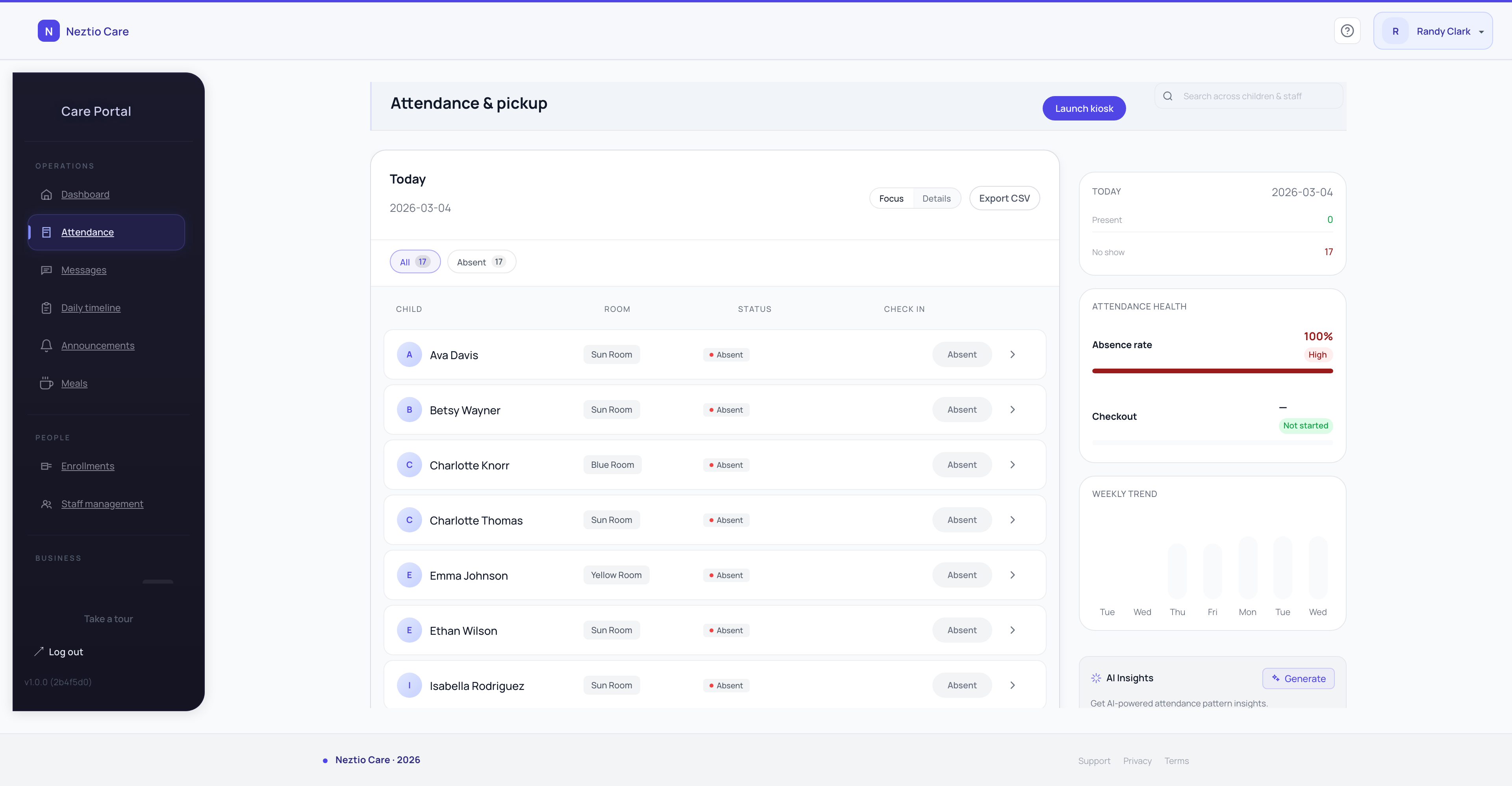
Attendance rosters travel with you: Staff must take current attendance rosters and emergency contact lists with them during any evacuation. These records are essential for accounting for every child and for contacting families. Consider keeping a printed backup of these records in a grab-and-go binder near exits in addition to any digital records.
Reunification procedures: At the evacuation site, children must be signed out individually to authorized pickup persons only. Staff must verify the identity of every person picking up a child, even in a stressful situation. No child should be released to anyone who is not listed as an authorized pickup on the child's enrollment file, regardless of the circumstances.
Head counts at every transition: Take a head count when leaving the building, upon arriving at the evacuation site, and after every child is released to a family member. Confirm that the number of children released plus the number of children still in your care equals the total number of children who were present that day.
Emergency supply kits
An emergency supply kit ensures your center has the essentials needed to care for children during and immediately after an emergency, especially if you need to shelter in place or evacuate to a location without supplies. Your kit should be stored in a clearly labeled, portable container that staff can grab quickly during an evacuation.
First aid kit: A fully stocked first aid kit with bandages, gauze, adhesive tape, antiseptic wipes, gloves, scissors, tweezers, and an instant cold pack. Check and restock the kit regularly.
Flashlight and battery-powered radio: Power outages are common during emergencies. A flashlight with extra batteries and a battery-powered or hand-crank NOAA weather radio allow you to navigate in the dark and stay informed about developing conditions.
Water and non-perishable snacks: Keep enough bottled water and shelf-stable snacks (crackers, granola bars, dried fruit) to sustain the children and staff in your care for several hours. Rotate stock regularly to ensure nothing is expired.
Blankets, diapers, and wipes: Include emergency blankets (space blankets are lightweight and compact), a supply of diapers and wipes for infants and toddlers, and plastic bags for waste disposal.
Children's medications: If children in your care have prescribed emergency medications (such as epinephrine auto-injectors or rescue inhalers), these must travel with the group during any evacuation. Assign a specific staff member to be responsible for the medication bag.
Contact lists and enrollment records: Include printed copies of emergency contact lists for every child, a staff cell phone list, and enrollment records with allergy and medical information. Digital records on a phone are helpful, but printed backups are essential in case of power loss or dead batteries.
Communication during emergencies
When an emergency occurs, parents need to know what is happening, that their child is safe, and what they should do. Fast, clear communication during a crisis is just as important as the physical response. A communication breakdown during an emergency erodes parent trust and can create dangerous situations if parents rush to the center without accurate information.
Notify parents immediately: As soon as children are safe and accounted for, begin notifying parents. Do not wait until the situation is fully resolved. Parents need to know their child is safe and where they are, even if the situation is still developing.
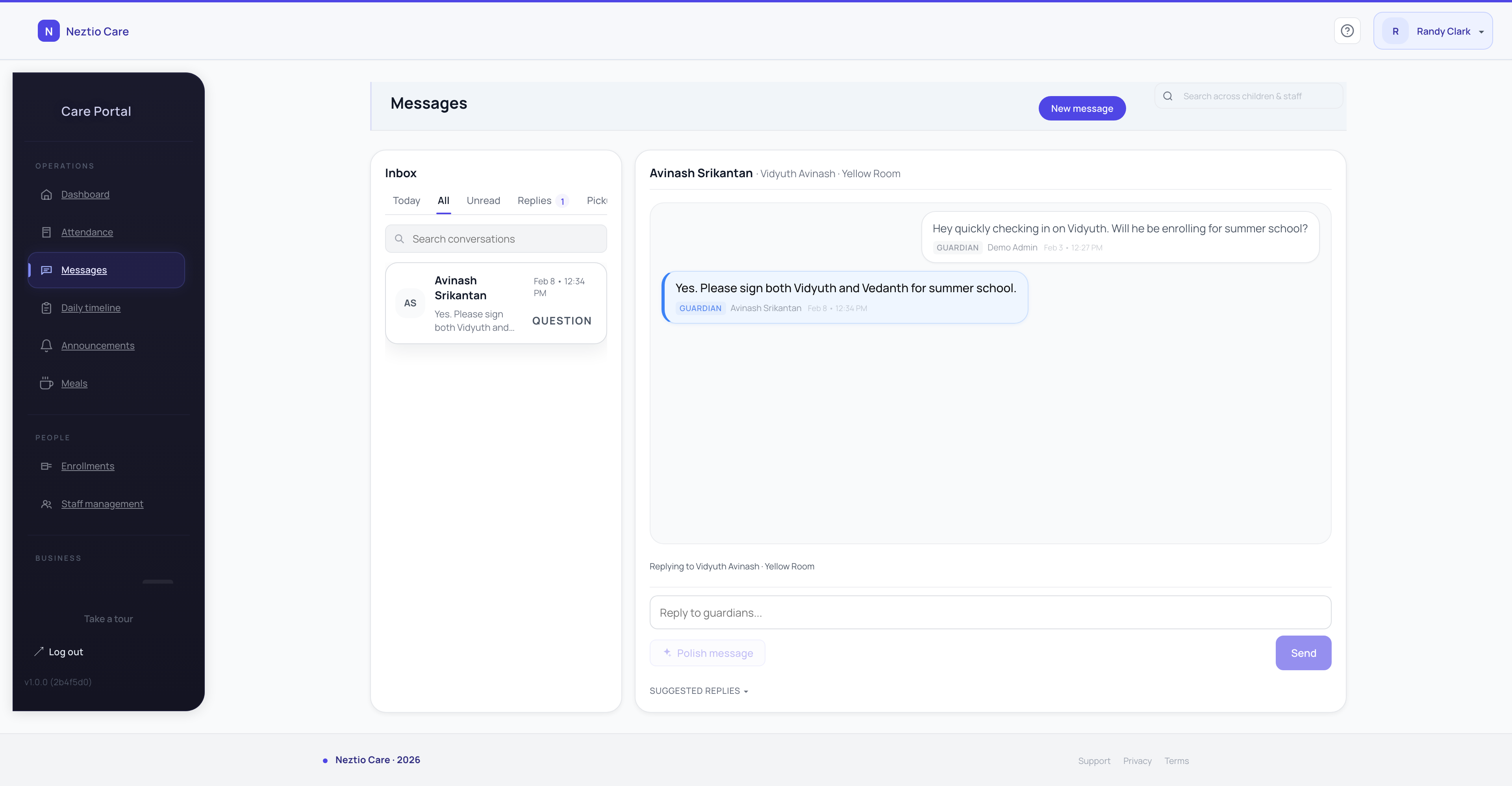
Use multiple channels: Do not rely on a single communication method. Use text messages, app notifications, email, and phone calls. Some parents may not check email during the day, while others may not see a text immediately. Reaching families through multiple channels increases the likelihood that every parent gets the message quickly.
Childcare management tools for real-time communication: Platforms like Neztio include built-in messaging and announcements features that allow directors to send real-time updates to every enrolled family instantly through the parent app. Announcements reach all families at once, while direct messaging allows staff to communicate with individual parents about their specific child. Having these communication tools already in place before an emergency means you are not scrambling to reach families when it matters most.
Designate a communication lead: Assign one person to manage all parent communication during an emergency. This prevents conflicting messages and ensures that updates are consistent, accurate, and timely. Other staff should focus on caring for the children.
Phone trees as a backup: Maintain a printed phone tree as a backup in case digital communication tools are unavailable. In a phone tree, each staff member is responsible for calling a specific group of parents. This ensures every family is contacted even if technology fails.
Documentation and review
Emergency preparedness is not a one-time task. Plans must be maintained, drills must be documented, and procedures must be updated based on what you learn from practice and real events. Licensing inspectors will review your drill logs and emergency plans during inspections, so thorough documentation is both a safety measure and a compliance requirement.
Log every drill: Keep a written log of every emergency drill conducted at your center, including fire drills, severe weather drills, and lockdown drills. Each log entry should include the date, time, type of drill, number of participants, duration, and notes about anything that went well or needs improvement.
Annual plan review: Review and update your entire emergency preparedness plan at least once a year. Check that evacuation sites are still available, contact lists are current, supply kits are stocked and not expired, and procedures reflect any changes to your facility, enrollment, or staffing.
Debrief after real incidents: If your center experiences an actual emergency, conduct a formal debrief with all staff afterward. Discuss what worked, what did not, and what changes need to be made. Document the debrief and update your plan accordingly.
Share updates with families: Whenever you make significant changes to your emergency plan, communicate those changes to families. Let parents know about new evacuation sites, updated procedures, or changes to your communication process. Transparency builds trust and keeps families informed about how their children will be protected.
The bottom line
Emergency preparedness is one of the most important responsibilities of running a childcare center. A well-written plan, practiced regularly and kept up to date, gives your staff the confidence to act decisively when it matters most. It protects the children in your care, satisfies licensing requirements, and gives families peace of mind.
Keeping track of attendance, communicating with families, and staying organized during both normal operations and emergencies is easier with the right tools. See how Neztio helps childcare centers manage attendance, messaging, announcements, daily reports, and more so your team is always prepared.
Related
Health and Safety Policies Every Childcare Center Needs
Related
Childcare Licensing Checklist: What Every New Center Needs
Glossary terms in this article
Licensing
State-issued permission to operate a childcare facility, requiring compliance with health, safety, and staffing standards.
Incident Report
A written record documenting any injury, accident, or unusual event that occurs at a childcare center.
Authorized Pickup
A person designated by a parent or guardian who is permitted to pick up a child from the childcare center.
Attendance Tracking
The process of recording when children arrive at and depart from a childcare center each day.