Requisitos de Licencias de Cuidado Infantil en Louisiana: Una Guía Completa
Louisiana regula el cuidado infantil mediante estándares de licencia detallados que se establecen en Bulletin 137. Ya sea que estés abriendo un nuevo centro de aprendizaje temprano o manteniendo el cumplimiento en un programa existente, esta guía cubre los requisitos clave que necesitas conocer, desde las proporciones de personal por niño hasta las verificaciones de antecedentes y los estándares de instalaciones.
Nota: Los requisitos de licencia cambian con frecuencia. Esta guía refleja las regulaciones vigentes a principios de 2026 con base en BESE Bulletin 137. Verifica siempre los requisitos actuales directamente con el Louisiana Department of Education (Departamento de Educación de Louisiana) antes de tomar decisiones de cumplimiento.
Panorama general: ¿quién regula el cuidado infantil en Louisiana?
En Louisiana, las licencias de cuidado infantil son administradas por el Louisiana Department of Education (LDE, Departamento de Educación de Louisiana). El LDE supervisa todos los centros de aprendizaje temprano mediante regulaciones definidas en BESE Bulletin 137, cuyo título oficial es "Louisiana Early Learning Center Licensing Regulations." Este boletín es promulgado por el Board of Elementary and Secondary Education (BESE, Junta de Educación Primaria y Secundaria) y cubre todo, desde los procedimientos de solicitud hasta los estándares de salud y seguridad.
Louisiana usa el término "Early Learning Center" (ELC, centro de aprendizaje temprano) para describir las instalaciones de cuidado infantil con licencia. El tipo de licencia o registro que necesitas depende del tamaño y el entorno de tu operación:
Early Learning Center (Type I, II, III): Una instalación tipo centro que brinda cuidado a siete o más niños. Los tres tipos se distinguen por la fuente de financiamiento y no por el tamaño. Los centros Type I son operados por una iglesia u organización religiosa sin fines de lucro y no reciben fondos estatales ni federales; los centros Type II reciben fondos estatales o federales distintos de CCAP; los centros Type III son elegibles para recibir pagos del Child Care Assistance Program (CCAP, Programa de Asistencia para el Cuidado Infantil). Solo los Type III pueden aceptar CCAP.
Family Child Care Provider (proveedor de cuidado infantil familiar): Un proveedor con base en el hogar que cuida a niños en su propia residencia. Los Family Child Care Providers están registrados en lugar de tener licencia y tienen requisitos diferentes.
In-Home Child Care Provider (proveedor de cuidado infantil en el hogar): Una persona que brinda cuidado en el propio hogar del niño. Los proveedores en el hogar tienen su propio conjunto de requisitos de registro conforme a Bulletin 139.
Importante
Operar un centro de aprendizaje temprano sin una licencia válida puede resultar en multas de hasta $1,000 por día. Las licencias deben renovarse antes de su fecha de vencimiento a través del sistema electrónico en línea del LDE.
Cómo solicitar una licencia de cuidado infantil en Louisiana
El proceso de solicitud de licencia de cuidado infantil en Louisiana implica coordinación con múltiples agencias estatales. Considera que el proceso puede tardar de varias semanas a varios meses, según la rapidez con la que cumplas todos los requisitos.
- 1
Completa los Key Orientation Training Modules
Louisiana requiere que el nuevo personal de los centros de aprendizaje temprano complete los Key Orientation Training Modules antes o dentro de los primeros días de operación. Estos módulos digitales, de ritmo autónomo, cubren las regulaciones de licencia de Bulletin 137 e incluyen audio y subtítulos. Recibirás certificados al completarlos.
- 2
Envía tu solicitud a través del sistema en línea del LDE
Las solicitudes se envían electrónicamente a través del portal en línea del Louisiana Department of Education. Deberás proporcionar información sobre tu instalación, la estructura de propiedad, el plan de personal y los detalles del programa.
- 3
Completa las Child Care Criminal Background Checks (CCCBC)
Todos los propietarios, empleados, voluntarios y otras personas cubiertas deben completar una CCCBC. Esta es una verificación de antecedentes basada en huellas dactilares administrada a través del sistema CCCBC del LDE. Los solicitantes tienen 10 días para obtener las huellas dactilares en un sitio aprobado después de recibir su número TCN.
- 4
Aprueba las inspecciones requeridas
El LDE coordina inspecciones de múltiples agencias: la Office of State Fire Marshal (Oficina del Jefe de Bomberos del Estado), los departamentos de bomberos municipales (si corresponde), el Louisiana Department of Health (Departamento de Salud de Louisiana) y la propia sección de aprobación académica del LDE. Todas las inspecciones deben aprobarse antes de que se emita tu licencia.
- 5
Recibe tu licencia
Una vez que se cumplen todos los requisitos y se aprueban las inspecciones, el LDE emitirá la licencia de tu centro de aprendizaje temprano. La licencia debe exhibirse en un lugar visible de tu instalación y renovarse antes del último día del mes en que vence.
Requisitos de proporción de personal por niño en Louisiana
Louisiana establece proporciones específicas de niños por miembro del personal según las edades de los niños bajo cuidado. Estas proporciones se definen en Bulletin 137, Section 1711 y deben mantenerse en todo momento. Aplican las siguientes proporciones mínimas:
| Grupo de edad | Proporción |
|---|---|
| Bebés (menores de 1 año) | 1:5 |
| De 1 año | 1:7 |
| De 2 años | 1:10 |
| De 3 años | 1:13 |
| De 4 años | 1:15 |
| De 5 años | 1:19 |
| De 6 años en adelante | 1:23 |
Debe haber al menos dos miembros del personal presentes en un centro de aprendizaje temprano siempre que haya más de cuatro niños presentes.
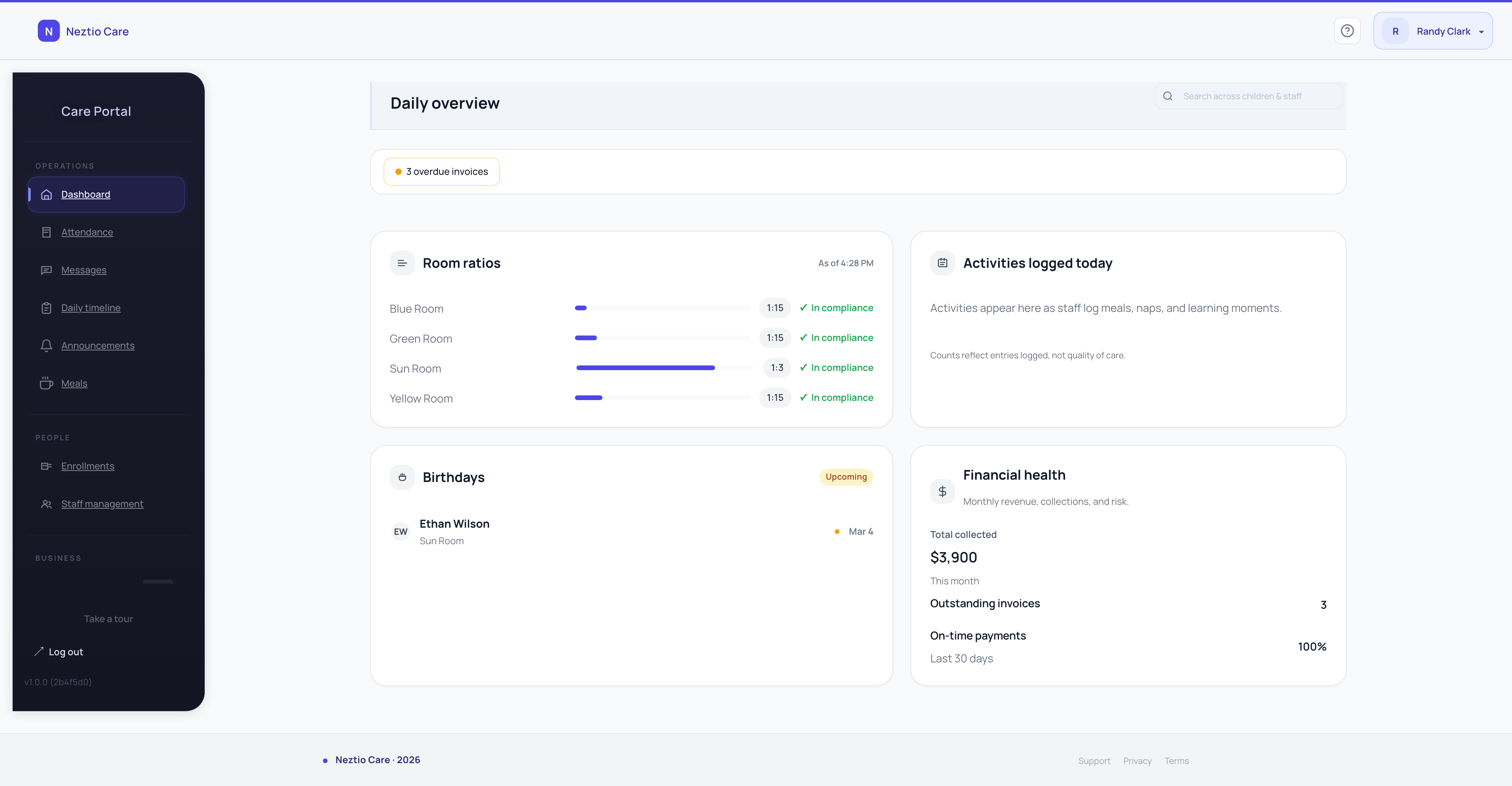
Estas proporciones provienen de BESE Bulletin 137, Section 1711. Verifica siempre las proporciones actuales con el LDE, ya que pueden actualizarse periódicamente. Para ayudarte a planear el personal de tu salón, prueba nuestra calculadora de proporciones.
Requisitos de calificación y capacitación del personal
Louisiana tiene calificaciones específicas para los directores y el personal que trabaja en centros de aprendizaje temprano con licencia.
Calificaciones del director
Louisiana ofrece varias vías para calificar como director de un centro de aprendizaje temprano (Bulletin 137, Section 1709):
Vía de credencial nacional: Una credencial nacional de administrador más un año de experiencia en enseñanza o cuidado en un centro de aprendizaje temprano con licencia o un entorno comparable, más 6 horas crédito o 90 horas reloj de capacitación en cuidado infantil, desarrollo infantil o educación de la primera infancia.
Vía de experiencia más educación: Un año de experiencia como director o miembro del personal en un centro de cuidado infantil con licencia más 12 horas crédito en cuidado infantil, desarrollo infantil o educación de la primera infancia. Se pueden sustituir quince horas reloj por cada tres horas crédito.
Vía de programa vocacional: Un diploma de un programa vocacional de capacitación en cuidado infantil aprobado por el Board of Regents (Junta de Regentes) o equivalente, más un año de experiencia supervisada en cuidado infantil en un centro con licencia o entorno comparable.
Requisitos de capacitación para todo el personal
Capacitación de orientación: El nuevo personal debe completar los Key Orientation Training Modules dentro de los primeros días de contratación. Estos módulos digitales de ritmo autónomo cubren las regulaciones de Bulletin 137.
CPR y Primeros Auxilios Pediátricos: El personal debe completar la capacitación de CPR y Primeros Auxilios Pediátricos a través de un curso aprobado por el LDE. La certificación debe mantenerse vigente.
Educación continua anual: Todo el personal debe completar un mínimo de 12 horas reloj de educación continua al año. Esto incluye al menos 3 horas de talleres o conferencias de cuidado infantil y 3 horas dedicadas a temas de salud y seguridad.
Requisitos de instalaciones y espacio
Tu espacio físico debe cumplir con los estándares de Bulletin 137 antes de que se pueda emitir una licencia. Louisiana actualizó sus requisitos de espacio interior con vigencia a partir del 1 de junio de 2022.
Espacio interior (desde el nacimiento hasta los 4 años): Un mínimo de 35 pies cuadrados de espacio interior utilizable por niño para los niños de entre el nacimiento y los 3 años. Esto se mide como espacio de actividad utilizable, excluyendo cocinas, baños, pasillos y áreas de almacenamiento.
Espacio interior (4 años en adelante): Un mínimo de 25 pies cuadrados de espacio interior utilizable por niño. Sin embargo, si algún niño en el salón es menor de 4 años, el requisito de 35 pies cuadrados aplica a cada niño en ese espacio.
Espacio exterior: Un mínimo de 75 pies cuadrados de espacio de juego exterior por niño que use el área en un momento dado. Las áreas exteriores deben estar cercadas y libres de peligros.
Seguridad contra incendios: Tu instalación debe aprobar una inspección de la Office of State Fire Marshal. Se requieren detectores de humo y extintores en funcionamiento. Los simulacros de incendio deben realizarse y documentarse con regularidad.
Inspección de salud: El Louisiana Department of Health realiza una inspección independiente que cubre el saneamiento, las áreas de preparación de alimentos, las estaciones de cambio de pañales, las instalaciones para lavarse las manos y la limpieza general.
Equipo apropiado para la edad: Todo el mobiliario, las cunas y el equipo de juego deben ser seguros, estar en buen estado y ser apropiados para las edades de los niños inscritos. Las cunas deben cumplir con los estándares actuales de CPSC.
Requisitos de verificación de antecedentes (CCCBC)
Louisiana requiere Child Care Criminal Background Checks (CCCBC) para todas las personas asociadas con los centros de aprendizaje temprano. El proceso de CCCBC se administra a través del sistema en línea del LDE y se detalla en Bulletin 137, Sections 1807 and 1809.
Quiénes deben ser verificados: Todos los propietarios, empleados, voluntarios, contratistas independientes y ciertos visitantes que tienen acceso a los niños deben completar una CCCBC. Este requisito se define en Bulletin 137, Sections 1807 and 1809.
Evaluación basada en huellas dactilares: La CCCBC incluye una verificación de antecedentes penales basada en huellas dactilares. Después de recibir un TCN (Transaction Control Number, número de control de transacción) del sistema del LDE, los solicitantes tienen 10 días para obtener las huellas dactilares en un sitio aprobado.
Verificaciones de registros: La evaluación de antecedentes incluye verificaciones del registro de delincuentes sexuales y del registro central estatal de abuso y negligencia infantil.
Resultados y notificación: Los resultados de la CCCBC se envían al propietario o director del centro de aprendizaje temprano. Una persona no puede tener acceso sin supervisión a los niños hasta que se haya aprobado su verificación de antecedentes.
Proveedores de CCAP: Los proveedores certificados a través del Child Care Assistance Program (CCAP) conforme a BESE Bulletin 139 tienen requisitos adicionales de verificación de antecedentes para los proveedores de cuidado infantil familiar y en el hogar.
Requisitos de salud y seguridad
Bulletin 137 incluye requisitos detallados de salud y seguridad que los centros de aprendizaje temprano con licencia deben seguir todos los días.
Registros de vacunación: Se requieren registros de vacunación actualizados para todos los niños inscritos. Los registros deben estar archivados y disponibles para inspección en todo momento.
Administración de medicamentos: Los medicamentos solo pueden administrarse con autorización escrita de los padres. Toda administración de medicamentos debe documentarse, incluyendo el nombre del medicamento, la dosis, la hora en que se administró y el miembro del personal que lo administró.
Prácticas de sueño seguro: Para los bebés, Louisiana requiere el cumplimiento de las pautas de sueño seguro. Los bebés deben colocarse boca arriba para dormir en cunas aprobadas, sin ropa de cama suave, almohadas, protectores acolchados ni juguetes en la cuna.
Lavado de manos: Tanto el personal como los niños deben seguir procedimientos adecuados de lavado de manos, incluyendo antes y después de las comidas, después de los cambios de pañal, después de usar el baño y después del juego al aire libre.
Procedimientos de emergencia: Los procedimientos de emergencia por escrito deben exhibirse y practicarse con regularidad. El personal debe saber qué hacer en caso de incendio, clima severo, emergencia médica u otra crisis.
Exclusión por enfermedad: Los centros deben tener una política escrita de exclusión por enfermedad y procedimientos para notificar a los padres cuando su hijo se enferma durante el día.
Requisitos de mantenimiento de registros
Las licencias de Louisiana requieren que los centros de aprendizaje temprano mantengan registros detallados que estén disponibles para su revisión durante las inspecciones. Mantener estos registros organizados y actualizados es una de las cosas más importantes que puedes hacer para mantenerte en cumplimiento.
Registros de asistencia: Registros diarios de entrada y salida de cada niño, con la hora registrada para cada entrada. Estos registros deben conservarse y estar disponibles para inspección.
Registros de inscripción de niños: Información completa de inscripción de cada niño, incluyendo contactos de emergencia, personas autorizadas para recoger al niño, información médica, alergias y registros de vacunación.
Registros del personal: Expedientes de personal de cada empleado, incluyendo los resultados de la CCCBC, la documentación de capacitación, las certificaciones, los registros de orientación y el historial laboral.
Informes de incidentes: Documentación escrita de cualquier lesión, accidente o incidente inusual que ocurra en la instalación, incluyendo detalles de lo que sucedió y qué acciones se tomaron.
Registros de simulacros de incendio: Documentación de cada simulacro de incendio realizado, incluyendo la fecha, la hora, el número de niños y personal presentes y el tiempo de evacuación.
Consejo: El software de gestión de cuidado infantil como Neztio puede ayudarte a mantener registros digitales de asistencia, documentación del personal, facturación y comunicación con los padres, facilitando mantenerte organizado y listo para inspecciones en todo momento.
El sistema de calificación de calidad de Louisiana
El sistema de calificación de calidad de la primera infancia de Louisiana es administrado por el Louisiana Department of Education (LDE). Desde 2015, el estado reemplazó el antiguo sistema Quality Start de cinco estrellas administrado por DCFS con un sistema unificado basado en observaciones anuales en el salón de clases, que el LDE usa para producir un Performance Profile (perfil de desempeño) para cada sitio con financiamiento público.
Observaciones CLASS: La calidad se mide usando el Classroom Assessment Scoring System (CLASS), que evalúa la calidad de las interacciones entre maestro y niño en el salón de clases. Estas observaciones forman la base del Performance Profile y la calificación de cada sitio.
Niveles de calificación de Bulletin 140: Los sitios con financiamiento público, incluidos los centros Type III, reciben una calificación de calidad conforme a BESE Bulletin 140 usando los niveles Gold, Silver y Bronze que reconocen niveles de calidad superiores al mínimo de licencia.
Performance Profiles: El LDE publica un Performance Profile para cada sitio con financiamiento público, dando a las familias una visión pública de la calidad del programa al elegir cuidado.
Directorio antiguo de Quality Start: El antiguo directorio de cinco estrellas "Quality Start" de DCFS todavía existe en línea, pero ya no es el sistema activo de calificación de calidad del estado.
Inspecciones y cumplimiento
Una vez con licencia, tu centro de aprendizaje temprano estará sujeto a monitoreo continuo por parte del Louisiana Department of Education.
Inspecciones de múltiples agencias: El LDE coordina inspecciones que involucran a la Office of State Fire Marshal, los bomberos municipales (si corresponde), el Louisiana Department of Health y el personal de licencias del LDE. Cada agencia evalúa diferentes aspectos de tu operación.
Visitas sin previo aviso: Las inspecciones de licencia pueden realizarse sin previo aviso y pueden cubrir cualquier aspecto de tu operación, desde las proporciones de personal hasta el mantenimiento de la instalación y el mantenimiento de registros.
Acción correctiva: Si se encuentran deficiencias durante una inspección, se le da al centro un plazo específico para corregir los problemas. El plazo depende de la gravedad de la deficiencia.
Sanciones: Las violaciones repetidas o graves pueden resultar en acciones adversas, incluyendo multas de hasta $1,000 por día, suspensión de la licencia o revocación de la licencia. Las violaciones más graves pueden resultar en acción inmediata.
Recursos
Estos son recursos clave para los proveedores de cuidado infantil de Louisiana:
Louisiana Department of Education - Child Care Facility Licensing: La página oficial del LDE para licencias de cuidado infantil, incluyendo información de solicitud, recursos de Bulletin 137 y datos de contacto.
BESE Bulletin 137: El texto completo de las Louisiana Early Learning Center Licensing Regulations, disponible a través del sitio web del LDE y el Louisiana Administrative Code (Title 28, Part CLXI).
CCCBC System: El portal en línea del LDE para gestionar las Child Care Criminal Background Checks, accesible en cccbcldoe.la.gov.
Calificaciones de calidad de Louisiana: El LDE publica Performance Profiles basados en CLASS y calificaciones de calidad de Bulletin 140 para los sitios con financiamiento público. La información sobre el sistema de calificación de calidad está disponible a través del sitio web del LDE.
Well-Ahead LA: Una iniciativa del Louisiana Department of Health que proporciona recursos de capacitación para proveedores, incluyendo mesas redondas de educación de la primera infancia y materiales de capacitación de Bulletin 137.
Mantente en cumplimiento con las herramientas adecuadas
Cumplir con los requisitos de licencia de Louisiana es solo el comienzo. Mantenerse en cumplimiento día tras día requiere registros organizados, documentación consistente y comunicación clara con las familias y el personal. La mejor manera de prepararse para una inspección sin previo aviso es operar cada día como si una pudiera ocurrir.
Descubre cómo Neztio ayuda a los centros de cuidado infantil de Louisiana a gestionar la asistencia, la facturación, los registros del personal y la comunicación con los padres para que siempre estés listo para una inspección.
Relacionado
Requisitos de Licencias de Cuidado Infantil en Texas: Una Guía Completa
Relacionado
Cómo Abrir una Guardería: Una Guía Paso a Paso
Glossary terms in this article
Licencia
Permiso emitido por el estado para operar una instalación de cuidado infantil, que requiere el cumplimiento de estándares de salud, seguridad y personal.
Proporción de personal por niño
El número requerido de personal calificado por grupo de niños, establecido por las regulaciones estatales de licencia según la edad.
Verificación de antecedentes
Evaluaciones de antecedentes penales y de registros requeridas para todos los trabajadores de cuidado infantil conforme a la CCDBG Act of 2014.
Tamaño del grupo
El número máximo de niños permitidos en un solo salón de clases o grupo de cuidado, determinado por las reglas estatales de licencia.
Acreditación
Certificación voluntaria de calidad de organizaciones como NAEYC o NAC que reconoce a los programas que superan los estándares mínimos de licencia.