Requisitos de licencia de cuidado infantil en Ohio: una guía completa
El cuidado infantil en Ohio está regulado por el Ohio Department of Children and Youth (DCY), el Departamento de Niños y Jóvenes de Ohio, conforme al capítulo 5101:2-12 del Ohio Administrative Code. Ya sea que vayas a abrir un centro de cuidado infantil, un hogar de cuidado infantil familiar Tipo A o un hogar Tipo B, esta guía cubre los requisitos de licencia, las proporciones, los estándares de capacitación y las expectativas de cumplimiento que necesitas conocer.
Nota: Los requisitos de licencia cambian con frecuencia. Esta guía refleja las regulaciones vigentes a principios de 2026. Verifica siempre los requisitos actuales directamente con tu agencia estatal de licencias antes de tomar decisiones de cumplimiento.
Panorama general: ¿quién regula el cuidado infantil en Ohio?
En Ohio, la licencia de cuidado infantil es administrada por el Ohio Department of Children and Youth (DCY). El DCY establece los estándares mínimos, procesa las solicitudes de licencia, realiza inspecciones y hace cumplir las normas para todas las operaciones de cuidado infantil reguladas en el estado. Las reglas de licencia están codificadas en los capítulos 5101:2-12 (centros de cuidado infantil) y 5101:2-13 (hogares de cuidado infantil familiar) del Ohio Administrative Code (OAC).
Ohio exige licencia para las operaciones de cuidado infantil que atienden a niños de manera regular. El tipo de licencia que necesitas depende del entorno y del número de niños bajo cuidado:
Centro de cuidado infantil con licencia (Licensed Child Care Center): Una instalación que no es el hogar del proveedor y que brinda cuidado a siete o más niños. Este es el tipo de licencia más común para los negocios comerciales de cuidado infantil en Ohio. Los centros están regulados conforme al capítulo 5101:2-12 del OAC.
Hogar de cuidado infantil familiar Tipo A (Type A Family Child Care Home): Una operación en el hogar que brinda cuidado a entre 7 y 12 niños a la vez, incluidos los hijos del proveedor menores de seis años de edad. Los hogares Tipo A requieren licencia y deben cumplir con requisitos de personal, seguridad y espacio. Se exige personal adicional según el número y la edad de los niños. También se requieren aprobaciones municipales de zonificación, construcción e incendios.
Hogar de cuidado infantil familiar Tipo B (Type B Family Child Care Home): Una operación en el hogar que brinda cuidado a entre 1 y 6 niños a la vez (sin contar los hijos del propio proveedor). Los hogares Tipo B deben cumplir con las ordenanzas municipales aplicables y con los requisitos del DCY de verificaciones de antecedentes, seguridad y capacitación, aunque los requisitos son menos extensos que los de los hogares Tipo A o los centros.
Importante
Los requisitos y las tarifas de licencia pueden cambiar. Verifica siempre los requisitos actuales directamente con el DCY o visita su sitio web oficial para obtener la información más actualizada. El Ohio Child Licensing and Quality System (OCLQS) es el portal en línea para las solicitudes y la gestión de licencias.
Cómo solicitar una licencia de cuidado infantil en Ohio
El proceso de solicitud de licencia de cuidado infantil en Ohio implica varios pasos. Prevé que el proceso tome aproximadamente de 60 a 90 días desde la solicitud hasta la aprobación, según la rapidez con la que puedas cumplir con todos los requisitos.
- 1
Completa la orientación previa a la licencia
El DCY exige que todos los solicitantes completen una orientación previa a la licencia antes de presentar una solicitud. Esta orientación está disponible a través del Ohio Professional Registry (OPR) y cubre los estándares mínimos, el proceso de licencia y las responsabilidades de operar un programa de cuidado infantil.
- 2
Presenta tu solicitud a través del OCLQS
Las solicitudes se presentan en línea a través del Ohio Child Licensing and Quality System (OCLQS). Deberás proporcionar información sobre tu instalación, plan de personal, estructura organizativa y políticas operativas. Se requiere una tarifa de solicitud; consulta el sitio web del DCY para conocer los montos actuales de las tarifas.
- 3
Completa las verificaciones de antecedentes de todas las personas requeridas
Todos los propietarios, administradores, empleados y voluntarios con acceso no supervisado a los niños deben aprobar una verificación de antecedentes basada en huellas dactilares tanto del BCI&I (Ohio Bureau of Criminal Investigation and Identification) como del FBI. En las operaciones en el hogar, los miembros del hogar también deben ser verificados. Las verificaciones de antecedentes se presentan a través del Ohio Professional Registry.
- 4
Aprueba la inspección inicial en el sitio
Un especialista en licencias del DCY realizará una inspección en el sitio de tu instalación para verificar que cumpla con todos los estándares mínimos de espacio, seguridad, equipo, personal y documentación. Cualquier deficiencia debe corregirse antes de que se otorgue tu licencia.
- 5
Recibe tu licencia
Una vez que hayas cumplido con todos los requisitos y aprobado tu inspección, el DCY emitirá tu licencia de cuidado infantil. La licencia debe colocarse en un lugar visible para los padres en tu instalación. Las licencias de cuidado infantil de Ohio deben renovarse periódicamente según lo exija el DCY.
Requisitos de proporción de personal por niño en Ohio
Ohio establece proporciones específicas de personal por niño y tamaños máximos de grupo según las edades de los niños bajo cuidado. Estas proporciones se definen en la regla 5101:2-12-18 (Apéndice A) del Ohio Administrative Code y deben mantenerse en todo momento. Cuando se combinan en un grupo niños de diferentes edades, se aplica la proporción correspondiente al niño de menor edad del grupo.
| Grupo de edad | Proporción | Tamaño máximo del grupo |
|---|---|---|
| Del nacimiento a los 12 meses | 1:5 | 12 |
| De 12 a 17 meses | 1:6 | 12 |
| De 18 a 29 meses | 1:7 | 14 |
| De 30 meses a menos de 3 años | 1:8 | 16 |
| 3 años | 1:12 | 24 |
| De 4 a 5 años (pre-K) | 1:14 | 28 |
| Edad escolar (menores de 11) | 1:18 | 36 |
| Edad escolar (11-15) | 1:20 | 40 |
Las limitaciones de tamaño de grupo no aplican durante la hora de la siesta, la hora de la comida, el juego al aire libre, las excursiones o las ocasiones especiales. Durante la hora de la siesta, la proporción puede duplicarse por hasta dos horas en un período de 24 horas, siempre que al menos un miembro del personal esté presente en la sala y todos los niños estén descansando en catres. Esta excepción no aplica a los grupos que incluyen bebés.
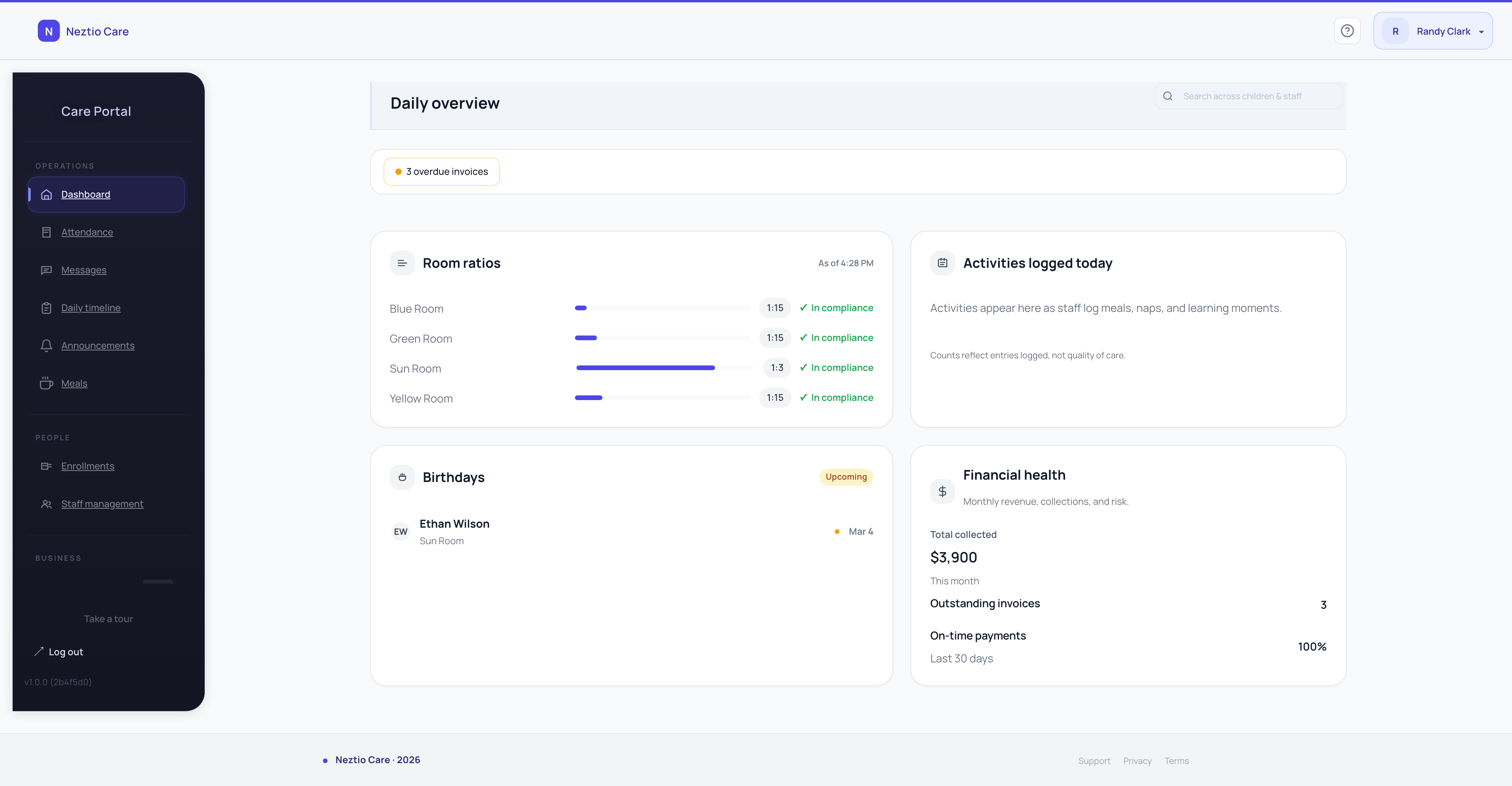
Estas proporciones provienen de la regla 5101:2-12-18 del OAC. Verifica siempre las proporciones actuales con el DCY, ya que pueden actualizarse periódicamente. Para ayudarte a planificar el personal de tu salón de clases, prueba nuestra calculadora de proporciones.
Requisitos de calificación y capacitación del personal
Ohio tiene requisitos específicos para los administradores y los miembros del personal de cuidado infantil que trabajan en instalaciones de cuidado infantil con licencia, definidos en las reglas 5101:2-12-07, 5101:2-12-08 y 5101:2-12-10 del OAC.
Calificaciones del administrador
Presencia en el sitio: El administrador es responsable de la operación diaria del centro y debe estar en el sitio un mínimo de la mitad de las horas en que el centro está en operación cada semana, o 40 horas por semana, lo que sea menor.
Educación y experiencia: Los administradores deben cumplir con los requisitos de educación y experiencia establecidos por el DCY en el OAC 5101:2-12-07. Estos generalmente incluyen una combinación de educación formal en educación de la primera infancia, desarrollo infantil o un campo relacionado, junto con experiencia supervisada en cuidado infantil.
Requisitos de los miembros del personal
Educación: Los miembros del personal de cuidado infantil deben haber completado la educación secundaria, o ser al menos estudiantes de tercer año de secundaria inscritos en, o que hayan completado, un programa técnico-profesional de educación de la primera infancia o desarrollo infantil, un programa de capacitación de Child Development Associate (CDA) o un programa de créditos universitarios con enfoque en educación de la primera infancia o desarrollo infantil.
Capacitación de orientación: Los nuevos miembros del personal deben completar la capacitación de orientación del personal prescrita por el DCY dentro de los 30 días posteriores al inicio de su empleo en el centro.
Capacitación en reconocimiento del abuso infantil: Cada administrador y miembro del personal de cuidado infantil, incluidos los suplentes, debe completar la descripción general de una hora sobre el reconocimiento del abuso infantil prescrita por el DCY dentro de los 60 días posteriores a la contratación.
Capacitación anual: Todos los administradores y miembros del personal de cuidado infantil deben completar un mínimo de seis horas reloj de capacitación de desarrollo profesional cada año fiscal (del 1 de julio al 30 de junio), según lo exige el OAC 5101:2-12-10.
RCP y primeros auxilios: Al menos una persona con certificación vigente en RCP pediátrica y primeros auxilios debe estar presente en todo momento cuando los niños estén bajo cuidado. También se requiere capacitación en el manejo de enfermedades transmisibles.
Requisitos de verificación de antecedentes
Ohio exige verificaciones de antecedentes exhaustivas para todas las personas involucradas en las operaciones de cuidado infantil, según se define en la regla 5101:2-12-09 del OAC.
Quiénes deben ser verificados: Todos los propietarios, administradores, empleados, suplentes y voluntarios que tengan acceso no supervisado a los niños deben completar verificaciones de antecedentes. En los hogares de cuidado infantil familiar Tipo A y Tipo B, todos los miembros del hogar también están sujetos a verificaciones de antecedentes.
Verificación del BCI&I: Se requiere una verificación de antecedentes penales basada en huellas dactilares a través del Ohio Bureau of Criminal Investigation and Identification (BCI&I) para todas las personas aplicables.
Verificación del FBI: También se requiere una verificación de antecedentes penales del FBI basada en huellas dactilares. Las huellas dactilares se presentan electrónicamente a través de una ubicación WebCheck, y los resultados se envían directamente al DCY.
Proceso de presentación: Las personas deben completar el formulario JFS 01175 "Request for a Background Check for Child Care" y presentar sus huellas dactilares a través del sistema Ohio Professional Registry (OPR).
Renovación: Las verificaciones de antecedentes del BCI&I deben renovarse cada cuatro años. Los centros y los hogares Tipo A también pueden requerir verificaciones del FBI cada cuatro años.
Sin acceso no supervisado antes de la autorización: Los miembros del personal de cuidado infantil no deben quedarse a solas con los niños hasta que un formulario de autorización JFS 01176 completado esté archivado en el centro.
Estándares de espacio físico y entorno
Tu espacio físico debe cumplir con los estándares mínimos de Ohio definidos en la regla 5101:2-12-11 del OAC antes de que pueda emitirse una licencia. Los requisitos clave incluyen:
Espacio interior: Un mínimo de 35 pies cuadrados de espacio interior utilizable por niño. Esta medición excluye pasillos, baños, cocinas, áreas de almacenamiento y otros espacios que no son de actividad.
Espacio exterior: Un mínimo de 60 pies cuadrados de espacio de juego exterior utilizable por cada niño que use el área en un momento dado, según lo exige el OAC 5101:2-12-11.
Cercas y barreras: Las áreas de juego al aire libre deben ubicarse lejos del tráfico o estar protegidas por una cerca continua en buenas condiciones con portones que funcionen, o por una barrera natural continua. La barrera debe evitar que los niños salgan sin supervisión y evitar que los peligros externos ingresen sin que el personal se dé cuenta.
Equipo apropiado para la edad: Todos los muebles, cunas y equipos de juego deben ser seguros, estar en buen estado y ser apropiados para las edades de los niños inscritos. Las cunas deben cumplir con los estándares vigentes de la Consumer Product Safety Commission (CPSC).
Seguridad contra incendios: Deben instalarse y mantenerse detectores de humo y extintores de incendios en funcionamiento. Los simulacros de incendio deben realizarse y documentarse con regularidad. Tu instalación debe tener un plan de evacuación colocado.
Salud y saneamiento: Tu instalación debe aprobar una inspección de salud y seguridad que cubra el saneamiento, las áreas de preparación de alimentos, las estaciones de cambio de pañales, las instalaciones para lavarse las manos y la limpieza general.
Requisitos de salud y seguridad
Los estándares mínimos de Ohio incluyen requisitos detallados de salud y seguridad que las operaciones con licencia deben seguir todos los días.
Registros de vacunación: Se requieren registros de vacunación actualizados para todos los niños inscritos. Los registros deben estar archivados y disponibles para inspección en todo momento.
Administración de medicamentos: Los medicamentos solo pueden administrarse con autorización escrita de los padres. Toda administración de medicamentos debe documentarse, incluidos el nombre del medicamento, la dosis, la hora en que se administró y el miembro del personal que lo administró.
Prácticas de sueño seguro: Para los bebés, Ohio exige el cumplimiento de las pautas de sueño seguro. Los bebés deben colocarse boca arriba para dormir en cunas aprobadas, sin ropa de cama blanda, almohadas, protectores de cuna ni juguetes en la cuna.
Lavado de manos: Tanto el personal como los niños deben seguir procedimientos adecuados de lavado de manos, incluidos antes y después de las comidas, después de los cambios de pañal, después de usar el baño y después del juego al aire libre.
Manejo de enfermedades transmisibles: El personal debe estar capacitado en el reconocimiento y el manejo de enfermedades transmisibles. Las operaciones deben tener políticas escritas para la exclusión por enfermedad y procedimientos para notificar a los padres cuando su hijo se enferma durante el día.
Procedimientos de emergencia: Los procedimientos de emergencia escritos deben estar colocados y practicarse con regularidad. El personal debe saber qué hacer en caso de incendio, clima severo, emergencia médica u otra crisis.
Step Up To Quality (SUTQ)
Step Up To Quality (SUTQ) es el Sistema de Calificación y Mejora de la Calidad (QRIS) de Ohio. Es un sistema de calificación de la calidad de tres niveles con designaciones Bronce, Plata y Oro (siendo Oro la más alta) que reconoce y promueve los programas de cuidado y educación tempranos que cumplen con estándares de calidad más allá de los requisitos básicos de licencia. El SUTQ es administrado por el Ohio Department of Children and Youth (DCY).
Designaciones Bronce, Plata y Oro: Los programas pueden obtener una designación Bronce, Plata u Oro (siendo Oro la más alta) según la calidad demostrada en áreas que incluyen el aprendizaje y el desarrollo, las prácticas administrativas y de liderazgo, las calificaciones del personal y las alianzas con las familias y la comunidad.
Requerido para financiamiento público: Los programas que reciben cuidado infantil con financiamiento público (PFCC) o financiamiento por subvención de Early Childhood Education (ECE) deben tener una calificación SUTQ. Si algún salón de clases dentro de un programa con licencia recibe financiamiento PFCC o ECE, todo el programa debe estar calificado y cumplir con todos los estándares aplicables del SUTQ.
Voluntario para los demás: Para los programas que no reciben financiamiento público, la participación en el SUTQ es voluntaria, pero puede ser un diferenciador de calidad significativo para las familias que eligen un proveedor de cuidado infantil.
Registro: Los programas que buscan una calificación SUTQ inicial, una renovación o un aumento pueden registrarse a través del Ohio Child Licensing and Quality System (OCLQS).
Inspecciones y cumplimiento del DCY
Una vez que tengas la licencia, tu operación estará sujeta a un monitoreo continuo por parte de los especialistas en licencias del DCY.
Inspecciones sin previo aviso: El DCY realiza inspecciones sin previo aviso de las operaciones de cuidado infantil con licencia durante el horario normal de operación. Estas inspecciones pueden ocurrir en cualquier momento y pueden cubrir cualquier aspecto de tu operación, incluidas las proporciones, la seguridad, la documentación y las calificaciones del personal.
Resultados de inspección públicos: Los resultados de las inspecciones, incluidas las citaciones por incumplimiento, son de dominio público. Los padres pueden consultar el estado de licencia, la calificación SUTQ y el historial de inspecciones de cualquier operación con licencia a través de la herramienta Ohio Child Care Search.
Acción correctiva: Si se detecta incumplimiento durante una inspección, se le da a la operación un plazo específico para corregir los problemas. El plazo depende de la gravedad del hallazgo.
Acciones adversas: Las violaciones repetidas o graves pueden dar lugar a acciones adversas, incluidos un período de prueba de la licencia, la suspensión de la licencia, la revocación de la licencia o sanciones monetarias. Las violaciones que representan una amenaza inmediata para los niños pueden dar lugar a acciones de emergencia.
Requisitos de mantenimiento de registros
La licencia de Ohio exige que las operaciones de cuidado infantil mantengan registros detallados que estén disponibles para su revisión durante las inspecciones. Mantener estos registros organizados y actualizados es una de las cosas más importantes que puedes hacer para mantenerte en cumplimiento.
Registros de asistencia: Registros diarios de entrada y salida de cada niño, con la hora anotada en cada entrada. Estos registros deben conservarse durante el período especificado por el DCY.
Registros de inscripción de los niños: Información completa de inscripción de cada niño, incluidos contactos de emergencia, personas autorizadas para recogerlo, información médica, alergias y registros de vacunación.
Registros del personal: Expedientes de personal de cada empleado, incluidos los formularios de autorización de verificación de antecedentes (JFS 01176), la documentación de capacitación, las certificaciones y el historial laboral.
Informes de incidentes: Documentación escrita de cualquier lesión, accidente o incidente inusual que ocurra en la instalación, incluidos los detalles de lo sucedido y las medidas que se tomaron.
Registros de simulacros de incendio: Documentación de cada simulacro de incendio realizado, incluidas la fecha, la hora, el número de niños y personal presentes, y el tiempo de evacuación.
Consejo: Un software de gestión de cuidado infantil como Neztio puede ayudarte a mantener registros digitales para el control de asistencia, la facturación, la gestión del personal y la comunicación con los padres, lo que facilita mucho mantenerte organizado y listo para una inspección en todo momento.
Recursos
Estos son recursos clave para los proveedores de cuidado infantil de Ohio:
DCY Child Care Licensing: La agencia estatal oficial para la licencia de cuidado infantil, que incluye los estándares mínimos, los formularios de solicitud y el Ohio Child Licensing and Quality System (OCLQS).
Ohio Professional Registry (OPR): El sistema estatal para gestionar el desarrollo profesional, las verificaciones de antecedentes y las credenciales de los profesionales de la primera infancia.
Step Up To Quality (SUTQ): El sistema de calificación de la calidad de Ohio para los programas de cuidado y educación tempranos, administrado por el Ohio Department of Children and Youth (DCY).
Ohio Child Care Resource and Referral Association (OCCRRA): Una red que brinda capacitación, asistencia técnica y apoyo a los proveedores de cuidado infantil en todo Ohio, incluida ayuda con la participación en el SUTQ.
Mantente en cumplimiento con las herramientas adecuadas
Cumplir con los requisitos de licencia de Ohio es solo el comienzo. Mantenerse en cumplimiento día tras día requiere registros organizados, documentación constante y una comunicación clara con las familias y el personal. La mejor manera de prepararse para una inspección sin previo aviso del DCY es operar cada día como si una pudiera ocurrir.
Descubre cómo Neztio ayuda a los centros de cuidado infantil de Ohio a gestionar el control de asistencia, la facturación, la gestión del personal y la comunicación con los padres para que siempre estés listo para una inspección.
Relacionado
Requisitos de licencia de cuidado infantil en Texas: una guía completa
Relacionado
Cómo abrir una guardería: una guía paso a paso
Glossary terms in this article
Licencia
Permiso emitido por el estado para operar una instalación de cuidado infantil, que exige el cumplimiento de estándares de salud, seguridad y personal.
Proporción de personal por niño
El número requerido de personal calificado por grupo de niños, establecido por las regulaciones estatales de licencia según la edad.
QRIS
Sistema de Calificación y Mejora de la Calidad, un marco que utilizan los estados para evaluar y mejorar la calidad de los programas de cuidado y educación tempranos.
Verificación de antecedentes
Verificaciones de antecedentes penales y de registros exigidas para todos los trabajadores de cuidado infantil conforme a la Ley CCDBG de 2014.
Tamaño del grupo
El número máximo de niños permitidos en un solo salón de clases o grupo de cuidado, determinado por las reglas estatales de licencia.
Acreditación
Certificación de calidad voluntaria de organizaciones como NAEYC o NAC que reconoce a los programas que superan los estándares mínimos de licencia.