Requisitos de licencia de cuidado infantil en Alabama: guía completa
Alabama exige que todas las instalaciones de cuidado infantil cumplan con los estándares establecidos por el Department of Human Resources (DHR, Departamento de Recursos Humanos). Ya sea que estés abriendo un nuevo centro de cuidado infantil o ampliando un programa existente, esta guía cubre lo que necesitas saber para obtener y mantener una licencia de cuidado infantil en Alabama.
Nota: Los requisitos de licencia cambian con frecuencia. Esta guía refleja las regulaciones vigentes a principios de 2026. Verifica siempre los requisitos actuales directamente con el Alabama Department of Human Resources antes de tomar decisiones de cumplimiento.
Panorama general: ¿quién regula el cuidado infantil en Alabama?
En Alabama, las licencias de cuidado infantil son administradas por el Department of Human Resources (DHR), específicamente a través de su Child Care Services Division (División de Servicios de Cuidado Infantil). El DHR es responsable de establecer los estándares mínimos, procesar las solicitudes, realizar inspecciones y hacer cumplir las regulaciones para todas las operaciones de cuidado infantil reguladas en el estado.
Todos los centros que requieren una licencia deben estar autorizados por el DHR y renovarse cada dos años. El tipo de licencia o modalidad que necesitas depende del entorno y del número de niños bajo tu cuidado:
Centro de cuidado infantil: Una instalación (no el hogar del cuidador) que brinda cuidado a un grupo de niños. Este es el tipo de licencia más común para los negocios comerciales de cuidado infantil en Alabama.
Centro nocturno: Una instalación que brinda cuidado durante las horas nocturnas. Los centros nocturnos deben cumplir con los mismos estándares básicos de licencia que los centros de cuidado infantil, con requisitos adicionales para las condiciones de descanso.
Hogar de cuidado infantil familiar: Una operación en el hogar donde el cuidador brinda cuidado en su propia residencia. Los hogares familiares tienen estándares mínimos separados, pero aun así requieren una licencia del DHR.
Hogar grupal de cuidado infantil: Una operación en el hogar autorizada para un mayor número de niños que un hogar de cuidado infantil familiar estándar, con requisitos adicionales de personal.
Cómo solicitar una licencia de cuidado infantil en Alabama
El proceso de licencia de cuidado infantil en Alabama implica varios pasos. Considera que el proceso puede tardar de varias semanas a varios meses, según la rapidez con la que puedas cumplir todos los requisitos.
- 1
Comunícate con la oficina del DHR de tu condado
Comienza por comunicarte con la oficina local del Department of Human Resources de tu condado para solicitar una solicitud de licencia y conocer los requisitos específicos de tu zona. El personal de licencias del DHR puede orientarte durante el proceso.
- 2
Completa el Child Care Orientation Training (CCOT)
Alabama exige que todos los solicitantes completen el Child Care Orientation Training (Capacitación de Orientación sobre Cuidado Infantil) del DHR antes de operar. Esta capacitación cubre los estándares mínimos y las responsabilidades de administrar una instalación de cuidado infantil con licencia.
- 3
Presenta las verificaciones de antecedentes de todo el personal
Todos los miembros del personal deben someterse a verificaciones de antecedentes penales y obtener la autorización del State Central Registry on Child Abuse and Neglect (Registro Central Estatal de Abuso y Negligencia Infantil). Las verificaciones de antecedentes deben completarse antes de que el personal pueda trabajar con niños.
- 4
Aprueba las inspecciones de bomberos y de salud
Antes de recibir una licencia, tu instalación debe presentar informes escritos de inspección del departamento de bomberos y del departamento de salud sin infracciones señaladas. Ambas inspecciones deben completarse y aprobarse antes de que el DHR emita tu licencia.
- 5
Recibe tu licencia
Una vez que hayas cumplido todos los requisitos, aprobado las inspecciones y presentado toda la documentación, el DHR emitirá tu licencia de cuidado infantil. Las licencias deben renovarse cada dos años.
Requisitos de proporción de personal por niño en Alabama
Alabama establece proporciones específicas de personal por niño según las edades de los niños bajo cuidado. Estas proporciones están definidas en los Alabama Minimum Standards for Day Care Centers (Estándares Mínimos de Alabama para Centros de Cuidado Infantil) y deben mantenerse en todo momento, incluidos el juego al aire libre, la siesta y las transiciones. Los niños menores de 2 años y medio deben agruparse por separado de los niños mayores.
| Grupo de edad | Proporción |
|---|---|
| 0 a 18 meses | 1:5 |
| 18 meses a 2 años y medio | 1:7 |
| 24 a 36 meses | 1:8 |
| 2 años y medio a 4 años | 1:11 |
| 4 años a edad escolar | 1:18 |
| Edad escolar a 8 años | 1:21 |
| 8 años o más | 1:22 |
Importante
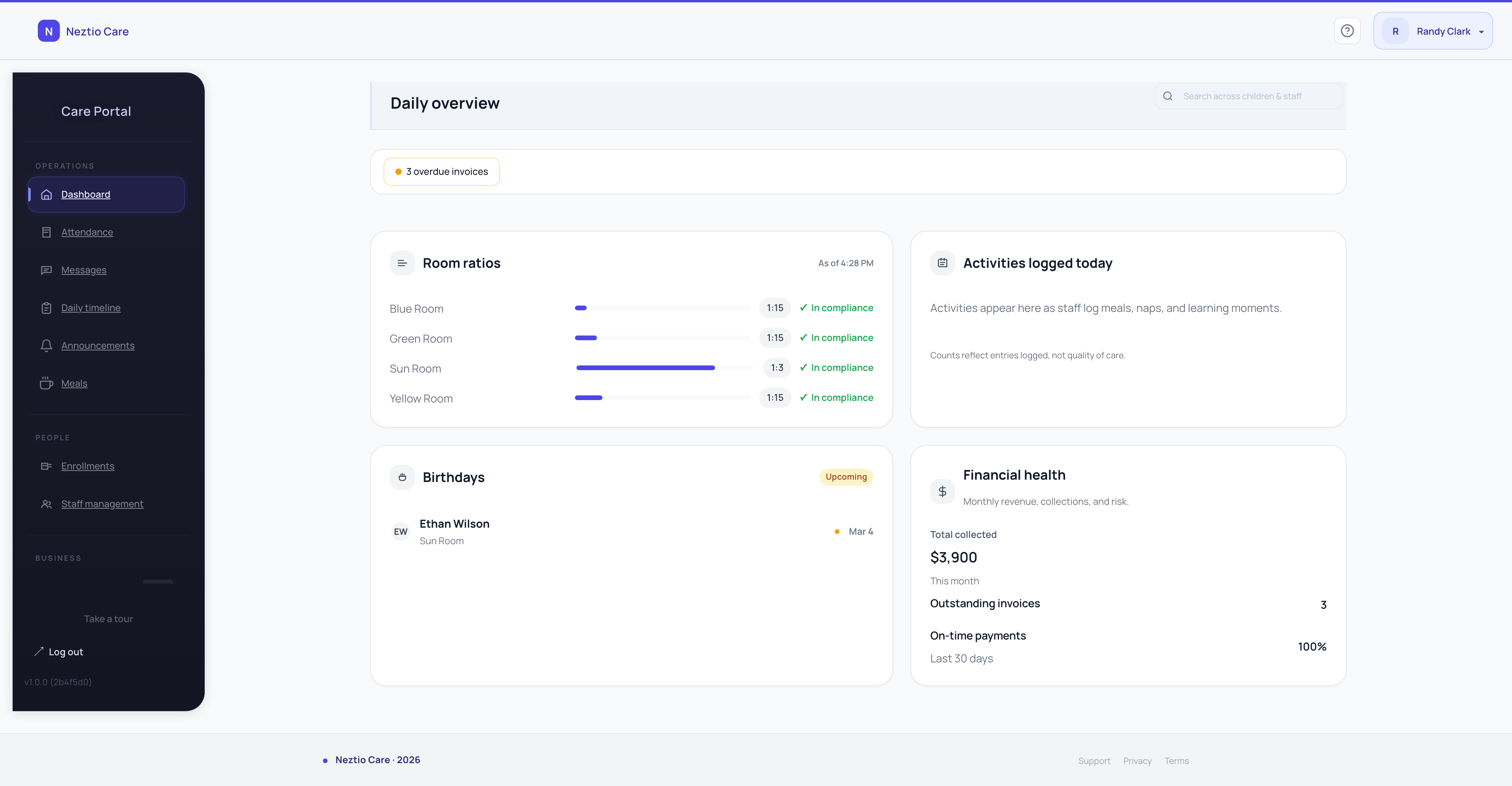
Estas proporciones se basan en los Alabama Minimum Standards for Day Care Centers. Cuando se agrupan niños de diferentes edades, la proporción de personal por niño debe seguir la edad del niño más pequeño del grupo si más del 20% de los niños pertenece a la categoría de edad más joven. Verifica siempre las proporciones actuales directamente con el DHR, ya que pueden actualizarse. Para ayudarte a planificar el personal de tu salón, prueba nuestra calculadora de proporciones.
Requisitos de calificación y capacitación del personal
Alabama tiene requisitos específicos para los directores y los trabajadores de cuidado infantil en las instalaciones con licencia.
Calificaciones del director
El director de un centro de cuidado infantil debe cumplir al menos una de las siguientes combinaciones de educación y experiencia:
Un diploma de escuela preparatoria o GED con al menos 120 horas reloj de capacitación en cuidado infantil y al menos 12 meses de experiencia laboral en cuidado infantil.
Una credencial de Child Development Associate (CDA) o un certificado de Certified Child Care Professional (CCP) con un diploma de escuela preparatoria o GED y al menos 12 meses de experiencia laboral.
Un título de asociado en desarrollo infantil o educación de la primera infancia con al menos 9 meses de experiencia laboral.
Una licenciatura en desarrollo infantil o educación de la primera infancia con al menos 6 meses de experiencia laboral.
Requisitos para los trabajadores de cuidado infantil
Edad mínima: Todos los trabajadores de cuidado infantil/maestros deben tener al menos 19 años; los auxiliares que asisten bajo supervisión deben tener al menos 16.
RCP y primeros auxilios: Al menos un miembro del personal con una certificación vigente de RCP y primeros auxilios para bebés y niños debe estar presente en el centro durante todas las horas de operación.
Prueba de tuberculosis: Todo el personal debe presentar comprobante de una prueba reciente de tuberculosis (TB) antes de comenzar a trabajar.
Capacitación de orientación: Todo el personal nuevo debe completar el programa Child Care Orientation Training (CCOT) del DHR.
Requisitos de capacitación anual
Directores: Deben completar al menos 24 horas reloj de capacitación en servicio cada año. Por separado, las 20 horas de administración y gestión más las 4 horas de cuidado infantil de calidad son requisitos de calificación de director que se cumplen una sola vez.
Trabajadores de cuidado infantil: Deben completar al menos 12 horas reloj de capacitación en servicio cada año. Los temas de capacitación incluyen el desarrollo infantil, la salud y la seguridad, y las actividades apropiadas para la edad.
Requisitos de verificación de antecedentes
Alabama exige verificaciones exhaustivas de antecedentes para todas las personas que trabajan en instalaciones de cuidado infantil con licencia. Estas verificaciones deben completarse antes de que el personal tenga acceso sin supervisión a los niños.
Quién debe ser verificado: Todos los miembros del personal que trabajan en una instalación de cuidado infantil con licencia, incluidos directores, cuidadores, suplentes y cualquier persona con acceso regular a los niños durante las horas de operación.
Verificación de antecedentes penales: Se requiere una verificación de antecedentes penales basada en huellas dactilares para todo el personal. Esto incluye búsquedas de antecedentes penales tanto estatales como federales (FBI).
Registro Central Estatal: Todo el personal debe recibir la autorización del Alabama State Central Registry on Child Abuse and Neglect (Registro Central Estatal de Abuso y Negligencia Infantil de Alabama). Esta verificación del registro confirma que la persona no tiene hallazgos comprobados de abuso o negligencia infantil.
Registro de delincuentes sexuales: La verificación del registro nacional de delincuentes sexuales forma parte del proceso integral de verificación de antecedentes.
Momento: Las verificaciones de antecedentes deben completarse antes de que una persona comience a trabajar con niños. No existe un periodo provisional ni de gracia para este requisito en Alabama.
Requisitos de instalaciones y espacio
Tu espacio físico debe cumplir con los Alabama Minimum Standards antes de que se pueda emitir una licencia. Los requisitos clave incluyen:
Espacio interior: Un mínimo de 32 pies cuadrados de espacio interior de actividad por niño. Los baños, las cocinas, las salas de aislamiento, las oficinas, los pasillos utilizados como corredores y las áreas de almacenamiento se excluyen de este cálculo.
Espacio exterior: Un mínimo de 60 pies cuadrados de área de juego al aire libre por niño. Para los centros con una capacidad autorizada de 60 niños o más, el espacio exterior debe dar cabida al menos a la mitad de la capacidad autorizada del centro a la vez.
Equipo apropiado para la edad: Todo el mobiliario y el equipo deben ser apropiados para la edad y el tamaño de los niños. Las cunas apiladas y las unidades de cunas múltiples están prohibidas.
Seguridad contra incendios: Se deben instalar y mantener detectores de humo y extintores de incendios en funcionamiento. Se debe establecer un plan de evacuación y cuidado de los niños en caso de incendio, tornado, accidente grave o corte de energía, y colocarlo en un lugar visible del centro.
Inspecciones de bomberos y de salud: Se deben presentar al DHR informes escritos de inspección del departamento de bomberos y del departamento de salud sin infracciones señaladas antes de que se emita una licencia.
Agrupación separada: Los niños menores de 2 años y medio deben agruparse por separado de los niños mayores de 2 años y medio.
Requisitos de salud y seguridad
Los Alabama Minimum Standards incluyen requisitos detallados de salud y seguridad que las operaciones con licencia deben seguir todos los días.
Registros de vacunación: Se requieren registros de vacunación actualizados para todos los niños inscritos, y deben mantenerse archivados y disponibles para inspección.
Administración de medicamentos: Los medicamentos solo pueden administrarse con autorización escrita de los padres. Toda administración de medicamentos debe documentarse con el nombre del medicamento, la dosis, la hora en que se dio y el miembro del personal que lo administró.
Procedimientos de emergencia: Se debe establecer un plan escrito de evacuación y cuidado de los niños en caso de incendio, tornado, accidente o lesión grave, o corte de energía, y colocarlo en un lugar visible del centro.
Lavado de manos: Tanto el personal como los niños deben seguir procedimientos adecuados de lavado de manos, incluidos antes y después de las comidas, después de los cambios de pañal y después de usar el baño.
Prácticas de sueño seguro: Para los bebés, Alabama exige el cumplimiento de las pautas de sueño seguro. Los bebés deben colocarse boca arriba para dormir en cunas aprobadas. Las cunas apiladas y las unidades de cunas múltiples están prohibidas.
Natación y chapoteo: Se requieren proporciones específicas de personal por niño durante las actividades de natación o chapoteo, que pueden diferir de las proporciones estándar, con precauciones de seguridad adicionales requeridas.
Requisitos de mantenimiento de registros
Las licencias de Alabama exigen que las operaciones de cuidado infantil mantengan registros detallados disponibles para su revisión durante las inspecciones. Mantener estos registros organizados y actualizados es esencial para seguir en cumplimiento.
Registros de asistencia: Registros diarios de entrada y salida de cada niño, con la hora registrada en cada entrada.
Registros de inscripción de los niños: Información completa de inscripción de cada niño, incluidos los contactos de emergencia, las personas autorizadas para recogerlo, la información médica, las alergias y los registros de vacunación.
Registros del personal: Expedientes de personal de cada empleado, incluidos los resultados de las verificaciones de antecedentes, la documentación de capacitación, las certificaciones de RCP y primeros auxilios, los resultados de las pruebas de tuberculosis y el historial laboral.
Informes de incidentes: Documentación escrita de cualquier lesión, accidente o incidente inusual que ocurra en la instalación.
Registros de simulacros de emergencia: Documentación de los simulacros de incendio, tornado y otras emergencias, incluidos la fecha, la hora, el número de niños y personal presentes, y el tiempo de evacuación.
Consejo: El software de gestión de cuidado infantil como Neztio puede ayudarte a mantener registros digitales de asistencia, inscripción, documentación del personal y facturación, lo que facilita mucho mantenerte organizado y listo para inspecciones en todo momento.
Alabama Quality STARS (QRIS)
Alabama Quality STARS es el Quality Rating and Improvement System (QRIS, Sistema de Calificación y Mejora de la Calidad) del estado, una colaboración entre el Alabama Department of Human Resources y el Alabama Department of Early Childhood Education (Departamento de Educación de la Primera Infancia de Alabama). El programa otorga niveles STAR a los programas de cuidado y educación de la primera infancia que cumplen con estándares de calidad definidos y basados en investigación.
Sistema de bloques de construcción: Alabama Quality STARS utiliza un sistema de calificación de cinco estrellas en el que los centros deben cumplir todos los requisitos de un nivel antes de pasar al siguiente. Un proveedor con 1 STAR cumple con los DHR Performance Standards (Estándares de Desempeño del DHR) para la licencia, mientras que las calificaciones más altas reflejan indicadores de calidad progresivamente mayores.
Aumentos en la tarifa de subsidio: Cada nivel STAR hace que los proveedores sean elegibles para un aumento del 2% sobre la tarifa base de subsidio de cuidado infantil. Un proveedor de 1 STAR recibe un 2% sobre la tarifa base, mientras que un proveedor de 5 STAR recibe un 10% sobre la tarifa base.
Herramientas de evaluación: Los programas deben cumplir con los requisitos de puntaje mínimo tanto en la Best Practice Rubric (Rúbrica de Mejores Prácticas) como en el modelo de puntuación CLASS para alcanzar los diferentes niveles STAR.
Opciones de participación: Los programas que solicitan Alabama Quality STARS pueden elegir entre tres vías de participación: Assessment (Evaluación), Guided Support (Apoyo Guiado) o Enhancement (Mejora).
Programa voluntario: Alabama Quality STARS es voluntario, pero participar y obtener calificaciones más altas puede ayudarte a atraer familias, aumentar los ingresos por subsidios y demostrar tu compromiso con el cuidado de calidad.
Inspecciones y cumplimiento continuo
Una vez con licencia, tu operación estará sujeta a un monitoreo continuo por parte del Alabama Department of Human Resources.
Renovación de licencia: Las licencias de cuidado infantil de Alabama deben renovarse cada dos años. El proceso de renovación incluye inspecciones actualizadas y la verificación de que se siguen cumpliendo todos los requisitos.
Inspecciones continuas: El DHR realiza inspecciones de las operaciones de cuidado infantil con licencia para verificar el cumplimiento de los estándares mínimos. Las inspecciones pueden abarcar cualquier aspecto de tu operación, incluidas las proporciones, la seguridad, la documentación y las calificaciones del personal.
Acción correctiva: Si se encuentran deficiencias durante una inspección, se le da a la operación un plazo determinado para corregir los problemas. El plazo depende de la gravedad de la deficiencia.
Acciones adversas: Las infracciones repetidas o graves pueden dar lugar a acciones adversas, incluidos el período de prueba, la suspensión de la licencia o la revocación de la licencia.
Recursos
Estos son recursos clave para los proveedores de cuidado infantil de Alabama:
Alabama DHR Child Care Services Division: El sitio web oficial de la agencia estatal para las licencias de cuidado infantil, que incluye los estándares mínimos, la información de solicitud y los datos de contacto. Teléfono: (866) 528-1694.
Alabama Quality STARS: El Sistema de Calificación y Mejora de la Calidad del estado. Visita alabamaqualitystars.org para conocer las pautas del programa, las opciones de participación y la información sobre incentivos.
Alabama Childcare Facts: Un sitio de recursos con información sobre los estándares mínimos, las oportunidades de capacitación y los recursos para proveedores en alabamachildcarefacts.com.
Child Care Resource and Referral agencies: Agencias locales que brindan capacitación, asistencia técnica y apoyo a los proveedores de cuidado infantil en todo Alabama.
Mantente en cumplimiento con las herramientas adecuadas
Cumplir con los requisitos de licencia de Alabama es solo el comienzo. Mantenerse en cumplimiento día tras día requiere registros organizados, documentación constante y una comunicación clara con las familias y el personal. La mejor manera de prepararte para una inspección es operar cada día como si pudiera ocurrir una.
Descubre cómo Neztio ayuda a los centros de cuidado infantil de Alabama a gestionar la asistencia, la facturación, los registros del personal y la comunicación con los padres para que siempre estés listo para una inspección.
Relacionado
Lista de verificación de licencias de cuidado infantil: lo que todo centro nuevo necesita
Relacionado
Cómo abrir una guardería: guía paso a paso
Glossary terms in this article
Licencia
Permiso emitido por el estado para operar una instalación de cuidado infantil, que requiere el cumplimiento de los estándares de salud, seguridad y personal.
Proporción de personal por niño
El número requerido de personal calificado por grupo de niños, establecido por las regulaciones estatales de licencia según la edad.
Verificación de antecedentes
Verificaciones de antecedentes penales y de registros requeridas para todos los trabajadores de cuidado infantil conforme a la CCDBG Act of 2014.
Tamaño del grupo
El número máximo de niños permitido en un solo salón o grupo de cuidado, determinado por las reglas estatales de licencia.
Acreditación
Certificación de calidad voluntaria de organizaciones como NAEYC o NAC que reconoce a los programas que superan los estándares mínimos de licencia.