Requisitos de licencia de cuidado infantil en Arizona: guía completa
Arizona es uno de los estados de más rápido crecimiento del país, y la demanda de cuidado infantil de calidad sigue aumentando. Ya sea que estés abriendo un nuevo centro en Phoenix, Tucson o en cualquier lugar intermedio, esta guía cubre lo que necesitas saber para obtener y mantener una licencia de cuidado infantil en Arizona.
Nota: Los requisitos de licencia cambian con frecuencia. Arizona actualizó sus reglas para las instalaciones de cuidado infantil con vigencia a partir de agosto de 2025. Esta guía refleja las regulaciones vigentes a principios de 2026. Verifica siempre los requisitos actuales directamente con el Arizona Department of Health Services antes de tomar decisiones de cumplimiento.
Panorama general: ¿quién regula el cuidado infantil en Arizona?
En Arizona, las licencias de cuidado infantil son administradas por el Arizona Department of Health Services (ADHS, Departamento de Servicios de Salud de Arizona), específicamente a través de su Bureau of Child Care Licensing (BCCL, Oficina de Licencias de Cuidado Infantil). El BCCL desarrolla y hace cumplir los estándares para proveedores, procesa las solicitudes, realiza inspecciones y gestiona las acciones de cumplimiento para todas las operaciones de cuidado infantil reguladas en el estado.
Arizona exige licencia para cualquier persona o entidad que brinde cuidado regular y remunerado a cinco o más niños no emparentados. Las reglas están codificadas en el Arizona Administrative Code, Title 9, Chapter 5 (AAC R9-5). El tipo de licencia que necesitas depende del entorno:
Centro de cuidado infantil: Una instalación comercial (no el hogar del proveedor) que brinda cuidado a niños. Este es el tipo de licencia más común para los negocios de cuidado infantil en Arizona.
Hogar grupal de cuidado infantil: Una operación en el hogar que brinda cuidado a entre cinco y diez niños. Los hogares grupales tienen un conjunto separado de reglas y requisitos bajo el ADHS.
Hogar de cuidado infantil familiar certificado por el DES: Una operación en el hogar certificada a través del Arizona Department of Economic Security (DES, Departamento de Seguridad Económica de Arizona) en lugar del ADHS. Estos proveedores cuidan hasta cuatro niños (además de los propios del proveedor) y siguen los requisitos de certificación del DES.
Importante
Arizona actualizó sus reglas para las instalaciones de cuidado infantil con vigencia a partir del 3 de agosto de 2025, con cambios en las horas de capacitación, los planos de las instalaciones, las notificaciones de cierre y la seguridad de las cunas de bebés. Los programas tienen hasta agosto de 2026 para cumplir algunos de los nuevos requisitos. Consulta siempre el sitio web del ADHS para conocer la versión más reciente de las reglas.
Cómo solicitar una licencia de cuidado infantil en Arizona
El proceso de solicitud de licencia de cuidado infantil en Arizona implica varios pasos. Considera que el proceso puede tardar de varias semanas a varios meses, según la rapidez con la que puedas cumplir todos los requisitos.
- 1
Obtén una Level One Fingerprint Clearance Card
Antes de poder solicitar, todos los propietarios y operadores deben obtener una Level One Fingerprint Clearance Card (FCC, Tarjeta de Autorización de Huellas Dactilares de Nivel Uno) válida emitida por el Arizona Department of Public Safety (DPS, Departamento de Seguridad Pública de Arizona). Esto implica presentar huellas dactilares y aprobar una verificación de antecedentes penales a nivel estatal y del FBI. La tarifa actual del DPS es de $67.
- 2
Presenta tu solicitud al ADHS
Presenta una solicitud completa al Bureau of Child Care Licensing. Deberás incluir tu tarjeta de autorización de huellas dactilares, los planos del sitio de la instalación y los planos del edificio dibujados a escala. A partir de la actualización de reglas de 2025, ya no se requiere el sello de un arquitecto en los planos; pueden ser elaborados por un arquitecto, un dibujante o un contratista.
- 3
Completa las verificaciones de antecedentes de todo el personal
Cada miembro del personal, voluntario y cualquier miembro del hogar de 18 años o más que vaya a estar presente en la instalación debe obtener su propia Level One Fingerprint Clearance Card antes de comenzar a trabajar. Las verificaciones de antecedentes se procesan a través del DPS a nivel estatal y nacional (FBI).
- 4
Aprueba la inspección inicial
Un inspector de licencias del ADHS realizará una inspección en el sitio para verificar que tu instalación cumple todos los estándares de espacio, seguridad, equipo, personal y documentación. Cualquier deficiencia debe corregirse antes de que se pueda emitir tu licencia.
- 5
Recibe tu licencia
Una vez que hayas cumplido todos los requisitos y aprobado tu inspección, el ADHS emitirá la licencia de tu instalación de cuidado infantil. La licencia debe colocarse en un lugar visible para los padres en tu instalación.
Requisitos de proporción de personal por niño en Arizona
Arizona establece proporciones específicas de personal por niño según las edades de los niños bajo cuidado. Estas proporciones están definidas en AAC R9-5-404 y deben mantenerse en todo momento cuando hay niños presentes. Para los grupos de edades mixtas, la proporción se determina por la edad del niño más pequeño del grupo.
| Grupo de edad | Personal : Niños |
|---|---|
| Bebés (menores de 1 año) | 1:5 |
| Niños de 1 año | 1:6 |
| Niños de 2 años | 1:8 |
| Niños de 3 años | 1:13 |
| Niños de 4 años | 1:15 |
| Niños de 5 años (aún no en edad escolar) | 1:20 |
| Niños en edad escolar | 1:20 |
Cuando hay dos miembros del personal presentes con bebés, el máximo es de 11 niños. Para los niños de 1 año con dos miembros del personal, el máximo es de 13 niños. Además, cuando hay seis o más niños inscritos presentes, los bebés no pueden colocarse para supervisión junto con niños que no sean bebés.
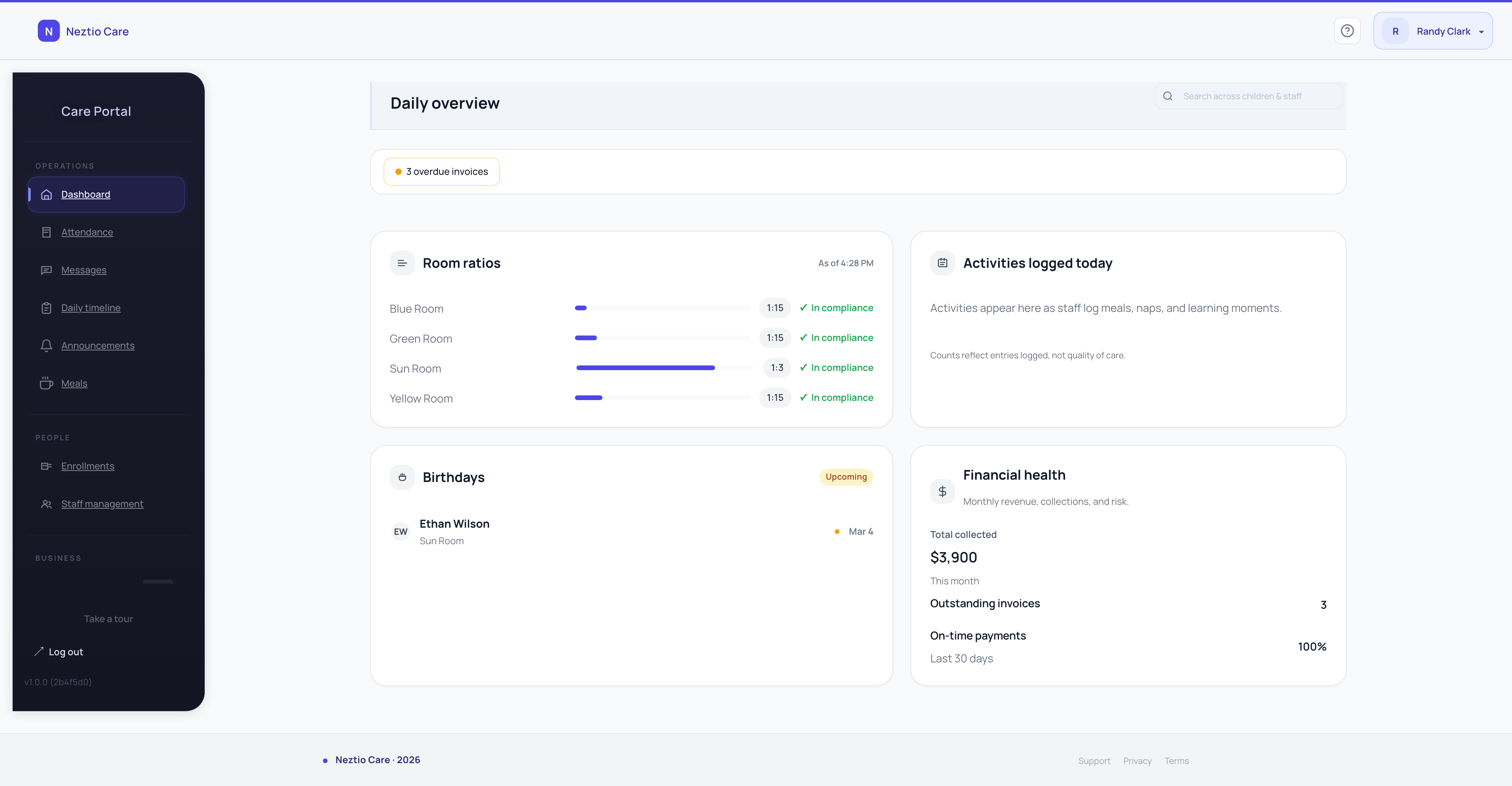
Estas proporciones provienen de AAC R9-5-404. Verifica las proporciones actuales con el ADHS, ya que pueden actualizarse. Para ayudarte a planificar el personal de tu salón, prueba nuestra calculadora de proporciones.
Requisitos de calificación y capacitación del personal
Arizona tiene requisitos específicos para los directores y el personal que trabajan en instalaciones de cuidado infantil con licencia, regidos por AAC R9-5, Article 4.
Calificaciones del director
Edad mínima: Los directores de la instalación deben tener al menos 21 años.
Educación y experiencia: Los directores deben cumplir una de varias combinaciones que califican. Las opciones incluyen 24 meses de experiencia en cuidado infantil con un diploma de escuela preparatoria más 6 horas de crédito en la primera infancia; una credencial N.A.C., C.D.A. o C.C.P. con 18 meses de experiencia; 24 horas de crédito universitario, incluidas 6 en desarrollo de la primera infancia; o un título de asociado o una licenciatura en la primera infancia o un campo estrechamente relacionado con experiencia relevante.
Requisitos para todo el personal
Tarjeta de autorización de huellas dactilares: Cada miembro del personal debe tener una Level One Fingerprint Clearance Card válida del DPS antes de comenzar a trabajar. Esto no es negociable y no hay periodo de gracia.
RCP y primeros auxilios: Todo el personal debe obtener y mantener una certificación vigente en RCP pediátrica y primeros auxilios (específica para bebés y niños). La capacitación debe incluir un componente de demostración práctica. Se permite la capacitación de RCP en línea si incluye una demostración virtual.
Horas de capacitación anual: A partir de la actualización de reglas de agosto de 2025, el personal debe completar 24 horas de capacitación al año (un aumento respecto al requisito anterior). Los programas tienen hasta agosto de 2026 para cumplir el nuevo requisito anual de 24 horas.
Divulgación de abuso y negligencia: Todos los solicitantes deben divulgar si han tenido una acusación comprobada de abuso o negligencia infantil o de adultos presentada ante una agencia de bienestar infantil o de bienestar de adultos, independientemente de si la acusación derivó en cargos penales.
Requisitos de verificación de antecedentes
Arizona utiliza un sistema centralizado de tarjetas de autorización de huellas dactilares para las verificaciones de antecedentes de cuidado infantil, administrado por el Arizona Department of Public Safety (DPS).
Quién debe ser verificado: Todos los propietarios, operadores, miembros del personal, voluntarios y cualquier miembro del hogar de 18 años o más que vaya a estar presente en la instalación durante las horas de operación.
Level One Fingerprint Clearance Card: Arizona requiere una FCC de Nivel Uno, que es el tipo de tarjeta más completo. Las huellas dactilares se presentan al DPS, que realiza verificaciones de antecedentes penales a nivel estatal y nacional (FBI).
Delitos excluyentes: El DPS compara los antecedentes penales con una lista de delitos excluyentes que descalifican automáticamente a una persona, incluidos agresión, robo, delitos de drogas y muchos otros. Las personas con delitos excluyentes pueden solicitar una Good Cause Exception (Excepción por Causa Justificada) a través del Arizona Board of Fingerprinting (Junta de Huellas Dactilares de Arizona).
Costo: La tarifa actual del DPS por una tarjeta de autorización de huellas dactilares es de $67 (o $65 para voluntarios).
Momento: La tarjeta de autorización de huellas dactilares debe obtenerse antes de que una persona comience a trabajar o tenga contacto con niños. No existe una autorización provisional ni temporal.
Requisitos de instalaciones y espacio
Tu espacio físico debe cumplir con los estándares del ADHS antes de que se pueda emitir una licencia. Los requisitos clave incluyen:
Espacio interior (bebés y niños de 1 año): Un mínimo de 35 pies cuadrados de espacio interior de actividad por niño para bebés y niños de 1 año.
Espacio interior (todas las demás edades): Un mínimo de 25 pies cuadrados de espacio interior de actividad por niño para los niños que no sean bebés ni de 1 año.
Espacio exterior: Un mínimo de 75 pies cuadrados de área de juego al aire libre por niño que use el espacio en un momento dado. El área al aire libre debe incluir sombra para cada niño inscrito y estar cercada por una barda de al menos 4 pies de altura con una puerta con pestillo.
Planos del sitio y del edificio: Al solicitar, debes presentar los planos del sitio y los planos del edificio dibujados a escala. A partir de la actualización de reglas de 2025, estos ya no requieren el sello de un arquitecto y pueden ser elaborados por un arquitecto, un dibujante o un contratista.
Incendios y seguridad: Se deben instalar y mantener detectores de humo y extintores de incendios en funcionamiento. Se requieren simulacros de incendio periódicos que deben documentarse. Tu instalación debe tener un plan de evacuación colocado a la vista.
Seguridad de las cunas de bebés: A partir de la actualización de reglas de 2025, las cunas de bebés ya no pueden contener cobijas. Solo se permite en la cuna una sábana ajustable limpia, desinfectada y del tamaño de la cuna.
Requisitos de salud y seguridad
El Arizona Administrative Code incluye requisitos detallados de salud y seguridad que las instalaciones de cuidado infantil con licencia deben seguir todos los días.
Registros de vacunación: Se requieren registros de vacunación actualizados para todos los niños inscritos. Los registros deben mantenerse archivados y disponibles para inspección.
Administración de medicamentos: Los medicamentos solo pueden administrarse con autorización escrita de los padres. Toda administración de medicamentos debe documentarse, incluidos el nombre del medicamento, la dosis, la hora en que se dio y el miembro del personal que lo administró.
Lavado de manos: Tanto el personal como los niños deben seguir procedimientos adecuados de lavado de manos, incluidos antes y después de las comidas, después de los cambios de pañal, después de usar el baño y después del juego al aire libre.
Prácticas de sueño seguro: Los bebés deben colocarse boca arriba para dormir en cunas aprobadas. Según la actualización de reglas de 2025, solo se permite una sábana ajustable en la cuna; sin cobijas, almohadas, protectores acolchados ni juguetes.
Notificaciones de cierre: A partir de la actualización de reglas de 2025, los proveedores deben notificar al ADHS dentro de las 24 horas posteriores a un cierre del negocio, ya sea planificado o imprevisto.
Procedimientos de emergencia: Los procedimientos de emergencia escritos deben colocarse a la vista y practicarse con regularidad. El personal debe saber qué hacer en caso de incendio, clima severo, emergencia médica u otra crisis.
Requisitos de mantenimiento de registros
Las licencias de Arizona exigen que las operaciones de cuidado infantil mantengan registros detallados disponibles para su revisión durante las inspecciones. Mantener estos registros organizados y actualizados es una de las cosas más importantes que puedes hacer para seguir en cumplimiento.
Registros de asistencia: Registros diarios de entrada y salida de cada niño, con la hora registrada en cada entrada.
Registros de inscripción de los niños: Información completa de inscripción de cada niño, incluidos los contactos de emergencia, las personas autorizadas para recogerlo, la información médica, las alergias y los registros de vacunación.
Registros del personal: Expedientes de personal de cada empleado, incluidos la documentación de la tarjeta de autorización de huellas dactilares, los registros de capacitación, las certificaciones y el historial laboral.
Informes de incidentes: Documentación escrita de cualquier lesión, accidente o incidente inusual que ocurra en la instalación, incluidos los detalles de lo sucedido y las acciones que se tomaron.
Registros de administración de medicamentos: Registros de todos los medicamentos administrados a los niños, incluidos los formularios de autorización de los padres.
Consejo: El software de gestión de cuidado infantil como Neztio puede ayudarte a mantener registros digitales de asistencia, documentación del personal, facturación y comunicación con los padres, lo que facilita mucho mantenerte organizado y listo para inspecciones en todo momento.
Inspecciones y cumplimiento
Una vez con licencia, tu operación estará sujeta a un monitoreo continuo por parte del ADHS Bureau of Child Care Licensing.
Inspecciones sin previo aviso: El ADHS realiza inspecciones sin previo aviso de las instalaciones de cuidado infantil con licencia durante las horas normales de operación. Estas inspecciones pueden ocurrir en cualquier momento y pueden abarcar cualquier aspecto de tu operación.
Acción correctiva: Si se encuentran deficiencias durante una inspección, se le da a la operación un plazo determinado para corregir los problemas. El plazo depende de la gravedad de la deficiencia.
Acciones adversas: Las infracciones repetidas o graves pueden dar lugar a acciones adversas, incluidos el período de prueba, la suspensión de la licencia, la revocación de la licencia o sanciones monetarias. Las infracciones que representan una amenaza inmediata para los niños pueden dar lugar a acciones de emergencia.
Quality First: el sistema de calificación de calidad de Arizona
Quality First es el Quality Improvement and Rating System (QIRS, Sistema de Mejora y Calificación de la Calidad) voluntario de Arizona, financiado y administrado por First Things First, la agencia de la primera infancia del estado. Aunque no es obligatorio para la licencia, participar en Quality First puede ayudar a tu programa a mejorar la calidad y atraer familias.
Calificaciones por estrellas: Quality First asigna una calificación de 1 a 5 estrellas con base en observaciones del programa. Los estándares de calidad se basan en lo que la investigación demuestra que es importante en el cuidado y la educación tempranos, incluidas las interacciones entre adultos y niños, los entornos de aprendizaje y las calificaciones del personal.
Participación gratuita: La participación es gratuita para los centros de cuidado infantil, hogares y programas preescolares regulados. First Things First ofrece desarrollo profesional, asesoría, asistencia especializada y financiamiento para ayudar a los programas a mejorar.
Alcance: Más de 1,400 programas regulados de cuidado infantil y preescolar en Arizona tienen calificación por estrellas a través de Quality First, y más de 1,100 reciben apoyo para la mejora de la calidad.
Recursos
Estos son recursos clave para los proveedores de cuidado infantil de Arizona:
ADHS Bureau of Child Care Licensing: El sitio web oficial de la agencia estatal para las licencias de cuidado infantil, que incluye las reglas, los formularios de solicitud y los recursos para proveedores (azdhs.gov).
Arizona DPS Fingerprint Clearance Card: Información y solicitud para la Level One Fingerprint Clearance Card requerida (azdps.gov).
Quality First / First Things First: El sistema voluntario de calificación y mejora de la calidad de Arizona para los programas de cuidado y educación tempranos (qualityfirstaz.com).
Arizona Child Care Resource & Referral (CCR&R): Brinda capacitación, asistencia técnica y apoyo a los proveedores de cuidado infantil en todo Arizona (azccrr.com).
Arizona Department of Economic Security (DES): Supervisa los hogares de cuidado infantil familiar certificados por el DES y los programas de subsidio de cuidado infantil (des.az.gov).
Mantente en cumplimiento con las herramientas adecuadas
Cumplir con los requisitos de licencia de Arizona es solo el comienzo. Mantenerse en cumplimiento día tras día requiere registros organizados, documentación constante y una comunicación clara con las familias y el personal. La mejor manera de prepararte para una inspección sin previo aviso del ADHS es operar cada día como si pudiera ocurrir una.
Descubre cómo Neztio ayuda a los centros de cuidado infantil de Arizona a gestionar la asistencia, la facturación, la gestión del personal y la comunicación con los padres para que siempre estés listo para una inspección.
Relacionado
Lista de verificación de licencias de cuidado infantil: lo que todo centro nuevo necesita
Relacionado
Cómo abrir una guardería: guía paso a paso
Glossary terms in this article
Licencia
Permiso emitido por el estado para operar una instalación de cuidado infantil, que requiere el cumplimiento de los estándares de salud, seguridad y personal.
Proporción de personal por niño
El número requerido de personal calificado por grupo de niños, establecido por las regulaciones estatales de licencia según la edad.
Verificación de antecedentes
Verificaciones de antecedentes penales y de registros requeridas para todos los trabajadores de cuidado infantil conforme a la CCDBG Act of 2014.
Tamaño del grupo
El número máximo de niños permitido en un solo salón o grupo de cuidado, determinado por las reglas estatales de licencia.
Acreditación
Certificación de calidad voluntaria de organizaciones como NAEYC o NAC que reconoce a los programas que superan los estándares mínimos de licencia.