Childcare Insurance: What Coverage Your Center Needs
Insurance is one of the most important investments you will make as a childcare operator. The right coverage protects your business, your staff, and the families you serve. This guide walks through the key policies every center should consider.
Why insurance is non-negotiable
Every state licensing agency requires childcare centers to carry some form of liability insurance as a condition of licensure. Beyond the legal requirement, insurance protects your center from financial ruin if a child is injured, a staff member is hurt on the job, or your facility is damaged.
Landlords and property owners also typically require proof of insurance before signing a commercial lease. If your center accepts children receiving state childcare subsidies, the subsidy program may have its own insurance requirements as well.
Important
Insurance requirements vary by state and by the type of childcare program you operate (center-based, family home, school-age). Always check your state licensing standards and consult with an insurance agent who understands childcare to determine your specific obligations.
General liability insurance
General liability insurance is the most fundamental policy for any childcare center. It covers claims of bodily injury and property damage that occur on your premises or as a result of your operations. This is the policy that responds when a child is injured during play, a visitor slips on a wet floor, or a parent's property is damaged at your facility.
Common coverage limits: Many states require a minimum of $1 million per occurrence and $2 million aggregate. Some landlords or licensing agencies may require higher limits.
What it covers: Bodily injury to children or visitors, property damage claims, legal defense costs, and medical payments for minor injuries regardless of fault.
What it typically does not cover: Employee injuries (covered by workers' compensation), professional negligence claims, intentional acts, or damage to your own property.
Professional liability (errors and omissions)
Professional liability insurance, sometimes called errors and omissions (E&O) coverage, protects against claims arising from the professional services you provide. In childcare, this means allegations of negligence, improper supervision, failure to follow safety protocols, or failure to report suspected abuse or neglect.
Why it matters: Childcare providers have a duty of care. If a family alleges that your staff failed to properly supervise a child and that failure led to injury, professional liability coverage responds to that claim.
Bundled vs. standalone: Some insurers bundle professional liability with general liability in a single childcare policy. Others offer it as a separate endorsement. Ask your agent which structure your policy uses so you understand what is covered.
Coverage scope: Typically covers legal defense costs, settlements, and judgments arising from claims of professional negligence in the delivery of childcare services.
Workers' compensation
Workers' compensation insurance is required in nearly every state for businesses with employees. It covers medical expenses and lost wages when an employee is injured or becomes ill as a result of their work. Childcare is a physically demanding job that involves lifting children, bending, kneeling, and spending time outdoors, so workplace injuries do occur.
State requirements: Most states require workers' compensation for any employer with one or more employees. A few states set the threshold at two to five employees. Texas is the only state where it is generally optional for private employers, though even there it is strongly recommended.
What it covers: Medical treatment, rehabilitation, and a portion of lost wages for employees who are hurt on the job. It also covers employer liability if an employee sues over a workplace injury.
Rates: Premiums are based on your state, the classification code for your business (childcare has its own code), your payroll, and your claims history. A strong safety record can lower your rates over time.
Commercial property insurance
Commercial property insurance covers damage to your facility, furniture, equipment, and supplies. Whether you own your building or lease your space, you need coverage for the physical assets your center relies on to operate.
Covered perils: Fire, theft, vandalism, certain weather events, and water damage are commonly covered. Review your policy to understand which perils are included and which require separate coverage (such as flood or earthquake).
Business personal property: Even if you lease your space, you likely own the furniture, toys, computers, kitchen equipment, and supplies inside. Property insurance covers these items if they are damaged or stolen.
Business interruption: Some property policies include or offer an add-on for business interruption coverage, which replaces lost income if your center cannot operate due to a covered event like a fire.
Commercial auto insurance
If your center owns or operates vehicles for transporting children to and from school, on field trips, or for any other purpose, commercial auto insurance is required. Transporting children introduces significant liability, and your personal auto policy will not cover vehicles used for business purposes.
Owned vehicles: Covers liability and physical damage for vehicles titled to your business. Make sure coverage limits are sufficient given the number of passengers you transport.
Hired and non-owned auto coverage: If employees use their personal vehicles for center business (such as running errands or transporting supplies), this coverage provides liability protection for the center. It does not replace the employee's personal auto insurance but fills gaps.
Driver qualifications: Insurers typically require that all drivers meet minimum age and driving record standards. Many states also require specific driver qualifications for anyone transporting children in a childcare vehicle.
Umbrella and excess liability insurance
An umbrella or excess liability policy provides additional coverage above the limits of your primary policies (general liability, auto, and employer's liability). If a claim exceeds the limits of your underlying policy, the umbrella policy covers the difference up to its own limit.
Why it matters for childcare: Claims involving injuries to children can result in significant settlements or judgments. An umbrella policy provides a financial safety net when a serious claim exceeds your primary coverage limits.
Cost-effective coverage: Umbrella policies are generally affordable relative to the amount of additional coverage they provide. A $1 million umbrella policy is often a modest annual expense compared to the protection it offers.
Requirements: Insurers typically require you to carry minimum underlying coverage limits before they will issue an umbrella policy. Your agent can advise on the specific thresholds.
Abuse and molestation coverage
This is a specialized coverage that addresses claims of abuse or molestation by staff, volunteers, or other individuals associated with the center. Given that childcare centers serve a vulnerable population, this coverage is an important part of a comprehensive insurance program.
How it is structured: Some general liability policies include abuse and molestation coverage as a standard or optional endorsement. Others exclude it entirely, requiring a separate standalone policy. Review your general liability policy carefully to understand whether this coverage is included.
What it covers: Legal defense costs, settlements, and judgments arising from allegations of abuse or molestation by anyone connected to your center. Some policies also cover counseling costs for affected individuals.
Prevention is primary: Insurance does not replace prevention. Thorough background checks, open-door classroom policies, staff training on appropriate interactions, and proper supervision ratios are all essential safeguards.
How to shop for childcare insurance
Not all insurance agents or carriers understand the unique risks of childcare operations. Working with a specialist can make a meaningful difference in the quality and appropriateness of your coverage.
Find a specialist: Look for an insurance agent or broker who specializes in childcare, education, or nonprofit organizations. They will understand the specific coverage you need and the common exclusions to watch for.
Get multiple quotes: Request quotes from at least three carriers so you can compare coverage, limits, exclusions, and premiums. The cheapest policy is not always the best value if it has significant coverage gaps.
Read the exclusions: Every policy has exclusions, which are situations the policy will not cover. Pay close attention to exclusions related to abuse and molestation, transportation, swimming or water activities, and animals.
Ask about discounts: Many carriers offer premium discounts for safety measures such as accreditation (NAEYC, NAC), staff CPR and First Aid training, security cameras, fenced outdoor areas, and documented safety policies.
Reducing your risk (and your premiums)
Insurance carriers look at your risk profile when setting premiums. Centers with strong safety practices, proper documentation, and a clean claims history typically pay less. Beyond cost savings, these practices simply make your center safer for everyone.
Comprehensive background checks: Run criminal history, sex offender registry, and child abuse registry checks on all staff before they begin working with children. This is required by the CCDBG Act and is a baseline expectation for insurers.
Written safety policies: Maintain and enforce written policies covering supervision, playground safety, field trips, illness exclusion, medication administration, and emergency procedures.
Incident documentation: Document every incident, no matter how minor. Written reports that include the date, time, what happened, who was involved, and what action was taken create a clear record that protects you if a claim is filed later.
Regular staff training: Ongoing training on safety protocols, supervision techniques, and recognizing hazards helps prevent incidents. Many states require annual professional development hours for childcare staff.
Proper supervision ratios: Maintaining appropriate staff-to-child ratios at all times, including during transitions and outdoor play, is one of the most effective ways to prevent injuries.
Facility maintenance: Regular inspections of playground equipment, indoor spaces, and safety systems (fire extinguishers, smoke detectors, first aid kits) help prevent incidents and demonstrate due diligence.
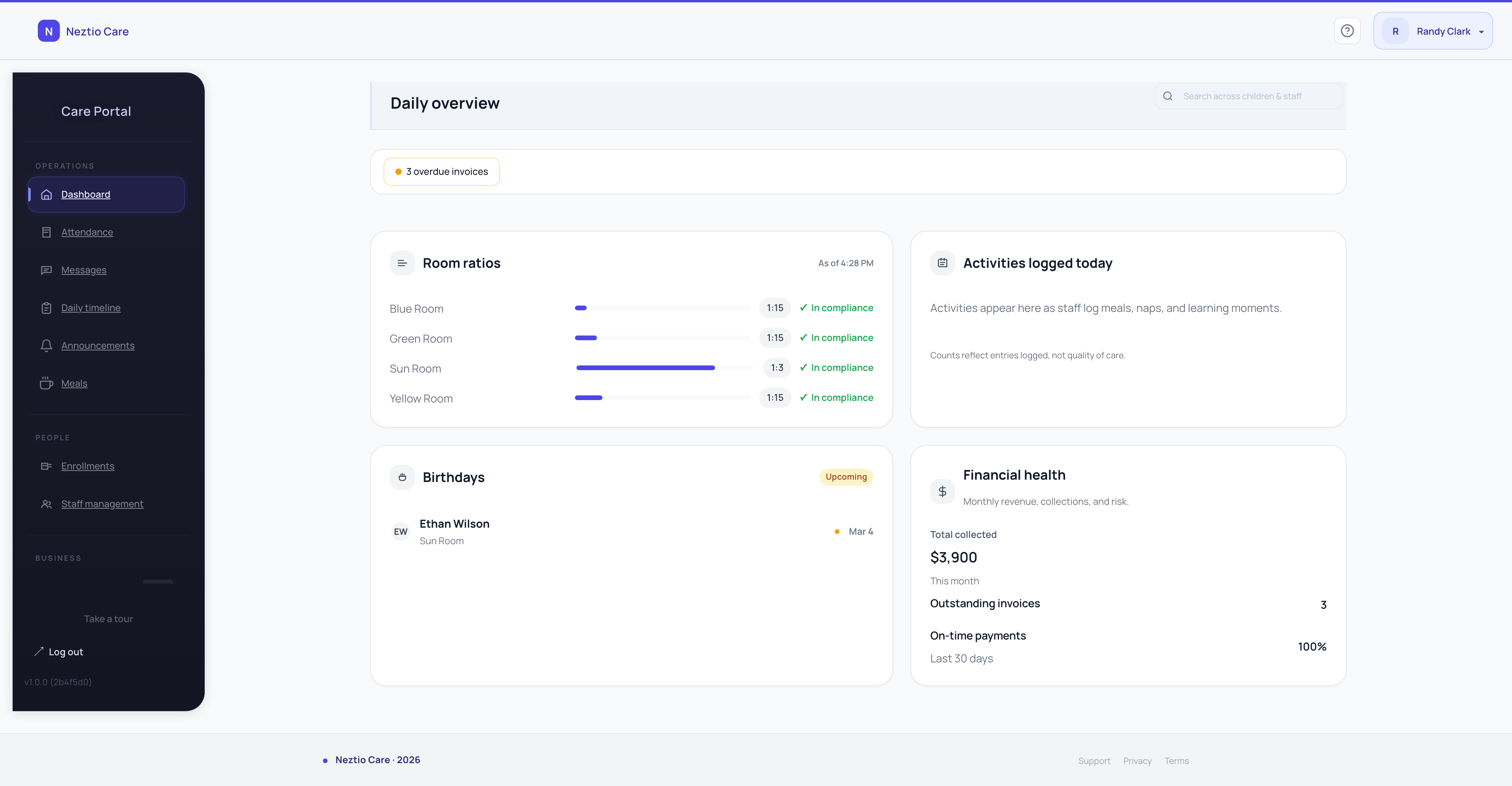
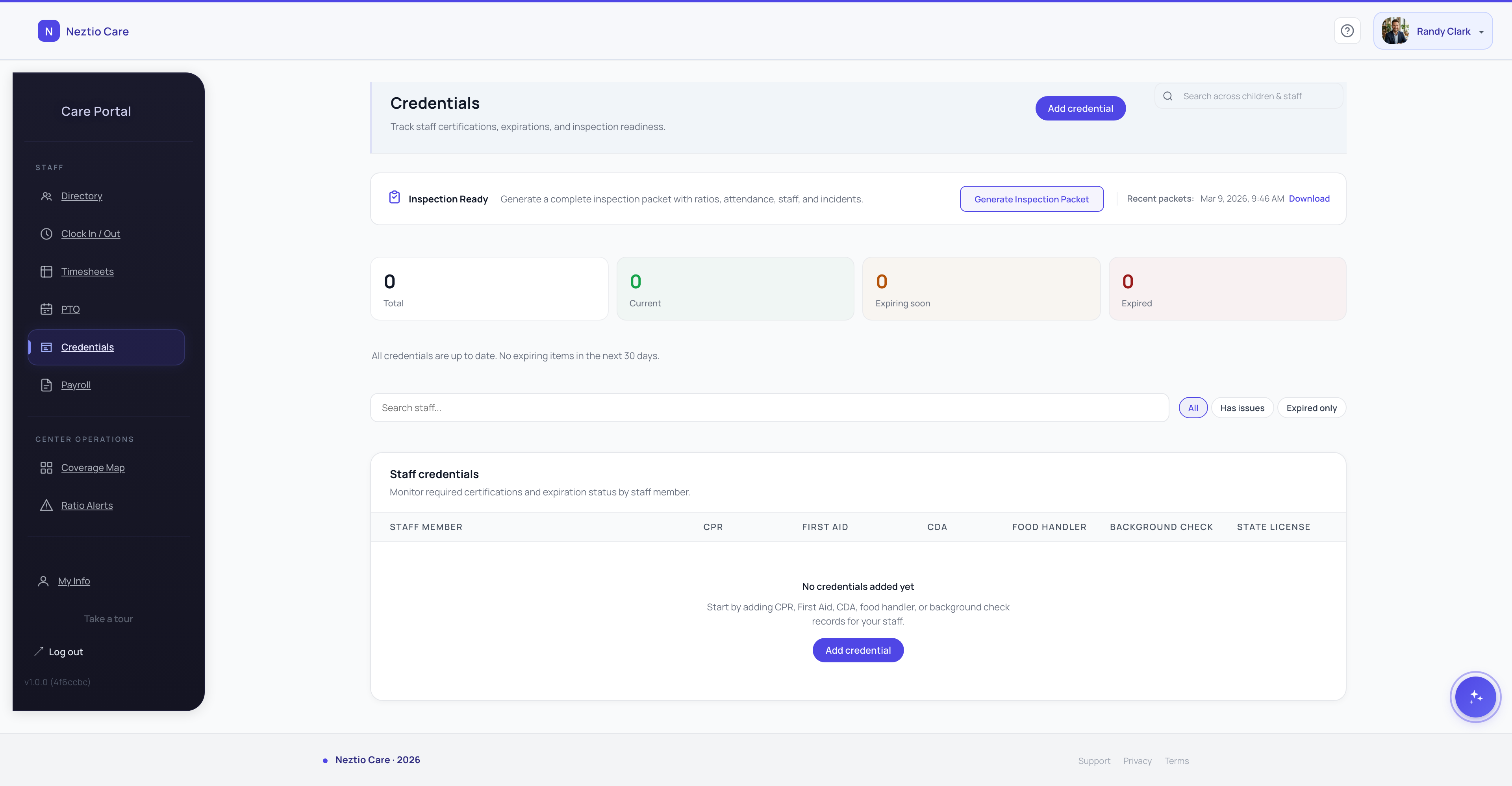
Tip: Childcare management software like Neztio can help you maintain digital records for attendance, incident reports, staff documentation, and enrollment information. Having organized, accessible records strengthens your position if a claim is filed and demonstrates to insurers that you take risk management seriously.
The bottom line
Insurance is not just a licensing checkbox. It is the financial safety net that allows you to focus on what matters most: providing safe, high-quality care. Work with a knowledgeable agent, understand your coverage, and invest in the safety practices that protect your children, your staff, and your business.
Good documentation and organized record-keeping are your best allies when it comes to both preventing incidents and supporting insurance claims. See how Neztio helps centers manage attendance, daily reports, incident documentation, and more so you can stay organized and focus on the children in your care.
Related
Childcare Licensing Checklist: What Every New Center Needs
Related
Starting a Daycare: A Step-by-Step Guide
Glossary terms in this article
Licensing
State-issued permission to operate a childcare facility, requiring compliance with health, safety, and staffing standards.
Enrollment
The process of registering a child for care, including collecting required records, emergency contacts, and authorized pickups.
Staff-to-Child Ratio
The required number of qualified staff per group of children, set by state licensing regulations based on age.
Incident Report
A written record documenting any injury, accident, or unusual event at a childcare center, including details and actions taken.