QRIS and Quality Improvement: How to Raise Your Childcare Program's Rating
Quality Rating and Improvement Systems help childcare programs measure, improve, and communicate their quality to families. Here is how QRIS works, what assessors look for, and practical steps you can take to raise your program's rating.
What is QRIS?
QRIS stands for Quality Rating and Improvement System. These are state-run frameworks designed to assess, improve, and communicate the quality of early care and education programs. More than 40 states, plus the District of Columbia, operate some form of QRIS, though the specific name, structure, and requirements vary from state to state.
Most QRIS programs use a tiered rating scale, commonly one to five stars, with higher ratings indicating higher quality. Programs are assessed across multiple domains, such as learning environment, staff qualifications, family engagement, and program administration. Ratings are typically made available to families through a public database or website, helping parents make informed choices about where to enroll their children.
Participation in QRIS is voluntary in most states, but many states tie participation to financial incentives such as higher child care subsidy reimbursement rates, quality improvement grants, or eligibility for state-funded pre-K programs.
Why participate in QRIS?
Beyond the intrinsic goal of providing better care, QRIS participation offers several tangible benefits for childcare programs:
Higher subsidy reimbursement rates: Many states offer tiered reimbursement rates for programs that accept child care subsidies. Programs with higher QRIS ratings receive higher per-child payments, which can significantly impact revenue.
Marketing advantage: A visible quality rating gives families a credible, third-party signal of your program's quality. Parents actively researching childcare options often check QRIS ratings as part of their decision-making process.
Quality improvement grants and coaching: Most states provide participating programs with access to free quality improvement coaches, professional development funds, and grants for classroom materials or facility upgrades.
Professional development support: QRIS participation often comes with training scholarships, access to specialized workshops, and mentoring opportunities for staff.
Required for certain funding: Some states require QRIS participation for programs receiving state pre-K contracts, Head Start partnerships, or other public funding streams.
What QRIS measures
While the specific criteria differ by state, most QRIS frameworks evaluate programs across several common domains. Understanding these categories is the first step toward improving your rating:
Learning environment: The quality of the physical space, materials, and daily routines. Assessors use standardized observation tools (covered in the next section) to evaluate the classroom environment, including how space is organized, what materials are available, and how routines are structured.
Staff qualifications and training: The education level, credentials, and ongoing professional development of teachers and directors. Higher QRIS tiers typically require higher levels of formal education and more annual training hours.
Curriculum and assessment practices: Whether the program uses a recognized curriculum framework and whether teachers conduct regular developmental assessments to individualize instruction for each child.
Family engagement: How the program communicates with families, involves them in decision-making, and supports the home-school connection through conferences, events, and daily communication.
Program administration: Business practices, record-keeping, staff compensation and benefits, and overall program management. Well-run programs with organized documentation tend to score higher in this area.
Health and safety: Compliance with health and safety standards beyond basic licensing minimums, including nutrition practices, physical activity, and health screenings.
Important
QRIS criteria vary significantly by state. Before beginning your quality improvement process, review your specific state's QRIS standards. Most states publish their full rating criteria and rubrics online through their early childhood agency's website.
Assessment tools used in QRIS
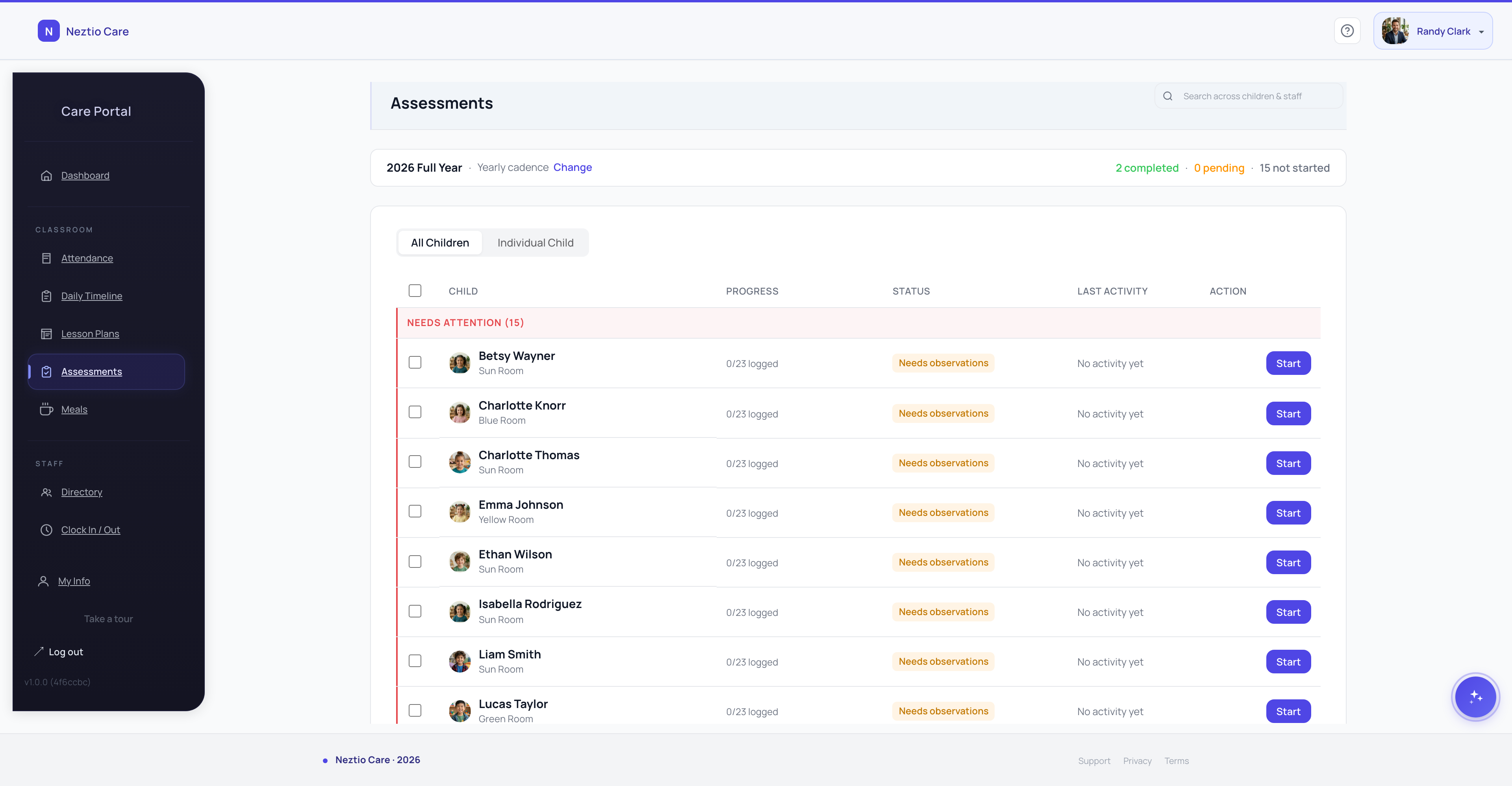
Many QRIS programs rely on standardized observation tools to evaluate classroom quality. Understanding what these tools measure can help you prepare for assessments and focus your improvement efforts:
ECERS-3 (Early Childhood Environment Rating Scale, Third Edition)
Used for preschool classrooms (ages 3-5), ECERS-3 evaluates six areas: space and furnishings, personal care routines, language and literacy, learning activities, interaction, and program structure. Assessors observe the classroom over several hours and score each item on a scale from 1 (inadequate) to 7 (excellent). Published by the Frank Porter Graham Child Development Institute at the University of North Carolina at Chapel Hill, ECERS-3 is one of the most widely used quality measurement tools in the field.
ITERS-3 (Infant/Toddler Environment Rating Scale, Third Edition)
The companion to ECERS-3, designed for infant and toddler classrooms (birth to 30 months). ITERS-3 evaluates similar areas but with criteria specific to the developmental needs of younger children, including safe sleep practices, diapering routines, and sensory exploration opportunities.
CLASS (Classroom Assessment Scoring System)
Developed at the University of Virginia, CLASS specifically measures the quality of teacher-child interactions rather than the physical environment. It evaluates three domains: emotional support (positive climate, teacher sensitivity, regard for student perspectives), classroom organization (behavior management, productivity, instructional learning formats), and instructional support (concept development, quality of feedback, language modeling). CLASS is increasingly used in QRIS systems because research has consistently linked high-quality teacher-child interactions to better child outcomes.
The Environment Rating Scales (ECERS-3, ITERS-3) focus on the overall classroom environment, including space, materials, routines, and interactions. CLASS focuses specifically on how teachers interact with children. Many states use one or both types of tools in their QRIS assessments.
Steps to improve your rating
Raising your QRIS rating is a process that takes time, but the improvements you make benefit children and families immediately. Here is a practical approach:
- 1
Start with a self-assessment
Use your state's QRIS rubric to evaluate where your program currently stands on each quality indicator. Many states provide self-assessment tools specifically for this purpose. Be honest about your current level so you can set realistic improvement goals.
- 2
Request a quality improvement coach
Most states provide free quality improvement coaching to QRIS-participating programs. These coaches are experienced early childhood professionals who can observe your classrooms, help you interpret assessment results, and create an action plan tailored to your program's specific needs.
- 3
Focus on teacher-child interactions
Research consistently shows that the quality of teacher-child interactions has the greatest impact on child outcomes. Invest in coaching and training that helps teachers respond sensitively to children, extend conversations, ask open-ended questions, and manage the classroom proactively rather than reactively.
- 4
Invest in curriculum
Adopt a recognized, research-based curriculum framework if you have not already. Having a structured curriculum and training teachers to implement it with fidelity is a common requirement for higher QRIS tiers.
- 5
Document everything
QRIS assessors need evidence. Maintain organized records of staff training hours, curriculum implementation, family engagement activities, developmental assessments, and program policies. Programs that do great work but cannot document it will score lower than they should.
- 6
Improve learning environments
Evaluate your physical spaces with fresh eyes. Are interest areas clearly defined? Are materials accessible to children at their level? Are there cozy spaces for quiet activities? Is there a variety of age-appropriate, open-ended materials? Small changes to classroom setup can have a meaningful impact on ERS scores.
Staff qualifications and training
Staff credentials are a major component of QRIS ratings. Higher tiers typically require more education and more professional development hours than state licensing minimums. Here is what to consider:
Credential progression: Many QRIS frameworks expect lead teachers to hold at least a Child Development Associate (CDA) credential for mid-level ratings, with an associate degree or bachelor's degree in early childhood education for the highest tiers. Support teachers to pursue these credentials by connecting them with scholarship programs available through your state's QRIS.
Annual training hours: While licensing may require 15-24 hours of annual training, higher QRIS ratings often require more hours or training in specific topic areas such as curriculum implementation, child assessment, or supporting children with special needs.
Coaching and mentoring: In-classroom coaching, where an experienced mentor observes and provides feedback to teachers during their work with children, is one of the most effective forms of professional development. Many QRIS programs offer this for free or at reduced cost.
Specialized training: Topics such as inclusive practices for children with disabilities, supporting dual language learners, and trauma-informed care are increasingly valued in QRIS systems and can help your program stand out during assessments.
Tip: Use childcare management software like Neztio to track staff credentials, certifications, and training hours in one place. Having organized staff records makes it easy to demonstrate compliance during QRIS assessments.
Curriculum and assessment
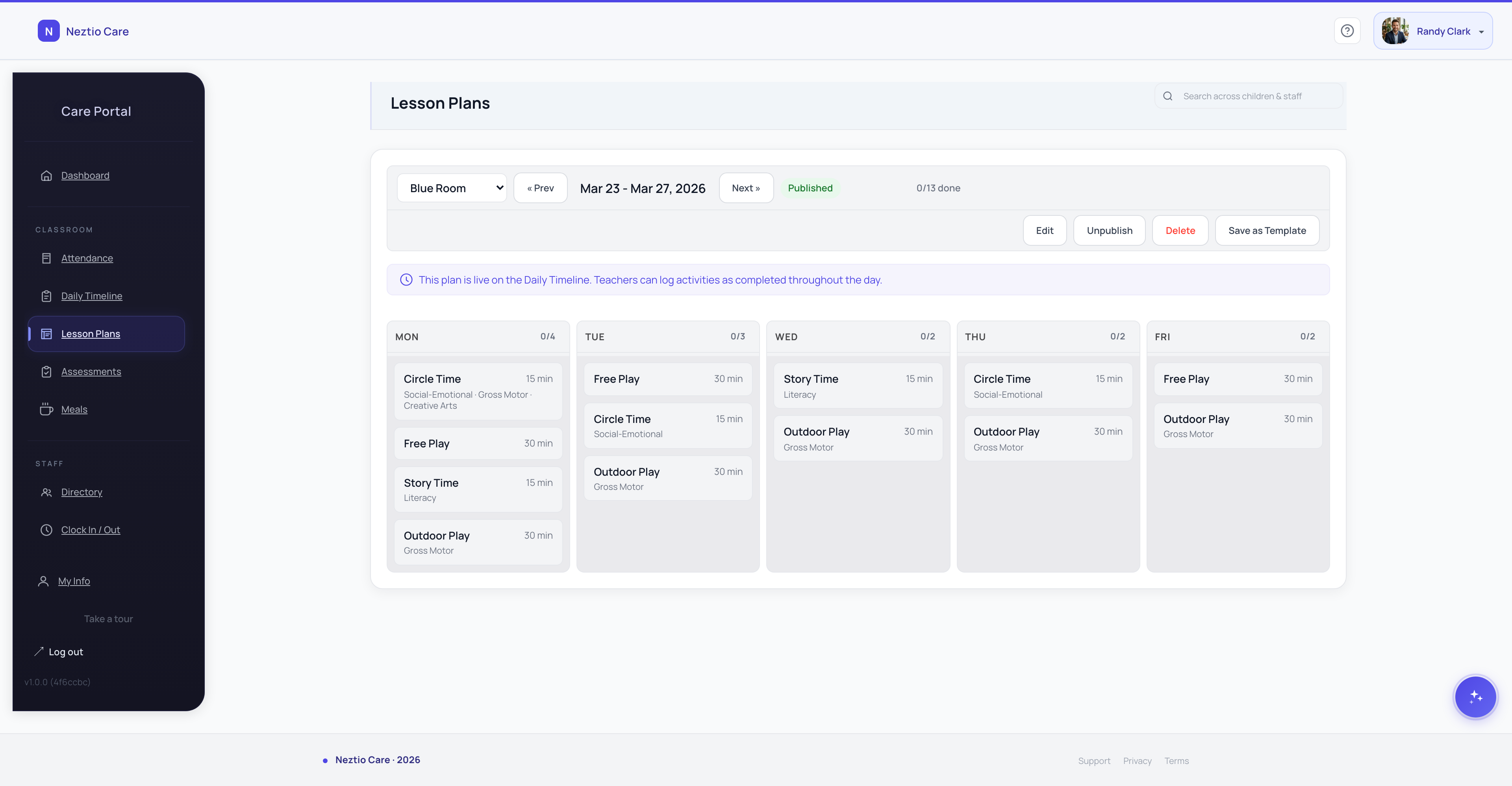
A structured, intentional approach to curriculum and child assessment is essential for higher QRIS ratings. Here is what assessors typically look for:
Recognized curriculum framework: Adopt a curriculum that is research-based and widely recognized. Common examples include The Creative Curriculum (by Teaching Strategies), HighScope, and Reggio Emilia-inspired approaches. What matters most is that your curriculum is implemented consistently and that teachers understand its principles, not just its activity plans.
Developmental assessment tools: Use a formal assessment tool to track each child's development across domains (cognitive, language, social-emotional, physical). Common tools include Teaching Strategies GOLD, the Ages and Stages Questionnaire (ASQ), and the Desired Results Developmental Profile (DRDP). These assessments should inform lesson planning and individualized instruction.
Documentation of learning: Build portfolios for each child that include work samples, observation notes, and photos. These portfolios serve as evidence of each child's growth and can be shared with families during conferences.
Individualized instruction: Use assessment data to plan activities that meet each child where they are. Assessors look for evidence that teachers differentiate their approach based on children's individual strengths, interests, and areas for growth.
Family engagement
Family engagement is a core component of nearly every QRIS framework. Programs that build genuine partnerships with families score higher in this domain. Here are the key areas assessors evaluate:
Regular parent-teacher conferences: Schedule formal conferences at least twice a year to discuss each child's development, share portfolio documentation, and set goals together. Many higher-rated programs hold conferences three or more times per year.
Family events and involvement: Host events that invite families into the program, such as open houses, family nights, or classroom volunteering opportunities. Assessors look for evidence that these events happen regularly and are accessible to all families.
Parent input in program decisions: Create formal channels for families to provide feedback, such as surveys, parent advisory committees, or suggestion processes. Document how family input has influenced program decisions.
Home-school connection: Support learning continuity between the classroom and home by sharing activity ideas, developmental milestones, and resources with families.
Daily communication: Keep families informed about their child's day through daily reports, photos, and messaging. Consistent, timely communication builds trust and keeps parents engaged. Neztio's messaging and daily reports features make it easy to share updates with families through the parent app, keeping the home-school connection strong without adding administrative burden.
The financial benefits of a higher rating
Improving your QRIS rating requires an investment of time and effort, but there are real financial returns:
Increased subsidy rates: Many states offer tiered reimbursement for child care subsidies based on QRIS rating. In some states, top-rated programs receive reimbursement rates 10-20% higher than programs at the base level. The exact differential varies by state.
Quality improvement grants: Many states offer one-time or recurring grants to programs that achieve or maintain certain QRIS tiers. These funds can be used for classroom materials, facility improvements, or staff professional development.
Tax credits: Some states offer tax credits or other fiscal incentives for programs that participate in QRIS and achieve higher ratings. Check with your state's early childhood agency for available incentives.
Ability to charge higher tuition: Families increasingly factor quality ratings into their enrollment decisions. A higher rating can support premium pricing and differentiate your program in a competitive market.
Increased enrollment: A strong quality reputation, backed by a visible QRIS rating, can attract more families to your program. In areas where families have multiple childcare options, your rating can be a deciding factor.
Start improving today
QRIS participation is one of the best investments a childcare program can make. The process pushes you to examine every aspect of your operation, from classroom interactions to administrative systems, and the improvements benefit children, families, and your business.
Strong program administration and organized documentation are foundational to a higher QRIS rating. See how Neztio helps childcare programs manage attendance, enrollment, staff records, billing, messaging, and daily reports so you can focus more time on what matters most: the children in your care.
Related
Childcare Licensing Checklist: What Every New Center Needs
Related
Childcare Staff Management: Hiring, Training, and Retention
Glossary terms in this article
QRIS
Quality Rating and Improvement System, a state-run framework that assesses, improves, and communicates the quality of childcare programs.
Accreditation
Voluntary quality certification from organizations like NAEYC or NAC that recognizes programs exceeding minimum licensing standards.
Licensing
State-issued permission to operate a childcare facility, requiring compliance with health, safety, and staffing standards.
NAEYC
National Association for the Education of Young Children, the largest professional organization for early childhood educators and a leading accreditation body.
Curriculum
A structured framework guiding what children learn and how teachers plan activities, such as Creative Curriculum or HighScope.