Requisitos de Licencia para el Cuidado Infantil en Georgia: Guía Completa
La industria del cuidado infantil en Georgia está regulada por el Department of Early Care and Learning (Departamento de Cuidado y Aprendizaje Temprano, DECAL), también conocido como Bright from the Start. Ya sea que estés abriendo un nuevo centro de aprendizaje de cuidado infantil, iniciando un hogar familiar de cuidado infantil o expandiendo un programa existente, esta guía cubre lo que necesitas saber sobre los requisitos de licencia de Georgia.
Nota: Los requisitos de licencia cambian con frecuencia. Esta guía refleja las regulaciones vigentes a principios de 2026. Siempre verifica los requisitos actuales directamente con la agencia estatal de licencias antes de tomar decisiones de cumplimiento.
¿Quién regula el cuidado infantil en Georgia?
En Georgia, la licencia de cuidado infantil es administrada por el Department of Early Care and Learning (Departamento de Cuidado y Aprendizaje Temprano, DECAL), que opera bajo la marca Bright from the Start. El DECAL es responsable de establecer reglas y regulaciones, procesar solicitudes de licencia, realizar inspecciones y hacer cumplir la normativa de todos los programas de cuidado infantil regulados en el estado.
Georgia exige licencia para las operaciones de cuidado infantil que atienden a niños durante más de cuatro horas al día. El tipo de licencia que necesitas depende de tu entorno y de cuántos niños atiendes:
Child Care Learning Center (Centro de Aprendizaje de Cuidado Infantil, CCLC): Una instalación que no es una residencia y brinda cuidado a siete o más niños. Este es el tipo de licencia más común para negocios comerciales de cuidado infantil, preescolares y programas extraescolares en Georgia.
Family Child Care Learning Home (Hogar Familiar de Aprendizaje de Cuidado Infantil, FCCLH): Una residencia privada donde el operador vive y brinda cuidado a entre tres y seis niños. Los propios hijos del operador menores de 13 años se cuentan dentro de la capacidad. Esta licencia tiene requisitos específicos para el entorno del hogar.
Group Day Care Home (Hogar de Cuidado Infantil Grupal, GDCH): Una residencia privada donde el operador vive y brinda cuidado a entre siete y dieciocho niños. Se requiere al menos un asistente de tiempo completo además del operador. Los propios hijos del operador menores de 13 años se cuentan dentro de la capacidad.
Importante
Los requisitos de licencia y las tarifas pueden cambiar. Siempre verifica los requisitos actuales directamente con el DECAL o visita su sitio web oficial (decal.ga.gov) para obtener la información más actualizada.
Cómo solicitar una licencia de cuidado infantil en Georgia
El proceso de solicitud de licencia de cuidado infantil en Georgia consta de varios pasos y se gestiona a través del DECAL. Prevé que el proceso tome de varias semanas a varios meses, dependiendo de la rapidez con la que cumplas todos los requisitos.
- 1
Asiste a un taller previo a la licencia del DECAL
Georgia exige que los futuros operadores de cuidado infantil asistan a un taller de orientación previo a la licencia impartido por el DECAL. Este taller cubre las reglas y regulaciones, el proceso de solicitud y las responsabilidades de operar un programa de cuidado infantil con licencia. Los talleres se ofrecen a través de las oficinas locales del DECAL.
- 2
Presenta tu solicitud y los documentos requeridos
Después de completar el taller, presenta tu solicitud completa al DECAL junto con la documentación requerida. Esto generalmente incluye comprobante de identidad, un plano de la instalación, aprobación de inspección de incendios, verificación de cumplimiento de zonificación y una inspección de salud y seguridad del departamento de salud local. Se requiere una tarifa de solicitud.
- 3
Completa las verificaciones de antecedentes de todo el personal y los miembros del hogar
El DECAL exige verificaciones de antecedentes exhaustivas (incluyendo toma de huellas dactilares) para todos los propietarios, directores, empleados y voluntarios. Para las operaciones basadas en el hogar, todos los miembros del hogar de 17 años o más también deben ser verificados. Las verificaciones de antecedentes deben aprobarse antes de emitir la licencia.
- 4
Aprueba la inspección en sitio del DECAL
Un consultor de licencias del DECAL realizará una inspección en sitio de tu instalación para verificar que cumple con todas las reglas y regulaciones de espacio, seguridad, equipo, saneamiento y mantenimiento de registros. Cualquier deficiencia debe corregirse antes de que se otorgue tu licencia.
- 5
Recibe tu licencia
Una vez que se cumplan todos los requisitos y tu instalación apruebe la inspección, el DECAL emitirá tu licencia de cuidado infantil. La licencia debe exhibirse en un lugar prominente visible para los padres. Las licencias de cuidado infantil de Georgia se emiten para una capacidad específica y deben renovarse anualmente.
Requisitos de proporción de personal por niño en Georgia
Georgia establece proporciones específicas de personal por niño según las edades de los niños atendidos. Estas proporciones están definidas en las Rules and Regulations for Child Care Learning Centers (Reglas y Regulaciones para Centros de Aprendizaje de Cuidado Infantil, Chapter 591-1-1) del DECAL y deben mantenerse en todo momento, incluso durante el juego al aire libre, las excursiones y las transiciones.
| Grupo de Edad | Proporción | Tamaño Máximo del Grupo |
|---|---|---|
| Bebés (menores de 1 año, o menores de 18 meses que aún no caminan) | 1:6 | 12 |
| Niños de 1 año (que ya caminan) | 1:8 | 16 |
| 2 años | 1:10 | 20 |
| 3 años | 1:15 | 30 |
| 4 años | 1:18 | 36 |
| 5 años | 1:20 | 40 |
| 6 años en adelante | 1:25 | 50 |
Nota: Georgia utiliza un hito de desarrollo basado en la capacidad de caminar, no un límite de edad estricto, para la transición de bebé a niño pequeño. Los niños menores de 18 meses que aún no caminan de forma independiente se clasifican como bebés sin importar su edad exacta.
Estas proporciones provienen de las Rules and Regulations for Child Care Learning Centers del DECAL. Las proporciones para los Family Child Care Learning Homes y los Group Day Care Homes son diferentes. Siempre verifica las proporciones actuales con el DECAL, ya que pueden actualizarse. Para ayudarte a planificar el personal de tu salón, prueba nuestra calculadora de proporciones.
Requisitos de calificación y capacitación del personal
Georgia tiene requisitos específicos para directores, maestros principales y todo el personal que trabaja en programas de cuidado infantil con licencia.
Calificaciones del director: Los directores de los Child Care Learning Centers deben tener al menos 21 años y cumplir con los requisitos de educación y experiencia establecidos por el DECAL. Los requisitos generalmente incluyen una combinación de educación postsecundaria en educación de la primera infancia o un campo relacionado, y experiencia supervisada en cuidado infantil. Los niveles específicos de credenciales se detallan en las reglas del DECAL.
Calificaciones del maestro principal: Los maestros principales deben tener al menos 18 años y cumplir con los requisitos de educación y experiencia del DECAL, que generalmente incluyen un diploma de escuela secundaria o GED, además de capacitación documentada o cursos en educación de la primera infancia.
Edad mínima del maestro asistente: Los maestros asistentes y auxiliares deben tener al menos 16 años en Georgia. Los menores de 18 años no pueden quedarse sin supervisión con los niños.
RCP y primeros auxilios: Debe haber presente en todo momento al menos un miembro del personal con certificación vigente de RCP pediátrico y primeros auxilios mientras los niños estén bajo cuidado. El DECAL recomienda que todo el personal esté certificado.
Capacitación previa al servicio: Los nuevos empleados deben completar la capacitación de orientación antes de quedarse solos con los niños. Esto incluye capacitación sobre las reglas y regulaciones del DECAL, el reconocimiento y reporte de abuso y negligencia infantil, procedimientos de emergencia y las políticas propias del programa.
Horas de capacitación anual: Todo el personal de cuidado infantil debe completar un mínimo de 10 horas reloj de educación continua al año. Los directores deben completar horas adicionales. La capacitación debe cubrir los temas especificados por el DECAL, incluyendo desarrollo infantil, salud y seguridad, y nutrición. La capacitación puede completarse a través de proveedores aprobados por el DECAL o mediante el sistema de capacitación en línea de Georgia (GeorgiaPDS).
Requisitos de verificación de antecedentes
Georgia exige verificaciones de antecedentes exhaustivas para todas las personas que trabajan en programas de cuidado infantil con licencia o que tienen acceso a los niños en ellos. El DECAL gestiona el proceso de verificación de antecedentes a través de su sistema Comprehensive Background Check (Verificación Integral de Antecedentes, CBC).
Quién debe ser verificado: Todos los directores, empleados, sustitutos y voluntarios que tengan acceso sin supervisión a los niños deben completar una verificación de antecedentes. Para las operaciones basadas en el hogar (FCCLH y GDCH), todos los miembros del hogar de 17 años o más también deben ser verificados.
Verificación de antecedentes penales del GCIC: Se requiere una verificación de antecedentes penales del Georgia Crime Information Center (Centro de Información Criminal de Georgia, GCIC). Esta verificación detecta antecedentes penales dentro del estado de Georgia.
Verificación de huellas dactilares del FBI: Se requiere una verificación de antecedentes penales del FBI basada en huellas dactilares para todas las personas cubiertas. Las huellas dactilares se envían a través de un proveedor aprobado por el DECAL.
Verificación de registros del DECAL: El DECAL mantiene sus propios registros de personas que han sido determinadas con hallazgos sustanciados de abuso, negligencia o explotación infantil. Esta verificación se realiza contra los registros internos del DECAL.
Registro de delincuentes sexuales: El proceso de verificación de antecedentes incluye una revisión del Georgia Sex Offender Registry (Registro de Delincuentes Sexuales de Georgia) y del National Sex Offender Public Website (Sitio Web Público Nacional de Delincuentes Sexuales, NSOPW).
Plazos y renovación: Las verificaciones de antecedentes deben completarse y aprobarse antes de que cualquier persona tenga acceso sin supervisión a los niños. Las verificaciones de antecedentes deben renovarse cada cinco años para todas las personas cubiertas.
Requisitos de espacio físico y entorno
Tu instalación debe cumplir con las reglas del DECAL sobre espacio físico, seguridad y entorno antes de que se emita una licencia. Los requisitos clave para los Child Care Learning Centers incluyen:
Espacio interior: Un mínimo de 35 pies cuadrados de espacio interior utilizable por niño. Esto excluye cocinas, baños, pasillos, oficinas y áreas de almacenamiento.
Espacio exterior: Un mínimo de 75 pies cuadrados de espacio de juego al aire libre por niño que use el área en un momento dado. Las áreas exteriores deben estar cercadas de forma segura con una valla de al menos cuatro pies de altura y libres de peligros.
Equipo adecuado para la edad: Todos los muebles, cunas, catres y equipo de juego deben ser seguros, estar en buen estado y ser apropiados para las edades de los niños atendidos. Las cunas deben cumplir con los estándares vigentes de la Consumer Product Safety Commission (Comisión de Seguridad de Productos de Consumo, CPSC).
Seguridad contra incendios: Las instalaciones deben contar con una inspección de seguridad contra incendios vigente del jefe de bomberos local o de la oficina estatal del jefe de bomberos. Se requieren detectores de humo funcionales, extintores de incendios y planes de evacuación exhibidos. Los simulacros de incendio deben realizarse y documentarse mensualmente.
Inspección del departamento de salud: Se requiere una inspección satisfactoria del departamento de salud del condado local antes de que pueda emitirse una licencia. Esto abarca saneamiento, áreas de cocina y preparación de alimentos, baños, estaciones de cambio de pañales y limpieza general.
Cumplimiento de zonificación: La instalación debe cumplir con las ordenanzas locales de zonificación. Por lo general, se requiere una carta de cumplimiento de zonificación de la autoridad local de planificación o zonificación como parte de la solicitud de licencia.
Requisitos de salud y seguridad
Las reglas del DECAL incluyen requisitos detallados de salud y seguridad que los programas con licencia deben seguir todos los días.
Registros de vacunación: Georgia exige registros de vacunación actualizados (Form 3231) para todos los niños inscritos. Los registros deben estar archivados dentro de los 30 días posteriores a la inscripción y disponibles para inspección en todo momento.
Administración de medicamentos: Los medicamentos solo pueden administrarse con autorización escrita de los padres. Todo medicamento debe estar en su envase original con el nombre del niño, y la administración debe documentarse con el nombre del medicamento, la dosis, la hora y el miembro del personal que lo administró.
Exclusión por enfermedad: Los programas deben contar con una política escrita de exclusión y readmisión por enfermedad. Los niños que muestren signos de enfermedad contagiosa deben separarse de los demás niños, y se debe notificar a los padres para que los recojan.
Lavado de manos: El personal y los niños deben seguir procedimientos adecuados de lavado de manos antes y después de las comidas, después de los cambios de pañal, después de usar el baño y después del juego al aire libre. Los lavamanos deben ser accesibles para los niños.
Prácticas de sueño seguro: Georgia exige el cumplimiento de las pautas de sueño seguro para bebés. Los bebés deben colocarse boca arriba para dormir en cunas aprobadas con colchones firmes y planos. No se permiten mantas, almohadas, protectores de cuna, peluches ni dispositivos de posicionamiento dentro de la cuna.
Preparación para emergencias: Los procedimientos de emergencia por escrito deben estar exhibidos y practicarse con regularidad. Los programas deben contar con planes para incendios, clima severo, confinamiento y otras emergencias. La información de contacto de emergencia de cada niño debe estar fácilmente accesible.
Quality Rated: el programa QRIS de Georgia
Quality Rated es el Quality Rating and Improvement System (Sistema de Calificación y Mejora de la Calidad, QRIS) de Georgia, administrado por el DECAL. Es un programa voluntario que evalúa, mejora y comunica el nivel de calidad de los programas de cuidado y educación de la primera infancia. Aunque no es obligatorio para la licencia, la participación ofrece beneficios significativos.
Calificación por estrellas: Quality Rated utiliza un sistema de calificación de una a tres estrellas. Una estrella indica que el programa cumple con estándares de calidad superiores a los mínimos de licencia. Dos estrellas indican un nivel de calidad más alto. Tres estrellas representan el nivel de calidad más alto del sistema.
Áreas de evaluación: Los programas se evalúan en múltiples áreas, incluyendo la participación familiar, las calificaciones y capacitación del personal, el entorno de aprendizaje, las interacciones entre el personal y los niños, y la administración del programa.
Evaluaciones de aula: Quality Rated utiliza herramientas de evaluación de aula reconocidas a nivel nacional, como las Environment Rating Scales (Escalas de Calificación del Entorno, ERS) y el Classroom Assessment Scoring System (Sistema de Puntuación de Evaluación del Aula, CLASS), para evaluar objetivamente los entornos de aprendizaje y las interacciones entre maestros y niños.
Beneficios de la participación: Los programas Quality Rated pueden recibir recursos de desarrollo profesional, subvenciones para la mejora de la calidad, mayor visibilidad ante las familias que buscan cuidado de calidad y, en algunos casos, tasas de reembolso de subsidios más altas a través del programa Childcare and Parent Services (Servicios de Cuidado Infantil y para Padres, CAPS) de Georgia.
Inspecciones y cumplimiento del DECAL
Una vez que tengas la licencia, tu programa estará sujeto a un monitoreo continuo por parte de los consultores de licencias del DECAL.
Inspecciones sin previo aviso: El DECAL realiza visitas de monitoreo sin previo aviso a los programas de cuidado infantil con licencia durante el horario de operación. Las inspecciones pueden abarcar cualquier aspecto de tu operación, incluyendo proporciones, seguridad, documentación y prácticas del programa.
Frecuencia de inspección: El DECAL generalmente inspecciona los programas con licencia al menos una vez al año, aunque las inspecciones pueden ser más frecuentes para programas con historial de infracciones o en respuesta a quejas.
Resultados de inspección públicos: Los resultados de las inspecciones y el historial de cumplimiento están disponibles al público a través de la base de datos en línea del DECAL. Los padres pueden consultar el historial de inspecciones, infracciones e investigaciones de quejas de cualquier programa con licencia.
Planes de acción correctiva: Si se encuentran infracciones durante una inspección, es posible que se exija al programa presentar un plan de acción correctiva. El plazo para la corrección depende de la gravedad de la infracción.
Acciones de cumplimiento: Las infracciones repetidas o graves pueden dar lugar a acciones de cumplimiento, incluyendo multas, periodo de prueba, suspensión de la licencia o revocación de la licencia. Las infracciones que representen una amenaza inmediata para la salud o seguridad de los niños pueden resultar en una suspensión de emergencia de la licencia.
Requisitos de mantenimiento de registros
La licencia de Georgia exige que los programas de cuidado infantil mantengan registros detallados disponibles para revisión durante las inspecciones.
Registros de asistencia: Registros diarios de entrada y salida de cada niño, con la hora y la firma de la persona que lo deja o lo recoge. Estos registros deben mantenerse y estar disponibles para revisión del DECAL.
Registros de inscripción: Información completa de inscripción de cada niño, incluyendo contactos de emergencia, personas autorizadas para recogerlo, información médica, alergias, registros de vacunación e información de contacto de los padres.
Registros del personal: Expedientes de personal de cada empleado, incluyendo documentación de verificación de antecedentes, registros de capacitación, certificaciones y resultados de exámenes de salud.
Informes de incidentes: Documentación por escrito de cualquier lesión, accidente o incidente inusual, incluyendo lo que sucedió, las medidas tomadas y cuándo se notificó a los padres.
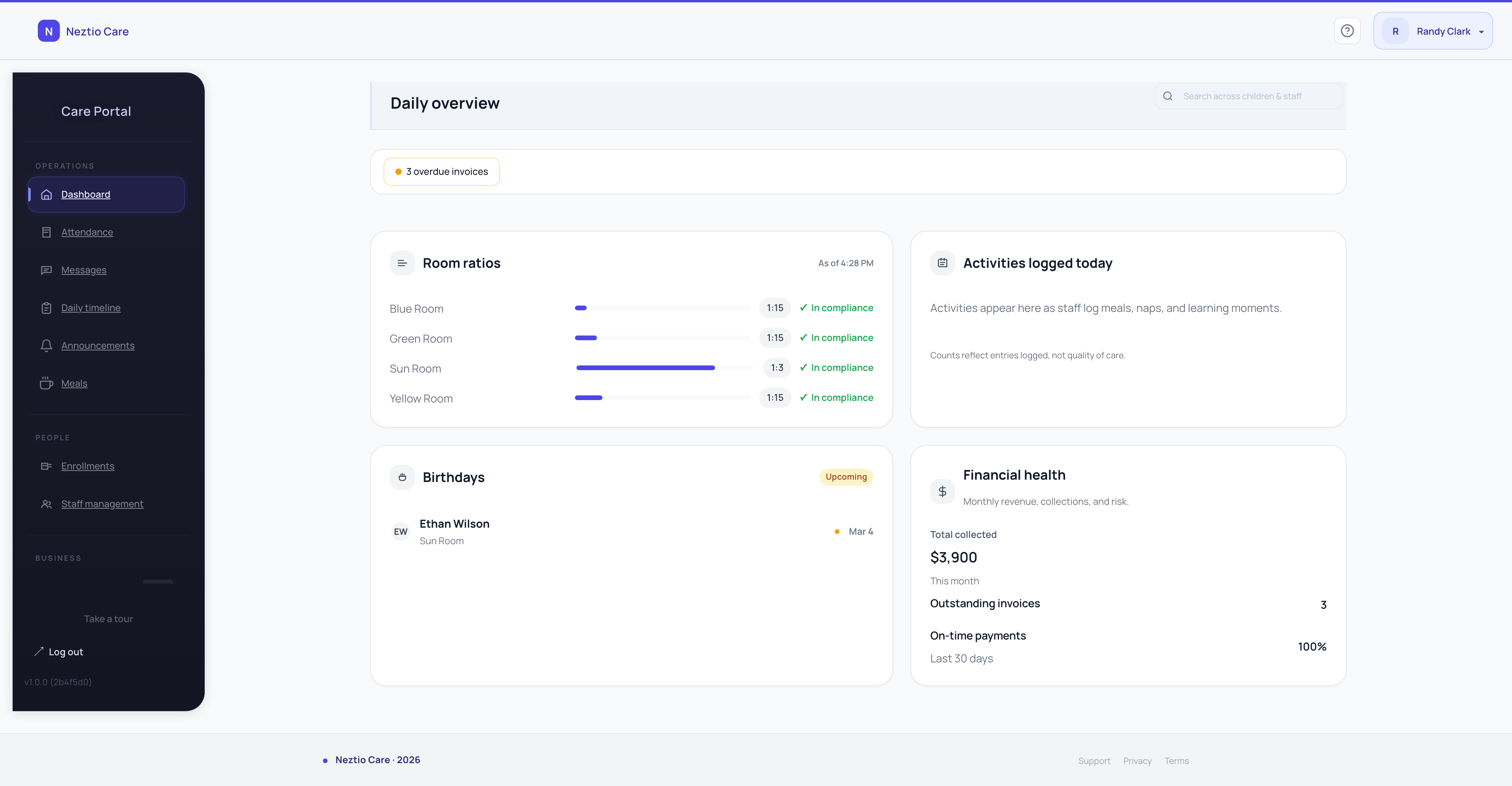
Consejo: Un software de gestión de cuidado infantil como Neztio puede ayudarte a mantener registros digitales de asistencia, inscripción, documentación del personal y facturación, lo que facilita mucho mantenerte organizado y listo para inspecciones en todo momento.
Recursos
Estos son recursos clave para los proveedores de cuidado infantil de Georgia:
DECAL (Bright from the Start): El sitio web oficial de la agencia estatal para la licencia de cuidado infantil en Georgia (decal.ga.gov). Incluye formularios de solicitud, reglas y regulaciones, búsqueda de inspecciones y recursos para proveedores.
Quality Rated: El programa Quality Rating and Improvement System de Georgia (qualityrated.decal.ga.gov). Información sobre cómo participar, recursos de mejora de calidad y la herramienta de búsqueda de proveedores dirigida a las familias.
Georgia Child Care Resource and Referral (CCR&R): La red de agencias CCR&R de Georgia brinda capacitación, asistencia técnica y apoyo a los proveedores de cuidado infantil. El DECAL contrata organizaciones en todo el estado para ofrecer estos servicios a nivel local.
GeorgiaPDS (Professional Development System): El sistema en línea de Georgia para el seguimiento del desarrollo profesional y las horas de capacitación de los educadores de la primera infancia. El personal puede usar este sistema para encontrar oportunidades de capacitación aprobadas y mantener sus registros de capacitación.
Mantente en cumplimiento con las herramientas adecuadas
Cumplir con los requisitos de licencia del DECAL de Georgia es solo el comienzo. Mantenerse en cumplimiento todos los días requiere registros organizados, documentación consistente y una comunicación clara con las familias y el personal. La mejor manera de prepararse para una inspección sin previo aviso es operar cada día como si pudiera ocurrir una.
Descubre cómo Neztio ayuda a los centros de cuidado infantil de Georgia a gestionar el seguimiento de asistencia, la facturación, la gestión del personal y la comunicación con los padres para que siempre estés listo para una inspección.
Relacionado
Lista de Verificación de Licencia de Cuidado Infantil: Lo Que Todo Centro Nuevo Necesita
Relacionado
Cómo Iniciar una Guardería: Guía Paso a Paso
Glossary terms in this article
Proporción de Personal por Niño
El número requerido de personal calificado por grupo de niños, establecido por las regulaciones estatales de licencia según la edad.
QRIS
Sistema de Calificación y Mejora de la Calidad que evalúa y comunica el nivel de calidad de los programas de cuidado y educación de la primera infancia.
Licencia
Permiso emitido por el estado para operar una instalación de cuidado infantil, que exige el cumplimiento de estándares de salud, seguridad y personal.
Verificación de Antecedentes
Verificaciones de antecedentes penales y de registros requeridas para todos los trabajadores de cuidado infantil bajo la CCDBG Act of 2014 (Ley CCDBG de 2014).
Tamaño del Grupo
El número máximo de niños permitido en un solo salón o grupo de cuidado, determinado por las reglas de licencia estatales.
Acreditación
Certificación voluntaria de calidad de organizaciones como NAEYC o NAC que reconoce a los programas que superan los estándares mínimos de licencia.