Requisitos de licencia de cuidado infantil en Maryland: una guía completa
Maryland cuenta con un sistema de licencias de cuidado infantil bien estructurado, supervisado por el Departamento de Educación del Estado de Maryland (Maryland State Department of Education, MSDE). Ya sea que estés abriendo un nuevo centro de cuidado infantil o ampliando tu programa actual, esta guía cubre los requisitos de licencia, las proporciones de personal por niño, los estándares de capacitación y los programas de calidad que necesitas conocer.
Nota: Los requisitos de licencia cambian con frecuencia. Esta guía refleja las regulaciones vigentes a principios de 2026. Verifica siempre los requisitos actuales directamente con tu agencia estatal de licencias antes de tomar decisiones de cumplimiento.
¿Quién regula el cuidado infantil en Maryland?
En Maryland, la licencia de cuidado infantil es administrada por la Oficina de Cuidado Infantil (Office of Child Care, OCC), que opera dentro de la División de Primera Infancia (Division of Early Childhood) del Departamento de Educación del Estado de Maryland (MSDE). La Rama de Licencias (Licensing Branch) de la OCC es responsable de inspeccionar y otorgar licencias a todos los centros de cuidado infantil y proveedores de cuidado infantil familiar en todo el estado.
La OCC mantiene trece Oficinas Regionales de Licencias (Regional Licensing Offices) en todo Maryland. Estas oficinas regionales procesan las solicitudes, realizan inspecciones y sirven como el principal punto de contacto para los proveedores de su área. Las regulaciones de cuidado infantil están codificadas en el Código de Regulaciones de Maryland (Code of Maryland Regulations, COMAR), y los centros de cuidado infantil se rigen por el COMAR Título 13A, Subtítulo 16.
Maryland requiere licencia para varios tipos de operaciones de cuidado infantil:
Centro de cuidado infantil: Una instalación que no es una residencia y que brinda cuidado a los niños. Los centros están regulados por el COMAR 13A.16 y deben cumplir con los estándares de personal, espacio, salud, seguridad y actividades del programa.
Hogar de cuidado infantil familiar: Un programa basado en el hogar registrado para cuidar a un número menor de niños. Estas operaciones están reguladas por el COMAR 13A.15.
Hogar grande de cuidado infantil familiar: Un programa basado en el hogar con licencia para cuidar a más niños que un cuidado infantil familiar estándar, con requisitos de personal adicionales. Estos están regulados por el COMAR 13A.18.
Cómo solicitar una licencia de centro de cuidado infantil en Maryland
Obtener una licencia de centro de cuidado infantil en Maryland implica varios pasos. El proceso puede tomar varios meses, así que planifica en consecuencia y comienza mucho antes de tu fecha de apertura prevista.
- 1
Comunícate con tu Oficina Regional de Licencias
Maryland tiene trece Oficinas Regionales de Licencias en todo el estado. Comunícate con la oficina de tu área para conocer los requisitos locales, hacer preguntas sobre el proceso de licencia y solicitar un paquete de solicitud.
- 2
Completa la capacitación previa al servicio requerida
Antes de que se pueda emitir una licencia, el director y el personal deben completar los requisitos de capacitación previa al servicio, incluyendo la Capacitación en Administración de Medicamentos (Medication Administration Training, MAT), un curso presencial de seis horas requerido por el MSDE. También se debe obtener la certificación en RCP y Primeros Auxilios apropiada para los rangos de edad de los niños.
- 3
Presenta las verificaciones de antecedentes de todo el personal
Todos los miembros del personal deben aprobar las verificaciones de antecedentes penales federales y estatales, incluyendo la toma de huellas dactilares a través del Sistema de Información de Justicia Penal de Maryland (Maryland Criminal Justice Information System, CJIS), antes de que se pueda emitir la licencia inicial.
- 4
Prepara tu instalación
Tu instalación debe cumplir con todos los requisitos del COMAR para el espacio interior y exterior, la seguridad contra incendios, el saneamiento y el equipo antes de tu inspección. Revisa el manual de licencias disponible en el sitio web de la División de Primera Infancia para asegurarte de que tu espacio cumpla con cada estándar.
- 5
Aprueba la inspección de licencia
Un especialista en licencias de tu Oficina Regional de Licencias realizará una inspección in situ para verificar que tu instalación cumpla con todos los requisitos del COMAR. Cualquier deficiencia debe corregirse antes de que se otorgue la licencia.
- 6
Recibe tu licencia y mantén el cumplimiento
Una vez que se cumplan todos los requisitos, el MSDE emitirá tu licencia de centro de cuidado infantil. Los centros con licencia reciben inspecciones anuales para verificar el cumplimiento continuo de los estándares de salud, seguridad y personal.
Requisitos de proporción de personal por niño en Maryland
Maryland establece proporciones específicas de personal por niño y tamaños máximos de grupo bajo el COMAR 13A.16.08.03 (Tamaño del Grupo y Personal). Estas proporciones deben mantenerse en todo momento mientras los niños estén bajo cuidado. La edad de un niño se determina por la fecha del cumpleaños más reciente del niño.
Grupos de la misma edad
| Grupo de edad | Proporción | Tamaño máximo del grupo |
|---|---|---|
| Bebés (menores de 18 meses) | 1:3 | 6 |
| Niños pequeños (18 meses a 2 años) | 1:3 | 9 |
| 2 años | 1:6 | 12 |
| 3-4 años | 1:10 | 20 |
| 5 años y mayores (edad escolar) | 1:15 | 30 |
Grupos de edades mixtas
Cuando se agrupan niños de diferentes edades, la proporción de personal por niño generalmente se determina por el niño más pequeño del grupo. Para grupos de edades mixtas que contienen niños en edad preescolar de 3 años o más (pero sin niños menores de 2 años), la proporción es de 1:10 con un tamaño máximo de grupo de 20. Cuando hay niños de 2 años en un grupo mixto de 13 a 20 niños, no más de seis de esos niños pueden tener 2 años.
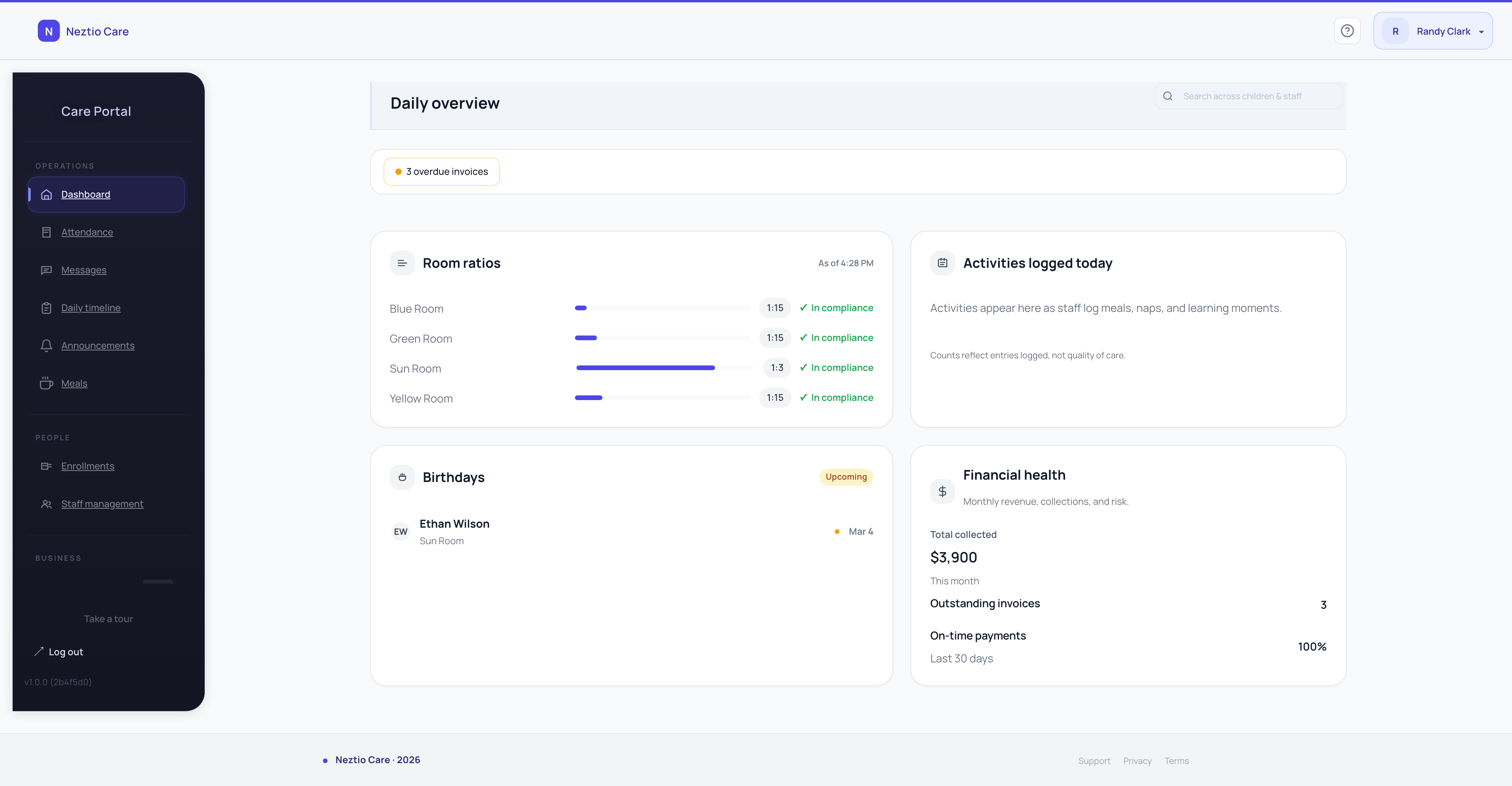
Estas proporciones están definidas en el COMAR 13A.16.08.03. Verifica siempre las proporciones actuales con tu Oficina Regional de Licencias, ya que las regulaciones pueden actualizarse. Para ayudarte a planificar el personal de tu aula, prueba nuestra calculadora de proporciones.
Requisitos de calificación y capacitación del personal
Maryland tiene requisitos detallados para los directores y maestros que trabajan en centros de cuidado infantil con licencia, descritos en el COMAR 13A.16.06.
Calificaciones del director
Educación: Los directores deben tener un diploma de escuela secundaria o un certificado de equivalencia, o haber completado al menos dos cursos universitarios acreditados. También deben completar 6 horas semestrales (o 90 horas reloj) de capacitación previa al servicio aprobada, o poseer una Credencial Nacional de Asociado en Desarrollo Infantil (Child Development Associate, CDA).
Capacitación administrativa: Los directores deben completar 3 horas semestrales o su equivalente de capacitación administrativa aprobada, además de 9 horas reloj de capacitación previa al servicio aprobada en comunicación con el personal, los padres y el público (o un curso universitario equivalente).
Capacitación en salud y seguridad: Los directores deben completar la capacitación básica aprobada en salud y seguridad dentro de los 90 días posteriores a su empleo.
Capacitación continua: Los directores deben completar al menos 12 horas reloj de capacitación aprobada por año, que consisten en un mínimo de 6 horas de capacitación en el núcleo de conocimientos y un máximo de 6 horas de capacitación electiva.
Requisitos para los maestros
Capacitación previa al servicio: Los maestros de cuidado infantil deben completar al menos 24 horas reloj de capacitación previa al servicio aprobada que cubra seis áreas de competencia del núcleo de conocimientos: desarrollo infantil, currículo del programa, salud y seguridad infantil, cuidado de niños con discapacidades, profesionalismo y recursos comunitarios. Alternativamente, 90 horas reloj de capacitación aprobada o su equivalente satisfacen este requisito.
Capacitación continua: Los maestros deben completar al menos 12 horas reloj de capacitación aprobada por año, con un mínimo de 6 horas en áreas del núcleo de conocimientos y un máximo de 6 horas de capacitación electiva.
RCP y Primeros Auxilios: Se debe mantener en todo momento la certificación vigente en capacitación básica aprobada de primeros auxilios y RCP. Las certificaciones deben cubrir los rangos de edad de los niños bajo tu cuidado.
Capacitación en Administración de Medicamentos (MAT): Todo el personal que pueda administrar medicamentos debe completar la MAT, un curso presencial de seis horas aprobado por el MSDE. Este es un requisito previo al servicio para obtener una licencia de centro de cuidado infantil.
Capacitación sobre el SIDS: El personal que brinda cuidado a niños menores de 2 años debe completar la capacitación sobre el Síndrome de Muerte Súbita del Lactante (Sudden Infant Death Syndrome, SIDS).
Requisitos de verificación de antecedentes
Maryland requiere verificaciones de antecedentes exhaustivas para todas las personas que trabajan en entornos de cuidado infantil con licencia. Estas verificaciones deben completarse antes de que se pueda emitir la licencia inicial.
Verificación de antecedentes penales estatales: Las verificaciones de antecedentes penales basadas en huellas dactilares se procesan a través del Sistema de Información de Justicia Penal de Maryland (CJIS), que mantiene el repositorio central de antecedentes penales del estado.
Verificación de antecedentes penales federales (FBI): Además de la verificación estatal, se requiere una verificación de antecedentes federal del FBI basada en huellas dactilares para todo el personal.
Registro de delincuentes sexuales: Se requieren verificaciones contra el Registro de Delincuentes Sexuales estatal y el Nacional.
Registro de abuso y negligencia infantil: Maryland mantiene una Base de Datos Confidencial Centralizada de investigaciones de abuso y negligencia infantil. Todo el personal de cuidado infantil es examinado contra este registro.
Servicio Rap Back: Maryland participa en el Servicio Rap Back de Identificación de Próxima Generación (Next Generation Identification, NGI) del FBI, que proporciona notificación continua de cualquier actividad delictiva posterior de personas en posiciones de confianza. Esto significa que el monitoreo de antecedentes es continuo, no solo una verificación única.
Ubicaciones para la toma de huellas dactilares: Las huellas dactilares se pueden tomar en Proveedores Privados autorizados o en ubicaciones de Servicio Operado por el Gobierno en todo el estado.
Requisitos de instalaciones y espacio
Los requisitos de espacio físico de Maryland para los centros de cuidado infantil están definidos en el COMAR 13A.16.05 (Planta Física y Equipo). Tu instalación debe cumplir con estos estándares antes de que se pueda emitir una licencia.
Espacio interior: Se requiere un mínimo de 35 pies cuadrados de espacio interior por niño. Los centros con licencia anterior al 1 de diciembre de 1971 están exentos por derechos adquiridos con 30 pies cuadrados por niño. Esta medida se aplica al espacio de actividad utilizable y excluye cocinas, baños, pasillos y áreas de almacenamiento.
Espacio exterior: Los centros deben proporcionar al menos 75 pies cuadrados de espacio de juego al aire libre por niño que utilice el área en un momento dado. Para los centros que presentaron un aviso de intención el 1 de enero de 2009 o después, el área exterior debe acomodar al menos la mitad de la capacidad aprobada del centro (o a cada niño si la capacidad es de 20 o menos).
Equipo apropiado para la edad: Todos los muebles, cunas y equipos de juego deben ser seguros, estar en buen estado y ser apropiados para las edades de los niños inscritos. El equipo en el área de actividad al aire libre debe estar aprobado para el uso de los niños bajo cuidado.
Seguridad contra incendios: Se deben instalar y mantener detectores de humo y extintores de incendios en funcionamiento. Se requieren simulacros de incendio regulares y deben documentarse. Se debe colocar un plan de evacuación.
Salud y saneamiento: Las instalaciones deben cumplir con los estándares de saneamiento, áreas de preparación de alimentos, estaciones de cambio de pañales, instalaciones para el lavado de manos y limpieza general. Las inspecciones de salud y seguridad son parte del proceso de licencia.
Requisitos de salud y seguridad
Los centros de cuidado infantil con licencia en Maryland deben seguir regulaciones detalladas de salud y seguridad para proteger a los niños bajo su cuidado.
Registros de vacunación: Se requieren registros de vacunación actualizados para todos los niños inscritos y deben estar archivados y disponibles para inspección.
Administración de medicamentos: Solo el personal que haya completado la Capacitación en Administración de Medicamentos (MAT) puede administrar medicamentos. Se requiere autorización escrita de los padres, y toda administración de medicamentos debe documentarse.
Prácticas de sueño seguro: Para los bebés, Maryland requiere el cumplimiento de las pautas de sueño seguro. Los bebés deben colocarse boca arriba para dormir, y las cunas deben estar libres de ropa de cama blanda, almohadas y objetos sueltos.
Lavado de manos: El personal y los niños deben seguir los procedimientos adecuados de lavado de manos, incluyendo antes y después de las comidas, después de los cambios de pañales, después de usar el baño y después del juego al aire libre.
Procedimientos de emergencia: Los planes de emergencia por escrito deben colocarse y practicarse regularmente. El personal debe estar capacitado en los procedimientos para incendios, clima severo, emergencias médicas y confinamientos de la instalación.
Requisitos de mantenimiento de registros
La licencia de Maryland requiere que los centros de cuidado infantil mantengan registros detallados y organizados que estén disponibles para su revisión durante las inspecciones. Mantener los registros actualizados es uno de los aspectos más importantes para conservar tu licencia.
Registros de asistencia: Registros diarios de entrada y salida de cada niño, con la hora registrada para cada entrada.
Registros de inscripción de niños: Información completa de inscripción de cada niño, incluyendo contactos de emergencia, personas autorizadas para recoger, información médica, alergias y registros de vacunación.
Registros del personal: Archivos de personal de cada empleado, incluyendo autorizaciones de verificación de antecedentes, documentación de capacitación, certificaciones e historial de empleo.
Informes de incidentes: Documentación escrita de cualquier lesión, accidente o incidente inusual, incluyendo lo que ocurrió, qué acciones se tomaron y cuándo se notificó a los padres.
Registros de capacitación: Documentación de todas las horas de capacitación del personal, incluyendo la capacitación previa al servicio y la continua, para demostrar el cumplimiento de los requisitos anuales.
Consejo: El software de gestión de cuidado infantil como Neztio puede ayudarte a mantener registros digitales de asistencia, documentación del personal, facturación y comunicación con los padres, facilitando mantenerte organizado y listo para la inspección.
Inspecciones y cumplimiento continuo
Una vez con licencia, tu centro estará sujeto a un monitoreo regular por parte de la Oficina de Cuidado Infantil para garantizar el cumplimiento continuo de los estándares del COMAR.
Inspecciones anuales: Los centros de cuidado infantil con licencia reciben inspecciones anuales de su Oficina Regional de Licencias para verificar el cumplimiento de los requisitos de salud, seguridad y personal.
Visitas sin previo aviso: Además de las inspecciones anuales programadas, la OCC puede realizar visitas sin previo aviso en cualquier momento durante el horario normal de operación para monitorear el cumplimiento.
Investigaciones de quejas: La Rama de Licencias investiga las quejas presentadas contra los proveedores con licencia. Las quejas pueden desencadenar inspecciones adicionales y requisitos de acción correctiva.
Registros públicos: Los padres y el público pueden consultar el estado de la licencia y el historial de inspecciones de cualquier proveedor de cuidado infantil regulado en Maryland a través del sitio web Check Child Care Maryland (checkccmd.org).
Acción correctiva: Las deficiencias encontradas durante las inspecciones deben corregirse dentro de los plazos especificados. Las violaciones repetidas o graves pueden resultar en período de prueba de la licencia, suspensión o revocación de la licencia.
Maryland EXCELS: el sistema estatal de calificación de calidad
Maryland EXCELS es el Sistema de Calificación y Mejora de Calidad (Quality Rating and Improvement System, QRIS) del estado. Otorga calificaciones de calidad del 1 al 5 a los programas de cuidado infantil y educación temprana que cumplen con estándares reconocidos a nivel nacional más allá de los requisitos mínimos de licencia.
Participación voluntaria: Maryland EXCELS es voluntario para todos los proveedores de cuidado infantil registrados en el MSDE, incluyendo hogares de cuidado infantil familiar, centros con licencia y programas públicos de prekínder.
Requerido para proveedores de subsidio: La participación en Maryland EXCELS es requerida para los proveedores que aceptan niños a través del Programa de Becas de Cuidado Infantil (Child Care Scholarship Program, subsidio de cuidado infantil). Esta es una consideración importante si planeas atender a familias que reciben asistencia estatal.
Estándares de calidad: Los proveedores aumentan su calificación de calidad demostrando logros en áreas como la práctica apropiada para el desarrollo, el desarrollo profesional, la participación familiar y las prácticas administrativas.
Apoyo y recursos: Maryland EXCELS proporciona una hoja de ruta, capacitación e incentivos para ayudar a los proveedores a mejorar. A cada proveedor se le asigna un Especialista Regional en Garantía de Calidad (Quality Assurance Specialist) para guiarlo a través del proceso de mejora de calidad.
Presentación remota de evidencia: Maryland EXCELS utiliza un sistema de presentación remota de evidencia (desarrollado por el Centro de Tecnología en Educación de la Universidad Johns Hopkins), facilitando que los proveedores presenten documentación y participen sin requisitos presenciales extensos.
Recursos
Aquí tienes recursos clave para los proveedores de cuidado infantil de Maryland:
División de Primera Infancia del MSDE: El sitio web oficial de la agencia estatal para la licencia de cuidado infantil, incluyendo regulaciones, manuales de licencia y recursos de solicitud (earlychildhood.marylandpublicschools.org).
Regulaciones del COMAR: El texto completo de las regulaciones de los centros de cuidado infantil de Maryland se puede encontrar en el COMAR Título 13A, Subtítulo 16, disponible a través de la División de Documentos del Estado de Maryland.
Check Child Care Maryland: Un sitio web público (checkccmd.org) donde los padres y proveedores pueden consultar el estado de la licencia y el historial de inspecciones de cualquier proveedor de cuidado infantil regulado en el estado.
Maryland EXCELS: El sitio web del Sistema de Calificación y Mejora de Calidad del estado (marylandexcels.org) con información sobre los estándares de calidad, los requisitos de participación y el apoyo a los proveedores.
Verificaciones de antecedentes y toma de huellas dactilares: La información sobre el proceso de verificación de antecedentes, incluyendo las ubicaciones para la toma de huellas dactilares y los formularios, está disponible a través del sitio web de la División de Primera Infancia.
Mantente en cumplimiento con las herramientas adecuadas
Cumplir con los requisitos de licencia de Maryland es el primer paso. Mantenerse en cumplimiento todos los días requiere registros organizados, documentación constante y una comunicación confiable con las familias y el personal. La mejor manera de estar listo para tu inspección anual es operar cada día como si una pudiera ocurrir.
Descubre cómo Neztio ayuda a los centros de cuidado infantil de Maryland a gestionar la asistencia, la facturación, la administración del personal y la comunicación con los padres para que estés siempre listo para la inspección.
Relacionado
Lista de verificación de licencia de cuidado infantil: lo que todo centro nuevo necesita
Relacionado
Cómo abrir una guardería: una guía paso a paso
Glossary terms in this article
Licencia
Permiso emitido por el estado para operar una instalación de cuidado infantil, que requiere el cumplimiento de los estándares de salud, seguridad y personal.
Proporción de personal por niño
El número requerido de personal calificado por grupo de niños, establecido por las regulaciones estatales de licencia según la edad.
Verificación de antecedentes
Verificaciones de antecedentes penales y de registros requeridas para todos los trabajadores de cuidado infantil bajo la Ley CCDBG de 2014.
Tamaño del grupo
El número máximo de niños permitidos en una sola aula o grupo de cuidado, determinado por las reglas estatales de licencia.
Acreditación
Certificación de calidad voluntaria de organizaciones como NAEYC o NAC que reconoce a los programas que superan los estándares mínimos de licencia.