Requisitos de Licencia para el Cuidado Infantil en Nueva York: Una Guía Completa
Nueva York tiene algunas de las regulaciones de licencia de cuidado infantil más detalladas del país. Ya sea que estés abriendo un centro, iniciando una guardería familiar en tu hogar, o dirigiendo una guardería familiar grupal, esta guía te lleva a través de los requisitos clave, desde solicitar tu licencia o registro hasta mantener el cumplimiento después de abrir.
Nota: Los requisitos de licencia cambian con frecuencia. Esta guía refleja las regulaciones vigentes a principios de 2026. Verifica siempre los requisitos actuales directamente con tu agencia estatal de licencias antes de tomar decisiones de cumplimiento.
¿Quién regula el cuidado infantil en Nueva York? Panorama general
En el estado de Nueva York, el cuidado infantil está regulado principalmente por la New York State Office of Children and Family Services (OCFS) (Oficina de Servicios para Niños y Familias del Estado de Nueva York). OCFS establece los estándares de licencia y registro a nivel estatal para la mayoría de los programas de cuidado infantil. Sin embargo, hay una excepción importante: en la ciudad de Nueva York, los centros de cuidado infantil grupal están regulados por el NYC Department of Health and Mental Hygiene (DOHMH) (Departamento de Salud e Higiene Mental de la Ciudad de Nueva York) bajo el Código de Salud de la Ciudad de Nueva York.
Nueva York reconoce varios tipos de programas de cuidado infantil regulados:
Centros de Cuidado Infantil (Day Care Centers): Instalaciones con licencia que brindan cuidado a más de seis niños en un entorno no residencial. Estas cuentan con licencia de OCFS en todo el estado, excepto en NYC, donde los centros de cuidado infantil grupal son regulados por DOHMH.
Guardería Familiar Grupal (Group Family Day Care): Programas registrados que se operan en el hogar del proveedor, cuidando de 7 a 12 niños (con un asistente). Estos se registran a través de OCFS.
Guardería Familiar (Family Day Care): Programas registrados que se operan en el hogar del proveedor, cuidando hasta 6 niños. Estos también se registran a través de OCFS.
Programas de Cuidado Infantil para Edad Escolar (School-Age Child Care, SACC): Programas con licencia que brindan cuidado a niños menores de 13 años fuera del horario escolar.
Registro versus licencia
En Nueva York, los hogares de guardería familiar y guardería familiar grupal están registrados en lugar de licenciados. Los centros de cuidado infantil y los programas de cuidado infantil para edad escolar sí están licenciados. Tanto el registro como la licencia requieren cumplir con los estándares de OCFS, pero el proceso y la terminología difieren. A lo largo de esta guía, se usa el término "licencia" de manera amplia para cubrir ambos casos, salvo que se indique lo contrario.
Cómo solicitar una licencia de cuidado infantil en Nueva York
El proceso de solicitud varía según el tipo de programa y la ubicación, pero generalmente sigue estos pasos:
- 1
Contacta a tu oficina regional local de OCFS (o a NYC DOHMH)
OCFS cuenta con oficinas regionales en todo el estado que gestionan las solicitudes. Si vas a abrir un centro de cuidado infantil grupal en la ciudad de Nueva York, contacta en su lugar a la Bureau of Child Care de NYC DOHMH (Oficina de Cuidado Infantil). Ellos pueden proporcionarte los formularios de solicitud específicos y explicarte los requisitos de tu área.
- 2
Completa la capacitación requerida de salud y seguridad
OCFS requiere que los futuros proveedores completen una capacitación de salud y seguridad antes de que se emita una licencia o registro. Esta capacitación cubre temas como la supervisión, el sueño seguro, la administración de medicamentos y la prevención de lesiones.
- 3
Sométete a verificaciones de antecedentes exhaustivas
Todos los operadores, empleados y voluntarios deben aprobar las verificaciones de antecedentes requeridas (detalladas más abajo) antes de que se les permita tener contacto sin supervisión con los niños.
- 4
Aprueba las inspecciones de incendios y de salud
Tu instalación debe aprobar las inspecciones del departamento de bomberos y del departamento de salud locales antes de que se otorgue una licencia. Para los programas basados en el hogar, la vivienda también debe cumplir con estándares de seguridad específicos.
- 5
Recibe tu licencia o registro
Una vez que se cumplen todos los requisitos y tu instalación aprueba la inspección, se emite tu certificado de licencia o registro. Debes exhibirlo en un lugar visible en tu sede del programa. Las licencias generalmente son válidas por un período determinado y deben renovarse.
Requisitos de proporción de personal por niño
Nueva York establece proporciones específicas de personal por niño y tamaños máximos de grupo según la edad de los niños. Las siguientes proporciones aplican a los centros de cuidado infantil regulados por OCFS. Ten en cuenta que NYC DOHMH puede tener requisitos adicionales para los centros dentro de la ciudad de Nueva York. Las proporciones para las guarderías familiares y las guarderías familiares grupales funcionan de manera diferente y se explican debajo de la tabla.
| Grupo de Edad | Proporción Personal-Niño | Tamaño Máximo del Grupo |
|---|---|---|
| 6 semanas a 18 meses | 1:4 | 8 |
| 18 a 36 meses | 1:5 | 12 |
| 3 años | 1:7 | 18 |
| 4 años | 1:8 | 21 |
| 5 años | 1:9 | 24 |
| Edad escolar (6+) | 1:10 | Varía según el programa |
Proporciones para las guarderías familiares y las guarderías familiares grupales
Los programas basados en el hogar siguen reglas basadas en el cuidador conforme a 18 NYCRR Parts 417 (guardería familiar) y 416 (guardería familiar grupal), en lugar de la tabla de centros anterior:
Proporción base: Un cuidador puede atender a un máximo de 6 niños menores de edad escolar, u 8 niños cuando al menos 2 de los 8 son de edad escolar.
Niños menores de 2 años: Debe haber al menos un cuidador por cada 2 niños menores de dos años presentes. Esto aplica tanto en las guarderías familiares como en las guarderías familiares grupales.
Asistente de guardería familiar grupal: Deben estar presentes dos cuidadores cuando se atienda a más de 6 niños, ninguno de edad escolar. Las guarderías familiares grupales están registradas para atender de 7 a 12 niños con un asistente.
Actividades fuera del sitio: Si el grupo se divide para salidas o transporte, los requisitos de proporción deben mantenerse para cada grupo.
Nota sobre bebés menores de 6 semanas
La mayoría de los programas de cuidado infantil regulados en Nueva York no aceptan niños menores de 6 semanas de edad. Consulta con tu autoridad de licencias los requisitos específicos de elegibilidad para el cuidado de bebés.
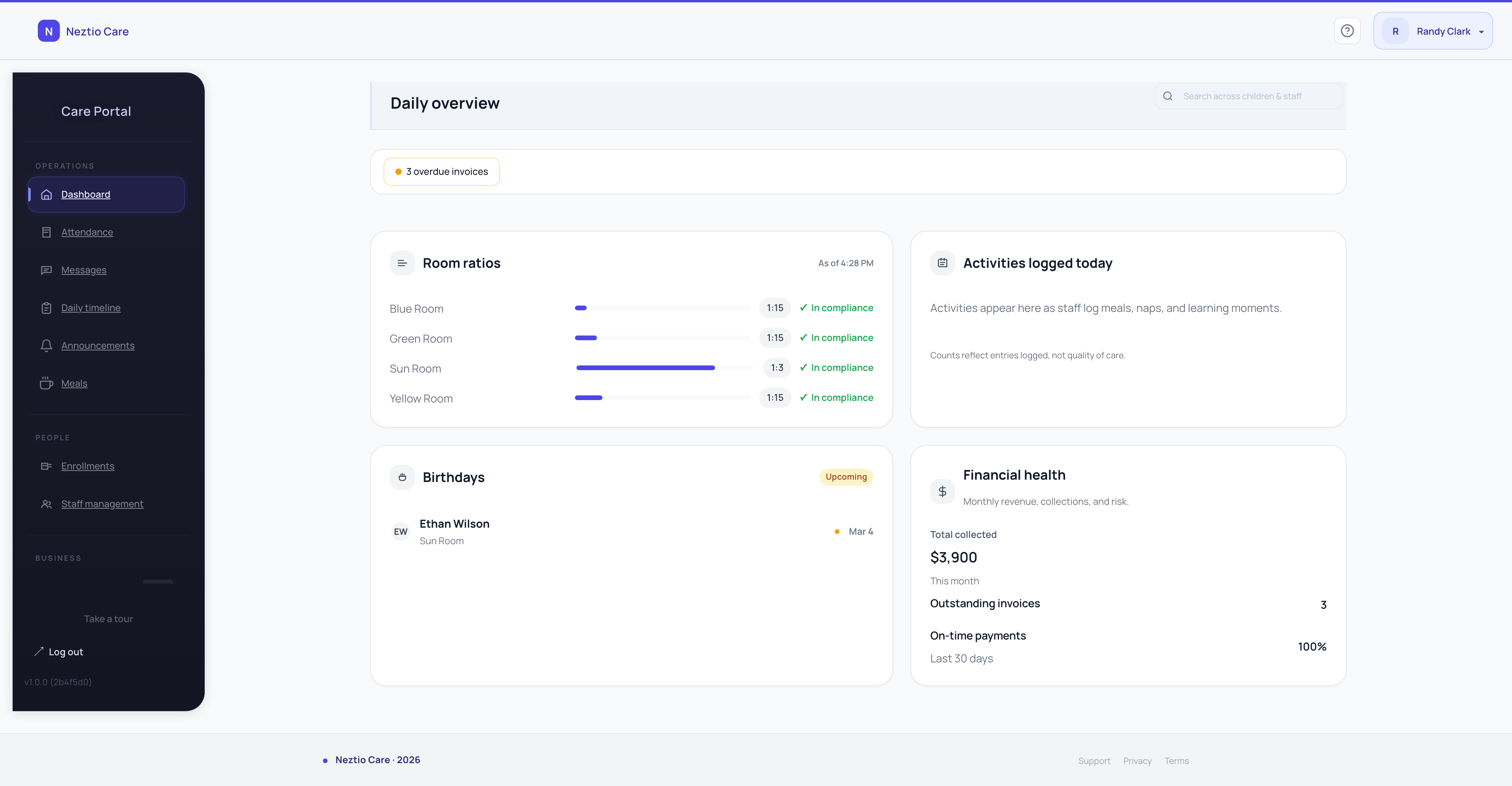
Las proporciones deben mantenerse en todo momento, incluyendo durante las comidas, el juego al aire libre y las transiciones. Para ayudarte a planificar tu personal, prueba nuestra calculadora de proporciones.
Calificaciones del personal
Nueva York tiene requisitos específicos de educación y capacitación para el personal de cuidado infantil que trabaja en centros de cuidado infantil:
Director: Generalmente se requiere que tenga un título universitario (bachelor's degree) en educación de la primera infancia, desarrollo infantil o un campo relacionado, además de experiencia de supervisión relevante. También se pueden aceptar combinaciones equivalentes de educación y experiencia. Consulta las regulaciones de OCFS para ver la lista completa de credenciales calificadas.
Maestros de grupo (Group teachers): Generalmente se requiere que tengan un título asociado (associate degree) en educación de la primera infancia o la credencial Child Development Associate (CDA), junto con experiencia relevante trabajando con niños. Algunas rutas permiten combinaciones equivalentes de cursos y experiencia.
Asistentes de maestro (Teacher assistants): Generalmente se requiere que cuenten con un diploma de escuela secundaria o su equivalente.
Capacitación de salud y seguridad: Todo el personal debe completar 15 horas de capacitación dentro de los primeros seis meses de empleo, con un total de 30 horas requeridas durante los primeros dos años. Esta capacitación debe cubrir temas obligatorios, incluyendo el desarrollo infantil, la seguridad, la nutrición y el reconocimiento del abuso y maltrato infantil.
Desarrollo profesional anual: OCFS requiere que los trabajadores de cuidado infantil completen un mínimo de 30 horas de desarrollo profesional cada dos años (mínimo 5 horas anuales), registradas a través del registro OCFS Aspire. Los temas de capacitación pueden incluir el aprendizaje temprano, la salud y seguridad, y el trabajo con niños con necesidades especiales.
RCP y primeros auxilios (CPR and First Aid): Al menos un miembro del personal con certificación vigente de RCP pediátrico y primeros auxilios debe estar presente en todo momento mientras haya niños bajo cuidado. Muchos programas requieren que todos los maestros principales tengan estas certificaciones.
Requisitos de las instalaciones
Tu espacio físico debe cumplir con los estándares de OCFS antes de que se emita una licencia. Los requisitos clave incluyen:
Espacio interior: Nueva York requiere un mínimo de 35 pies cuadrados de espacio interior utilizable por niño. Esta medición excluye pasillos, baños, cocinas y áreas de almacenamiento.
Espacio exterior: Los programas deben proporcionar acceso a un espacio de juego al aire libre. El área debe ser segura, apropiada para la edad, y estar debidamente cercada o supervisada.
Mobiliario apropiado para la edad: Las cunas, mesas, sillas y equipo de juego deben tener un tamaño apropiado para los grupos de edad atendidos y cumplir con los estándares de seguridad vigentes.
Seguridad contra incendios: Las instalaciones deben cumplir con todos los códigos de incendios aplicables, incluyendo detectores de humo y monóxido de carbono en funcionamiento, extintores de incendios, planes de evacuación exhibidos y simulacros de incendio regulares.
Cumplimiento del código de construcción: La instalación debe contar con un certificado de ocupación válido o una aprobación equivalente para su uso como programa de cuidado infantil.
Entrada accesible: Las instalaciones deben ser accesibles para personas con discapacidades, de acuerdo con los requisitos de la ADA y los códigos de construcción estatales y locales aplicables.
Requisitos de verificación de antecedentes
Nueva York requiere una verificación de antecedentes exhaustiva para todos los futuros empleados, voluntarios y miembros del hogar de cuidado infantil (para los programas basados en el hogar). El proceso de verificación de antecedentes se administra a través de OCFS e incluye los siguientes componentes:
Verificación de huellas dactilares del FBI: Una verificación de antecedentes penales a nivel nacional a través del Federal Bureau of Investigation (FBI), basada en la presentación de huellas dactilares.
Verificación de antecedentes penales del Estado de Nueva York: Una búsqueda de los registros penales del estado a través de la Division of Criminal Justice Services (DCJS) (División de Servicios de Justicia Penal).
Verificación del Registro de Delincuentes Sexuales: Una búsqueda en el New York State Sex Offender Registry (Registro de Delincuentes Sexuales del Estado de Nueva York), así como en el National Sex Offender Public Website (Sitio Web Público Nacional de Delincuentes Sexuales) para cualquier estado en el que la persona haya residido.
Statewide Central Register of Child Abuse and Maltreatment (SCR) (Registro Central Estatal de Abuso y Maltrato Infantil): Una verificación en la base de datos para determinar si una persona tiene un informe indicado de abuso o maltrato infantil en Nueva York.
Lista de Exclusión de Personal (Staff Exclusion List, SEL): Una verificación contra la Staff Exclusion List (Lista de Exclusión de Personal) del Justice Center, la cual identifica a las personas que se ha determinado que cometieron actos graves de abuso o negligencia.
Importante
Todas las verificaciones de antecedentes requeridas deben completarse y aprobarse antes de que una persona pueda tener contacto sin supervisión con los niños. No existe un período de gracia para este requisito.
Requisitos de salud y seguridad
Nueva York tiene regulaciones detalladas de salud y seguridad que los programas deben seguir:
Vacunas: Los niños deben tener las vacunas apropiadas para su edad según lo requerido por la New York State Public Health Law (Ley de Salud Pública del Estado de Nueva York) antes de asistir a un programa de cuidado infantil. Los programas deben mantener registros de vacunación actualizados para cada niño inscrito.
Plan de atención médica: Los programas deben contar con un plan de atención médica por escrito que aborde la exclusión por enfermedad, la administración de medicamentos, los procedimientos de emergencia y la respuesta ante lesiones. El plan debe desarrollarse en consulta con un asesor de atención médica.
Administración de medicamentos: El personal que administre medicamentos debe recibir capacitación específica. Todos los medicamentos requieren autorización por escrito de los padres y deben almacenarse de forma segura.
Prácticas de sueño seguro: Las regulaciones de OCFS establecen requisitos estrictos de sueño seguro para bebés en entornos de cuidado infantil. Los programas que atienden a bebés deben seguir protocolos estrictos de sueño seguro, incluyendo colocar a los bebés boca arriba para dormir en cunas aprobadas, mantener el área de sueño libre de ropa de cama blanda y juguetes, y garantizar la supervisión directa durante la siesta.
Planificación de emergencias: Los programas deben contar con planes de emergencia y evacuación por escrito que cubran incendios, clima severo, escenarios de refugio en el lugar y otras emergencias. Los planes deben practicarse mediante simulacros regulares.
Requisitos de mantenimiento de registros
OCFS requiere que los programas de cuidado infantil mantengan registros exhaustivos que deben estar disponibles para revisión durante las inspecciones. Los registros esenciales incluyen:
Registros de asistencia: Registros diarios de entrada y salida para cada niño, incluyendo las horas y el nombre de la persona que lo dejó y lo recogió.
Registros de inscripción: Formularios de inscripción completos para cada niño, incluyendo información de contacto de emergencia, personas autorizadas para recogerlo, información de salud y detalles de alergias.
Registros de calificación del personal: Documentación de la educación de cada empleado, certificaciones (RCP, primeros auxilios), autorizaciones de verificación de antecedentes y horas de desarrollo profesional.
Registros de salud: Registros de vacunación actualizados y registros de exámenes físicos para cada niño, según lo requerido por el tipo de programa.
Informes de incidentes: Documentación por escrito de cualquier lesión, accidente o incidente inusual, incluyendo la fecha, la hora, la descripción de lo ocurrido y las acciones tomadas.
Registros de simulacros: Registros de todos los simulacros de incendio y de emergencia, incluyendo las fechas, las horas y el número de niños y personal que participaron.
Consejo: Un software de gestión de cuidado infantil como Neztio puede ayudarte a mantener registros digitales de asistencia, inscripción, documentación del personal y personas autorizadas para recoger a los niños, facilitando que te mantengas organizado y preparado para las inspecciones.
Inspecciones y aplicación de la normativa
Una vez que cuentas con licencia o registro, tu programa está sujeto a un monitoreo continuo:
Inspecciones sin previo aviso: El personal de licencias de OCFS realiza visitas sin previo aviso a los programas regulados. Estas inspecciones pueden ocurrir en cualquier momento durante tu horario de operación. Los inspectores revisan los registros, observan las aulas, verifican las proporciones y evalúan el cumplimiento general.
Inspecciones de NYC DOHMH: Los centros de cuidado infantil grupal en la ciudad de Nueva York son inspeccionados por DOHMH. Estas inspecciones siguen un formato similar sin previo aviso y evalúan el cumplimiento de las disposiciones del Código de Salud de la Ciudad de Nueva York para el cuidado infantil.
Informes públicos de inspección: Los resultados de las inspecciones de los programas regulados por OCFS están disponibles públicamente en el sitio web de OCFS. Las familias y el público en general pueden consultar cualquier proveedor con licencia o registro para ver su historial de inspecciones, infracciones y medidas de aplicación.
Medidas de aplicación: Si se encuentran infracciones, OCFS o DOHMH pueden emitir planes de acción correctiva, multas, o en casos graves, suspender o revocar una licencia o registro.
Recursos para proveedores de cuidado infantil en Nueva York
Las siguientes organizaciones y agencias pueden ayudarte a navegar el proceso de licencia y mejorar la calidad de tu programa:
NY OCFS Division of Child Care Services (División de Servicios de Cuidado Infantil de OCFS): La principal agencia estatal para la licencia y el registro de cuidado infantil. Su sitio web proporciona formularios de solicitud, textos de las regulaciones e información de contacto de las oficinas regionales.
QUALITYstarsNY: El Quality Rating and Improvement System (QRIS) (Sistema de Calificación y Mejora de Calidad) de Nueva York. Este programa voluntario ayuda a los proveedores a evaluar y mejorar la calidad de sus programas, y la participación puede mejorar tu reputación con las familias.
NYC DOHMH Bureau of Child Care (Oficina de Cuidado Infantil de NYC DOHMH): Para los proveedores que operan centros de cuidado infantil grupal en la ciudad de Nueva York, DOHMH es tu contacto regulatorio principal. Ellos gestionan los permisos, inspecciones y medidas de aplicación para los centros grupales de NYC.
Agencias locales de Child Care Resource and Referral (CCR&R) (Recursos y Referencias de Cuidado Infantil): Estas organizaciones comunitarias brindan apoyo gratuito a los proveedores de cuidado infantil, incluyendo ayuda con el proceso de licencia, oportunidades de desarrollo profesional y asistencia en la planificación de negocios.
Cómo comenzar con tu licencia de cuidado infantil en Nueva York
Abrir un programa de cuidado infantil en Nueva York requiere una planificación cuidadosa, pero el proceso de licencia es manejable si trabajas los requisitos paso a paso. Comienza contactando a tu oficina regional local de OCFS (o a NYC DOHMH para los centros grupales en la ciudad), asiste a la capacitación requerida, y asegúrate de que tu instalación cumpla con todos los estándares de salud y seguridad antes de solicitar.
Una vez que estés en funcionamiento, mantenerte organizado es la clave para el cumplimiento continuo. Descubre cómo Neztio ayuda a los programas de cuidado infantil a gestionar la asistencia, la inscripción, los registros del personal y la comunicación con los padres para que siempre estés preparado para tu próxima inspección.
Relacionado
Lista de Verificación de Licencia de Cuidado Infantil: Lo Que Todo Centro Nuevo Necesita
Relacionado
Cómo Iniciar una Guardería: Una Guía Paso a Paso
Glossary terms in this article
Licencia
Permiso emitido por el estado para operar una instalación de cuidado infantil, que requiere el cumplimiento de estándares de salud, seguridad y personal.
Proporción Personal-Niño
El número requerido de personal calificado por grupo de niños, establecido por las regulaciones estatales de licencia según la edad.
Verificación de Antecedentes
Revisiones de antecedentes penales y de registros requeridas para todos los trabajadores de cuidado infantil bajo la Ley CCDBG de 2014.
Tamaño del Grupo
El número máximo de niños permitido en una sola aula o grupo de cuidado, determinado por las reglas de licencia estatales.
Acreditación
Certificación voluntaria de calidad otorgada por organizaciones como NAEYC o NAC que reconoce a los programas que superan los estándares mínimos de licencia.