Planning Safe Field Trips for Your Childcare Center
Field trips are one of the most exciting parts of a childcare program for children and families alike. They also come with real logistics and safety responsibilities. From licensing requirements and transportation rules to emergency planning and parent communication, here is everything childcare directors need to know to plan field trips that are safe, compliant, and fun.
Licensing Requirements for Field Trips
Most state licensing agencies have specific rules governing field trips at childcare centers. Before you plan your first outing, review your state's childcare licensing regulations to understand what is required. While the details vary by state, several requirements are common across the country.
- -Written parent permission for each trip. Most states require a signed permission slip from a parent or guardian for every field trip. A blanket annual consent form is not sufficient in many jurisdictions. The permission form should include the destination, date, departure and return times, transportation method, and any costs involved.
- -Higher supervision ratios during transportation. Many states require enhanced staff-to-child ratios when children leave the center, particularly during vehicle transport. Check your state's specific ratio requirements for off-site activities.
- -First aid kit and emergency contacts. A fully stocked first aid kit and a printed list of emergency contact information for every child on the trip must travel with the group. Some states also require that at least one staff member on the trip hold a current first aid and CPR certification.
- -Licensed transportation. If your center uses vehicles to transport children, those vehicles must meet state licensing standards for child transportation, including proper insurance, vehicle maintenance records, and licensed drivers.
- -Pre-approval in some states. Certain states require childcare centers to submit field trip plans to their licensing agency in advance. Even if your state does not require formal pre-approval, documenting your plans and keeping records of all field trips is a best practice for compliance.
Planning and Preparation
Thorough preparation is what separates a smooth field trip from a stressful one. The planning process should start well before the day of the trip.
Visit the location in advance:
A pre-visit by the lead teacher or director is essential. Walk the entire site and identify restroom locations, shaded areas for breaks, shelter in case of sudden weather changes, and any potential hazards like open water, steep drops, or busy roads nearby. Confirm that the location is accessible for all children in your group, including any who use wheelchairs or have mobility considerations.
Plan timing around meals and naps:
Young children have limited stamina and predictable needs. Schedule the trip so it does not conflict with lunch, snack, or nap times. If the trip overlaps with a meal, plan how and where food will be served, and account for any food allergies. Shorter trips in the morning tend to work best for toddlers and preschoolers, when energy levels are highest.
Prepare name tags and identification:
Every child should wear a visible identification tag during the trip. For safety, name tags should include the child's first name only and the center's phone number. Never put a child's last name on a visible tag, as this makes it easier for a stranger to approach the child by name and appear familiar. Some programs use matching colored T-shirts or wristbands instead of name tags for quick visual identification of their group.
Permission and Communication
Clear, timely communication with families is one of the most important parts of field trip planning. Parents need to be informed, and their written consent is required.
Permission slips:
Send permission slips home well in advance of the trip. Each form should clearly state the destination, the date and time of departure and return, how children will be transported, what children should wear (closed-toe shoes, weather-appropriate clothing), and anything they need to bring (sunscreen, water bottle, bag lunch). Collect signed forms before the day of the trip, and do not allow a child to attend without a signed permission slip on file.
Reminders and updates:
Send a reminder to families the day before the trip with key details: drop-off time, what to pack, and what to expect. On the day of the trip, let parents know when the group departs and when it returns safely. Sharing photos during or after the trip through daily reports gives parents a window into their child's experience and builds trust in your program.
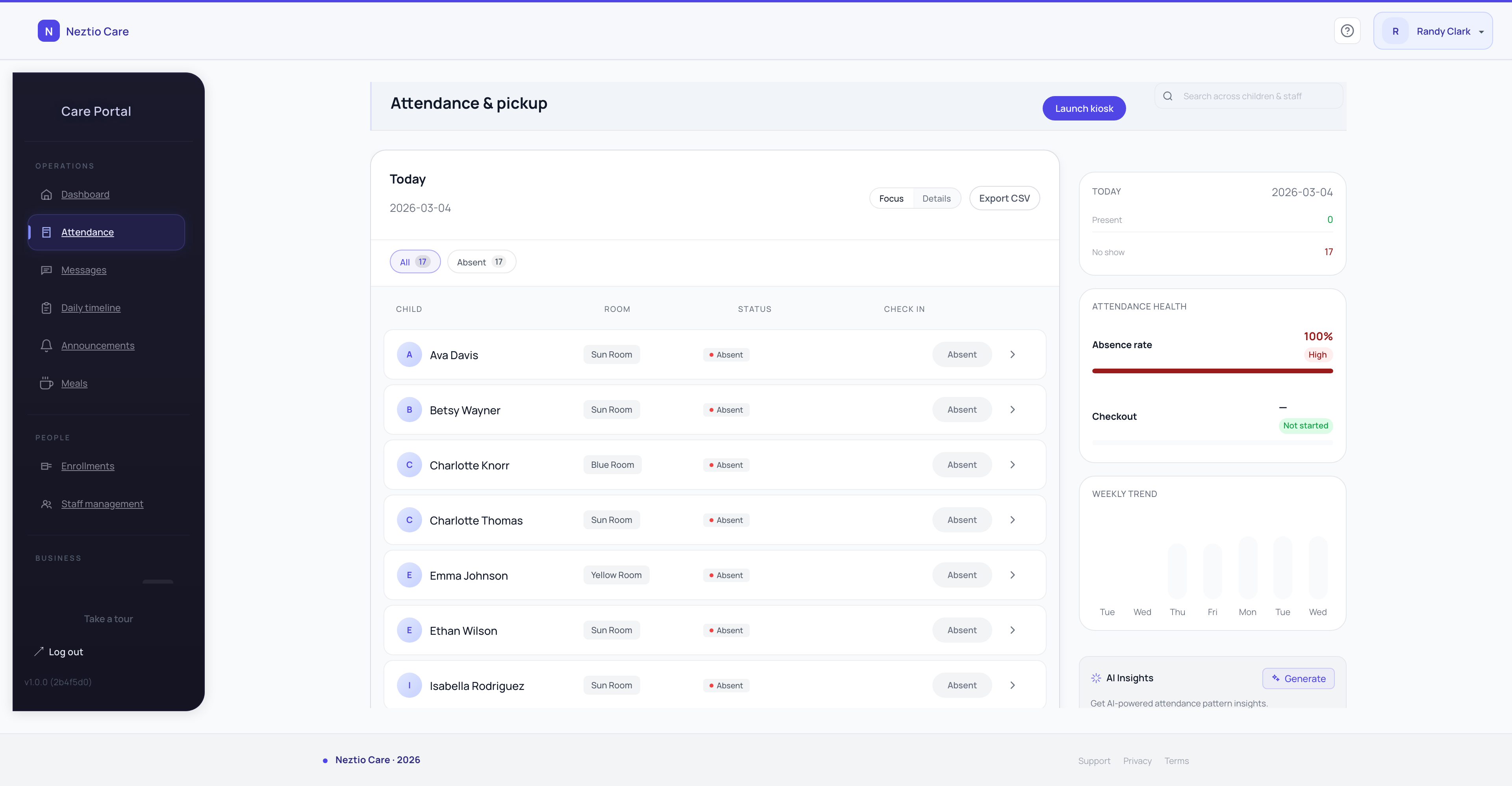
Neztio's messaging and announcements features make it easy to coordinate field trip logistics with families. Send announcements to an entire classroom about an upcoming trip, message individual parents about permission slips, and share photos in daily reports through the activity feed. Parents receive updates in real time on the Neztio parent app for iOS and Android.
Transportation Safety
Transportation is often the highest-risk part of any field trip. Whether children are riding in vehicles or walking, safety protocols must be in place and followed without exception.
Vehicle transportation:
- -Car seats and restraints. Federal and state laws require age-appropriate car seats or booster seats for young children. Ensure every child is in the correct restraint for their age, weight, and height. Staff must verify that each seat is properly installed and each child is buckled before the vehicle moves.
- -Licensed drivers and vehicle inspections. All drivers must hold valid licenses and meet any state-specific requirements for transporting children (some states require commercial driver's licenses for vehicles over a certain size). Vehicles should have current safety inspections, proper insurance, and working safety equipment.
- -Headcounts. Conduct a headcount before boarding, after boarding, upon arrival at the destination, before boarding for the return trip, and upon return to the center. Use a written roster and check off each child by name at every transition point. This is the single most important safety measure for preventing a child from being left behind.
Walking field trips:
- -Buddy system. Pair each child with a partner and teach them to hold hands and stay together. Staff should be positioned at the front, middle, and back of the group.
- -Visibility. Use reflective vests, brightly colored T-shirts, or a walking rope (a rope with handles that children hold) to keep the group together and visible to drivers. Cross streets only at crosswalks and designated crossing points, with an adult stopping traffic or confirming it is safe before the group crosses.
Supervision Ratios
Maintaining proper supervision is more challenging on a field trip than in a classroom. Children are in an unfamiliar environment, there are more potential hazards, and the space is larger and harder to monitor. Many states recognize this and require enhanced staff-to-child ratios for off-site activities.
For example, a state that requires a 1:8 ratio for preschoolers in the classroom may require 1:4 or 1:5 for field trips. Check your state's licensing regulations for the specific ratios that apply to off-site excursions. If your center does not have enough staff to meet the enhanced ratio, you may need to recruit additional adult volunteers.
Keep in mind that many states require all adults who supervise children, including volunteers, to pass background checks. Plan ahead and allow time for background check processing if you are bringing in parent volunteers or other community members. Every adult on the trip should understand their role, know which children they are responsible for, and have a copy of the emergency contact list.
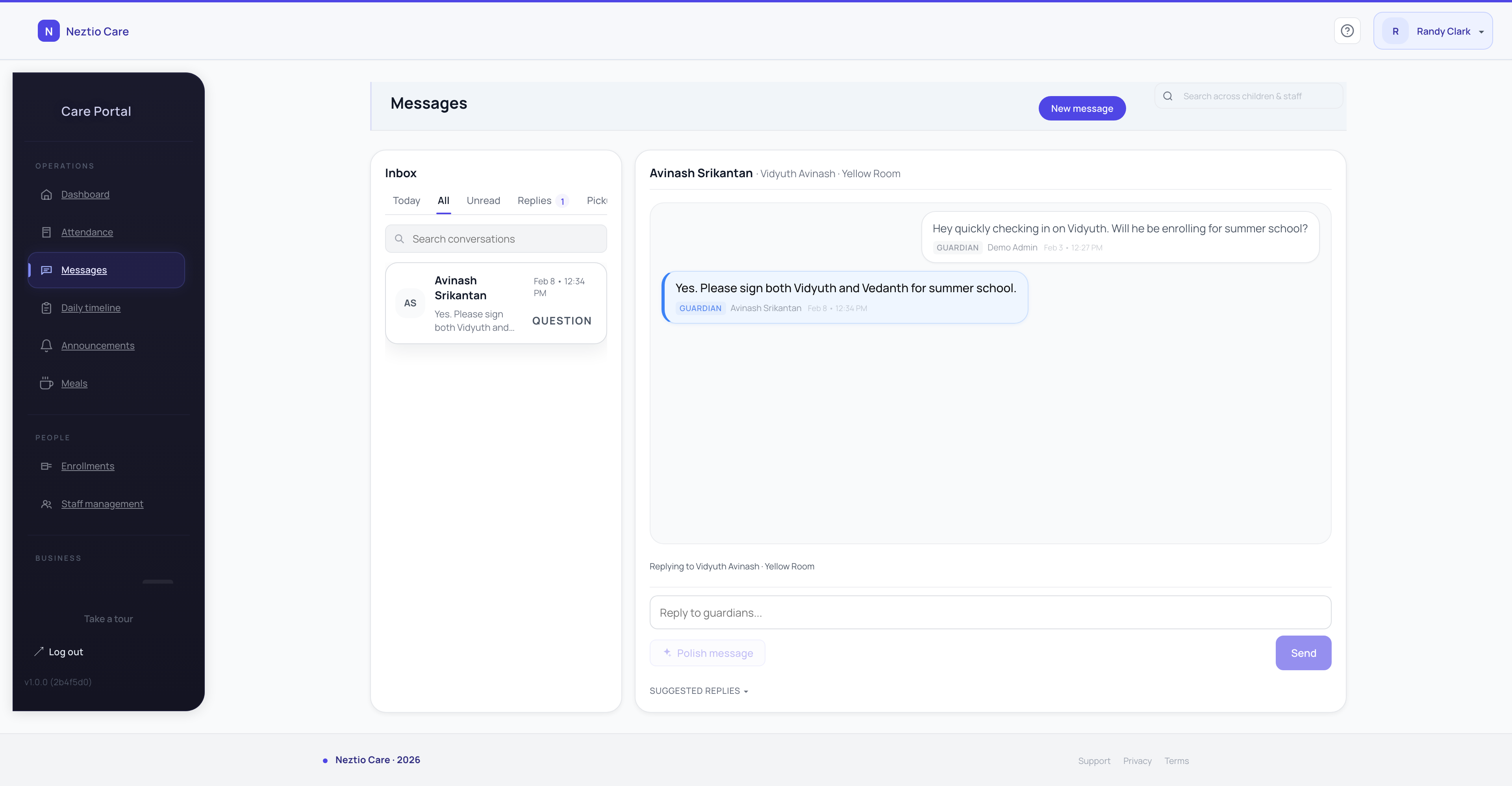
Neztio's attendance and check-in features help you maintain an accurate count of which children are present on any given day, making it easier to confirm your roster before departure and verify ratios.
Emergency Procedures on the Road
Emergencies can happen anywhere, and being away from the center makes them harder to manage. Preparation is everything. Before the trip, make sure the following items and plans are in place.
- -First aid kit. Bring a fully stocked, portable first aid kit on every trip. Check the contents before departure and restock after each use.
- -Emergency contact list. Print a list of emergency contacts for every child on the trip. Do not rely solely on a phone or tablet for this information, as devices can lose battery or signal.
- -Medication. If any child on the trip requires medication (such as an EpiPen for allergies or an inhaler for asthma), that medication must travel with the group. The staff member responsible for administering it should have the medication on their person, not stored in a bag or vehicle.
- -Center director's phone number. At least one staff member should have the center director's direct phone number and know to call immediately if an emergency arises.
- -Know the nearest hospital or urgent care. Before departure, look up the nearest emergency medical facility to the field trip destination. Save the address so staff can navigate there quickly if needed.
- -Plan for early return. Have a clear plan for how the group will get back to the center quickly if conditions change: severe weather, a child becomes ill, or a safety concern arises at the destination. Every adult on the trip should know the plan before departure.
Age-Appropriate Destinations
The best field trips match the developmental stage of the children. A destination that is perfect for school-age children may overwhelm toddlers, and a trip that delights preschoolers may bore older kids. Here are practical destination ideas for each age group.
Toddlers (1-2 years):
Keep trips short, close to the center, and focused on sensory exploration. A walk to a nearby park, a visit to the local library for story time, or a trip to a farm where children can see and touch animals are all excellent options. Toddlers tire quickly, so plan for trips of an hour or less including travel time.
Preschoolers (3-5 years):
Preschool-age children can handle slightly longer trips and benefit from destinations that connect to classroom learning. A visit to the local fire station, a trip to the post office to mail letters the children wrote, a nature center, or a zoo gives children hands-on experiences that reinforce what they are learning. These destinations also offer natural opportunities for conversation, observation, and asking questions.
School-age (5+ years):
Older children are ready for more complex outings. Museums, science centers, sporting events, community service projects (like a park cleanup or visiting a senior center), and nature hikes all work well. School-age children can also participate in planning the trip, which builds ownership and excitement. Keep the travel distance manageable so the majority of time is spent at the destination rather than on the road.
Keep Your Center Organized for Every Outing
Field trips are a valuable part of any childcare program, but they require careful planning, clear communication, and strict safety protocols. With the right preparation, your center can give children memorable experiences while keeping them safe every step of the way.
See how Neztio helps childcare centers manage daily operations, from attendance tracking and daily reports to messaging, billing, and staff management. Explore all features or get started free.
Glossary terms in this article
Licensing
The regulatory process by which state agencies certify that childcare programs meet minimum health, safety, and operational standards.
Authorized Pickup
A person designated by a parent or guardian who is permitted to pick up a child from a childcare center.
Staff-to-Child Ratio
The required number of qualified adults per group of children, set by state licensing agencies based on the age of the children.
Parent Communication
The methods and practices childcare providers use to share information with families about their child's day, development, and center operations.