Florida Childcare Licensing Requirements: A Complete Guide
Florida's childcare licensing is administered by the Department of Children and Families (DCF). Whether you are opening a licensed child care facility, a family day care home, or a large family child care home, this guide covers the key requirements you need to know.
Note: Licensing requirements change frequently. This guide reflects regulations as of early 2026. Always verify current requirements directly with your state licensing agency before making compliance decisions.
Overview of Florida childcare licensing
In Florida, the Department of Children and Families (DCF) is the state agency responsible for licensing and regulating childcare providers. Florida law generally requires a license for anyone providing childcare for compensation if they care for more than one unrelated child, or for more than five children total including the provider's own children.
Florida recognizes several categories of licensed childcare:
Licensed Child Care Facilities (centers): Programs operating in a commercial or institutional setting, serving children in a group care arrangement. These are what most people think of as daycare centers or preschools.
Licensed Family Day Care Homes: Care provided in the operator's own home, with capacity limits based on the ages of children served and whether an assistant is present.
Large Family Child Care Homes: Home-based care that serves a larger number of children than a standard family day care home, with additional staffing and requirements.
Important
Florida licensing requirements are set by state statute and the Florida Administrative Code, and they can change over time. Always verify current requirements directly with DCF or your local Early Learning Coalition before making business decisions.
How to apply for a Florida childcare license
The application process involves multiple steps and coordination with several agencies. Here is what to expect:
- 1
Complete the 40-hour introductory child care training
Florida statute mandates that child care personnel complete a 40-hour introductory training course. This training covers topics including child development, health and safety, identifying child abuse and neglect, and age-appropriate activities. It must be completed through a DCF-approved provider.
- 2
Submit the DCF Child Care Facility application
Applications are submitted through the DCF online portal. You will need to provide information about the facility, ownership, planned capacity, and operating hours.
- 3
Complete Level 2 background screening
All owners, directors, staff, and anyone with direct contact with children must pass a Level 2 background screening (more details in the background screening section below).
- 4
Pass health and fire inspections
Your facility must be inspected and approved by the local county health department and the local fire marshal or fire inspector before a license can be issued.
- 5
Obtain zoning approval
Confirm that your location is properly zoned for childcare operations with your local zoning or planning department.
- 6
DCF licensing inspection and approval
A DCF licensing counselor will visit your facility to verify compliance with all requirements. Once approved, your license is issued and must be posted in a visible location at the facility.
Florida staff-to-child ratio requirements
Florida sets specific staff-to-child ratios in the Florida Administrative Code. These ratios must be maintained at all times children are in care. The following are Florida's required ratios for licensed child care facilities (as established in state regulations; always verify current rules with DCF):
| Age Group | Staff-to-Child Ratio |
|---|---|
| Birth to 1 year | 1:4 |
| 1 year | 1:6 |
| 2 years | 1:11 |
| 3 years | 1:15 |
| 4 to 5 years | 1:20 |
| 5 years and older (school-age) | 1:25 |
Florida's ratios for older age groups are notably more permissive than many other states. This makes staffing planning particularly important, as centers may choose to maintain tighter ratios than the state minimum to ensure quality of care.
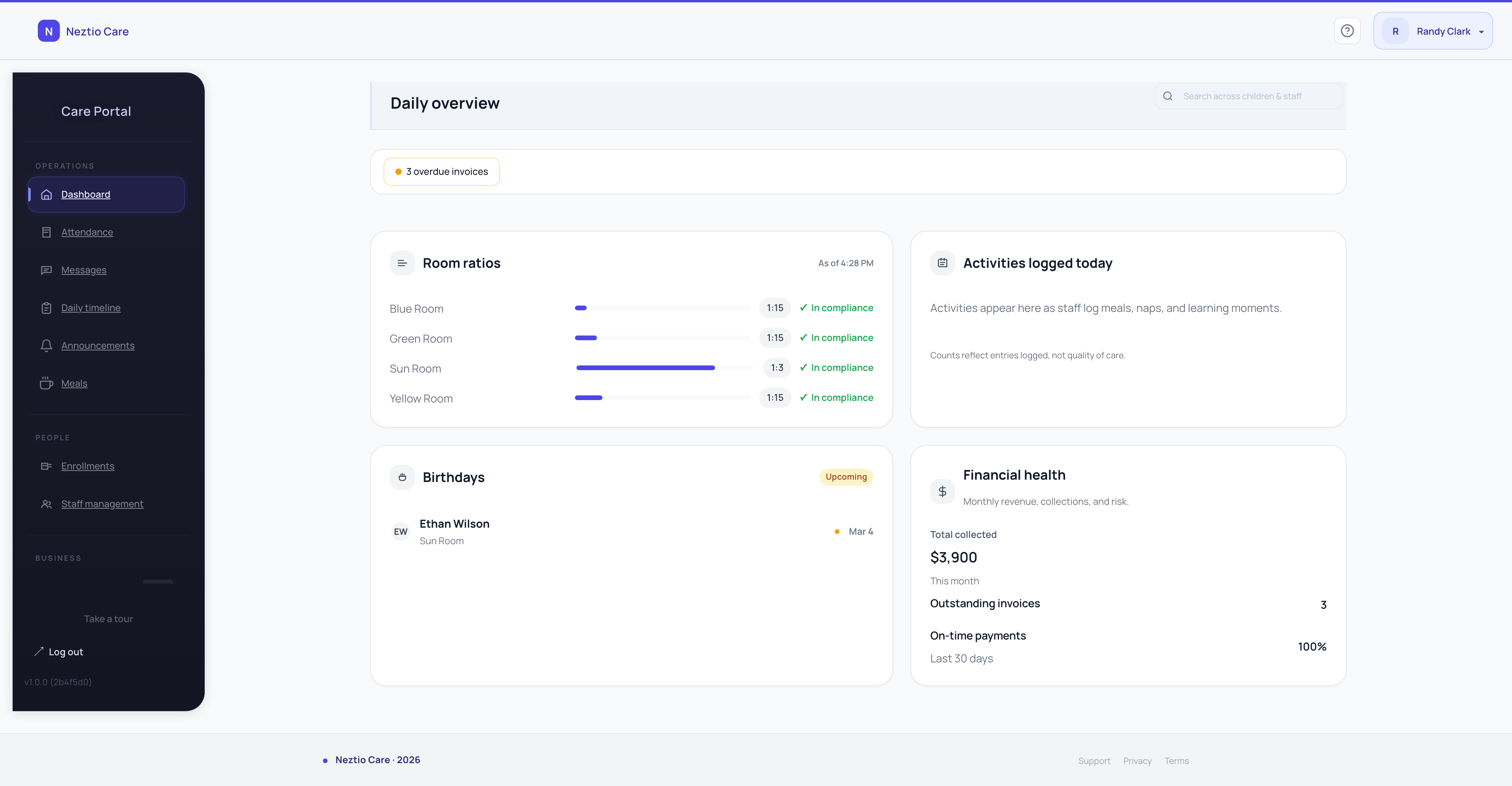
For help planning your staffing levels, try our ratio calculator.
Staff qualifications
Florida has specific requirements for who can work in a licensed childcare setting and what credentials they need.
Director credentials: Child care facility directors must complete DCF Director Credential training or hold an equivalent qualification (such as a degree in early childhood education or a related field). The Director Credential includes coursework in management, child development, and regulatory compliance.
40-hour introductory training: All child care personnel must complete the state-mandated 40-hour introductory child care training course. New employees must complete this training within 90 days of starting employment.
Annual in-service training: Florida requires a minimum of 10 hours (1.0 CEU) of in-service training annually for all child care personnel. Topics may include child development, health and safety, and special needs.
CPR and First Aid: Staff must maintain current certifications in infant and child CPR and First Aid.
Minimum age: Child care personnel must generally be at least 18 years old. In some circumstances, individuals who are 16 or 17 may work in a childcare setting under specific conditions and supervision requirements.
Credential options: Beyond the introductory training, Florida recognizes several professional credentials including the Florida Staff Credential, the Child Development Associate (CDA) credential, and degrees in early childhood education or related fields.
Facility requirements
Your physical space must meet specific standards set by the Florida Administrative Code. These are verified during your initial licensing inspection and in subsequent inspections.
Indoor space: Florida requires a minimum of 35 square feet of usable indoor floor space per child. This measurement excludes bathrooms, hallways, kitchens, and storage areas.
Outdoor space: A minimum of 45 square feet of outdoor play space per child is required. The outdoor area must be fenced and maintained in a safe condition.
Age-appropriate equipment: All furniture, equipment, and materials must be safe, clean, and appropriate for the ages of children served. Cribs, rest mats, and outdoor play equipment must meet applicable safety standards.
Fire inspection approval: Your facility must pass an inspection by the local fire marshal or fire inspector. This includes fire extinguishers, smoke detectors, emergency exits, and a posted evacuation plan.
Health department inspection: The local county health department inspects the facility for sanitation, food preparation safety, water supply, and general environmental health.
Zoning approval: You must verify that your facility location is properly zoned for childcare use with your local zoning or planning authority.
Background screening
Florida requires Level 2 background screening for all individuals working in licensed childcare settings. This is one of the most critical requirements and must be completed before any person has direct contact with children.
Level 2 screening: This includes fingerprint-based checks through both the Florida Department of Law Enforcement (FDLE) and the FBI. It is more comprehensive than a standard name-based background check.
Who must be screened: All owners, operators, directors, employees, and any person who has direct contact with children. This includes substitutes and volunteers who are counted in ratios.
What is checked: Criminal history records (state and national), the sex offender registry, and the Florida Abuse Hotline (child abuse and neglect registry).
Timing: Screening must be completed and results must come back clear before the individual can have unsupervised contact with children.
Rescreening: Florida requires rescreening every 5 years for all individuals who remain in positions requiring screening.
Health and safety requirements
Florida licensing standards include detailed health and safety requirements designed to protect children in care.
Immunization records: Children must have a current Florida Certificate of Immunization (Form DH 680) on file before enrollment. Florida law specifies which immunizations are required by age.
Daily health observation: Staff must observe each child daily upon arrival for signs of illness or injury and document any concerns.
Medication administration: Facilities must have written policies for administering medication, including requirements for parent authorization, proper storage, and documentation of each dose.
Safe sleep practices for infants: Florida regulations require that infants be placed on their backs to sleep in approved cribs. Soft bedding, pillows, bumper pads, and stuffed animals are not permitted in cribs.
Handwashing: Proper handwashing protocols must be followed by children and staff, including before and after meals, after diaper changes, and after using the restroom.
Emergency preparedness: Each facility must have a written emergency preparedness plan covering natural disasters, fires, lockdowns, and medical emergencies. Florida's hurricane risk makes disaster preparedness particularly important for providers in the state.
Training requirements
Florida has specific training requirements that all child care personnel must complete. These are tracked through the DCF training transcript system.
40-hour introductory training: Covers child growth and development, behavioral observation, health and safety, identifying child abuse, and age-appropriate activities. Must be completed within 90 days of hire.
10 hours (1.0 CEU) annual in-service training: Required each year for all child care personnel. Content areas vary and may be selected based on the needs of the program and staff.
CPR and First Aid: Current certifications must be maintained. CPR training must cover infant, child, and adult CPR.
Special needs training: Florida-specific training on working with children who have special needs or developmental disabilities.
Early literacy training: Florida includes early literacy as a component of its required training for child care personnel working with preschool-age children.
Approved providers: All training must be completed through DCF-approved training providers. Completion is recorded on the individual's DCF training transcript.
Inspections and ongoing compliance
Once you are licensed, DCF monitors your facility through a regular inspection process.
Unannounced inspections: DCF conducts unannounced inspections at least once per year, and may visit more frequently based on complaint history or previous violations.
Public inspection results: Inspection results are available to the public on the DCF website. Parents can look up any licensed provider's inspection history and violation record.
Violation classifications: Violations are classified by severity. More serious violations (those posing an immediate risk to children) require immediate corrective action, while less severe violations may be given a corrective action timeline.
Corrective action: When deficiencies are found, the facility must submit and implement a corrective action plan within the timeframe specified by DCF. Failure to correct violations can result in fines, probation, or license revocation.
Tip: The best way to prepare for unannounced inspections is to operate every day as if an inspector could walk in. Childcare management software like Neztio can help you keep attendance records, staff documentation, enrollment files, and authorized pickup lists organized and readily accessible.
Florida childcare licensing resources
Here are the key resources for Florida childcare providers:
Florida DCF Child Care Services: The official DCF website for child care licensing is the primary source for applications, regulations, training information, and provider search tools.
Early Learning Coalitions: Florida has local Early Learning Coalitions across the state that serve as child care resource and referral (CCR&R) agencies. They can help with training, quality improvement, and connecting families to providers.
Gold Seal Quality Care program: Florida's Gold Seal program is the state's quality recognition system (similar to a QRIS in other states). Centers that hold accreditation from recognized accrediting bodies (such as NAEYC or NAC) can apply for Gold Seal designation, which comes with benefits including higher School Readiness reimbursement rates.
Get started with confidence
Florida's licensing process requires attention to detail across many areas, from background screening and staff training to facility standards and ongoing inspections. The requirements exist for a critical reason: ensuring the safety and well-being of children in care.
Once your center is licensed and operating, the right childcare management software makes day-to-day compliance much easier. See how Neztio helps Florida childcare centers manage attendance, enrollment, staff records, and parent communication so you can focus on what matters most.
Related
Childcare Licensing Checklist: What Every New Center Needs
Related
Starting a Daycare: A Step-by-Step Guide
Glossary terms in this article
Licensing
State-issued permission to operate a childcare facility, requiring compliance with health, safety, and staffing standards.
Staff-to-Child Ratio
The required number of qualified staff per group of children, set by state licensing regulations based on age.
Background Check
Criminal history and registry screenings required for all childcare workers under the CCDBG Act of 2014.
Group Size
The maximum number of children allowed in a single classroom or care group, determined by state licensing rules.
Accreditation
Voluntary quality certification from organizations like NAEYC or NAC that recognizes programs exceeding minimum licensing standards.