How to Handle Biting in Your Toddler Classroom: Policies and Communication
Biting is one of the most common and emotionally charged behaviors in toddler classrooms. It upsets the child who was bitten, worries both families, and stresses out teachers. But biting is also a normal part of toddler development, and how your center handles it can either build trust with families or erode it. This guide covers why toddlers bite, how to prevent and respond to incidents, and how to communicate with families through every step.
1. Why Toddlers Bite
The first thing every teacher and parent needs to understand is that biting in toddlers is not malicious. Children between roughly 12 and 36 months bite for reasons that have nothing to do with aggression in the adult sense. Their language skills are still developing, their impulse control is minimal, and they are navigating a world of big feelings with very few tools to express them.
Common reasons toddlers bite:
- -Teething. For younger toddlers, the physical discomfort of new teeth breaking through can drive them to bite down on whatever is nearby, including other children.
- -Frustration. A toddler who wants a toy another child has, or who cannot communicate what they need, may bite out of sheer frustration. They do not yet have the words to say "I want a turn."
- -Exploration. Toddlers learn about the world through their mouths. Biting can be an extension of mouthing objects, applied to people.
- -Seeking attention. Even negative attention is attention. If a child learns that biting gets a strong reaction from adults and peers, they may repeat the behavior.
- -Overwhelm or overstimulation. A noisy, crowded room with too much happening at once can push a toddler past their coping threshold. Biting becomes a stress response.
Understanding why a child is biting is the first step toward stopping it. A child who bites because they are teething needs a different intervention than a child who bites because they are overwhelmed by a chaotic classroom. Observe before you react.
2. Prevention Strategies
The best response to biting is preventing it from happening in the first place. While you cannot eliminate biting entirely in a toddler room, you can significantly reduce how often it occurs.
- -Maintain adequate supervision. Toddler classrooms need enough adults to actively supervise small groups. Biting most often happens when teachers are distracted or spread too thin. Position yourself at the children's level and stay engaged.
- -Reduce crowding. When too many toddlers are in one area, conflicts over space and toys escalate. Spread activities across the room and limit how many children are in each center at a time.
- -Provide sensory outlets. Keep teethers, chew toys, and textured sensory items readily available. For children who bite due to oral sensory needs, having appropriate things to chew on makes a real difference.
- -Teach simple words for feelings. Even before toddlers can speak in sentences, they can learn a few key words and signs: "mine," "no," "help," "mad." Giving children language for their emotions reduces the need to express them physically.
- -Watch for triggers. Hunger, tiredness, and overstimulation are the most common triggers. If a child consistently bites right before lunch or at the end of a long morning, adjusting the schedule or offering an earlier snack can help.
- -Maintain structured routines. Toddlers thrive on predictability. Consistent daily routines reduce anxiety and overstimulation, which in turn reduces biting incidents. Transitions between activities are especially high-risk moments, so use songs, countdowns, or visual cues to smooth them.
3. Responding to a Biting Incident
When a bite happens, your response sets the tone for how both families experience the situation. Stay calm, be methodical, and prioritize the well-being of both children.
Immediate steps:
- -Comfort the bitten child first. Attend to the child who was hurt. Check the injury, offer comfort, and separate them from the situation. This child needs to feel safe and cared for.
- -Calmly address the biter. Get down to the child's level, make eye contact, and use a firm but calm voice: "No biting. Biting hurts." Keep it short and clear. Long explanations do not register with toddlers. Redirect them to another activity.
- -Clean the wound. Wash the bite area with soap and water. Apply a cold compress to reduce swelling. If the skin is broken, follow your center's first aid protocol and document accordingly.
- -Document the incident. Complete an incident report for both families: one for the bitten child's family and one for the biter's family. Include the time, what happened, what was done, and how both children responded afterward.
What to never do:
- -Never use punishment. Biting a child back, putting hot sauce on their tongue, or using time-out as punishment for a toddler are never appropriate responses. These methods are ineffective, can be harmful, and may violate your state's licensing regulations.
- -Never shame the child. Labeling a toddler as "the biter" or making them feel bad about themselves does not stop the behavior. It damages their sense of security in the classroom.
4. Writing a Biting Policy
A written biting policy should be part of your parent handbook. Having it documented before an incident occurs means you are not creating rules on the fly during an emotional situation. It also gives families clear expectations from the start.
Your biting policy should cover:
- -Prevention efforts. Explain what your center does proactively to minimize biting: adequate staffing ratios, sensory materials, conflict resolution coaching, and structured routines.
- -Incident response. Describe step by step how staff respond when a bite occurs, including first aid, redirection, and documentation.
- -Family notification. State that both families will be notified the same day with a written incident report. Specify the method of notification (in-app message, phone call, written form at pickup).
- -Confidentiality. Make it clear that you will not share the name of the biting child with the bitten child's family, or vice versa. This is standard practice in early childhood education and protects both families from conflict.
- -Persistent biting protocol. Outline what happens if a child bites repeatedly: behavior observation, individualized plan, parent conferences, and, as a last resort, discussion of whether the current classroom setting is the right fit.
Review your biting policy with every family during enrollment. When parents know the plan before an incident happens, they are far more likely to respond with understanding rather than anger.
5. Communicating with Families
Communication after a biting incident is where trust is either strengthened or broken. Both families, the biter's and the bitten child's, need to be contacted the same day with a written incident report.
For the bitten child's family:
- -Explain what happened factually: where, when, and what led up to it (if known).
- -Describe what first aid was provided and how their child responded afterward.
- -Reassure them about the steps the center is taking to prevent future incidents.
- -Do not name the other child involved. If asked, explain that confidentiality is maintained for all children, including theirs if roles were ever reversed.
For the biting child's family:
- -Approach the conversation as partners, not as blame. These parents are often embarrassed and worried. Lead with empathy.
- -Share what the center observed about why the bite may have happened (frustration, overstimulation, teething).
- -Explain what the center is doing differently (more shadowing, schedule adjustments, sensory tools) and ask if they are seeing similar behavior at home.
- -Collaborate on strategies. Consistency between home and school makes a significant difference.
Keep child names confidential between families. This is not just good practice, it prevents parent-to-parent conflict that can make the situation much worse for everyone, especially the children.
6. When Biting Becomes Persistent
Most toddlers go through a biting phase that resolves on its own within a few weeks as their language skills develop and they learn other ways to cope. But some children bite repeatedly, and that requires a more structured response.
- -Create an individual behavior plan. Work with the child's family and your teaching team to develop a plan specific to that child. Identify the triggers, outline the interventions, and set a timeline for review.
- -Shadow the child during high-risk times. If biting tends to happen during free play or transitions, assign an adult to stay close to the child during those periods. The goal is to intervene before the bite, not after.
- -Track patterns. Document every incident: time of day, location, what happened before the bite, who was involved, and what the child's emotional state seemed to be. Patterns almost always emerge, and they point you toward the right intervention.
- -Consider whether the child needs additional support. If biting persists despite consistent interventions, it may be worth discussing an occupational therapy evaluation with the family, particularly if the child also has sensory processing difficulties. A smaller group setting may also help if the child is overwhelmed by a large classroom.
- -Discuss transition options as a last resort. If a child's biting is causing ongoing safety concerns for other children despite documented interventions, you may need to have an honest conversation with the family about whether a different setting would better meet the child's needs. This should never be the first response, and it should never happen without a documented trail of interventions that were tried first.
- -Document everything. Every incident, every parent conversation, every strategy tried, and every outcome should be recorded. Documentation protects the center, supports the family, and provides continuity if the child moves to a new classroom or provider.
7. What NOT to Do
Some responses to biting are not just ineffective, they are harmful. Make sure every member of your staff understands these boundaries clearly.
- -Never bite a child back. This is sometimes suggested as a way to "teach them how it feels." It does not work. It models the exact behavior you are trying to stop, and it can constitute abuse under state licensing standards.
- -Never use shame or punishment. Isolating a toddler, yelling, or using punitive consequences does not address the root cause and damages the child's trust in their caregivers.
- -Never dismiss parents' concerns. If a parent is upset that their child was bitten, take their concern seriously. Saying "It happens, it is just a phase" may be factually true, but it invalidates their feelings. Listen first, then explain your response and prevention plan.
- -Never name other children involved. Confidentiality protects everyone. Even if a parent demands to know who bit their child, hold the line. Explain that you would extend the same confidentiality to their child if the situation were reversed.
- -Never threaten expulsion without documented intervention steps first. Removing a child from care is a last resort that should follow a clear, documented process. Jumping straight to expulsion is unfair to the child and family, and it may expose your center to complaints or licensing scrutiny.
How Childcare Software Supports Your Biting Policy
Managing biting incidents requires consistent documentation, timely parent communication, and coordination across your teaching team. Childcare management software helps you stay organized and responsive, especially when emotions are running high.
With Neztio, for example:
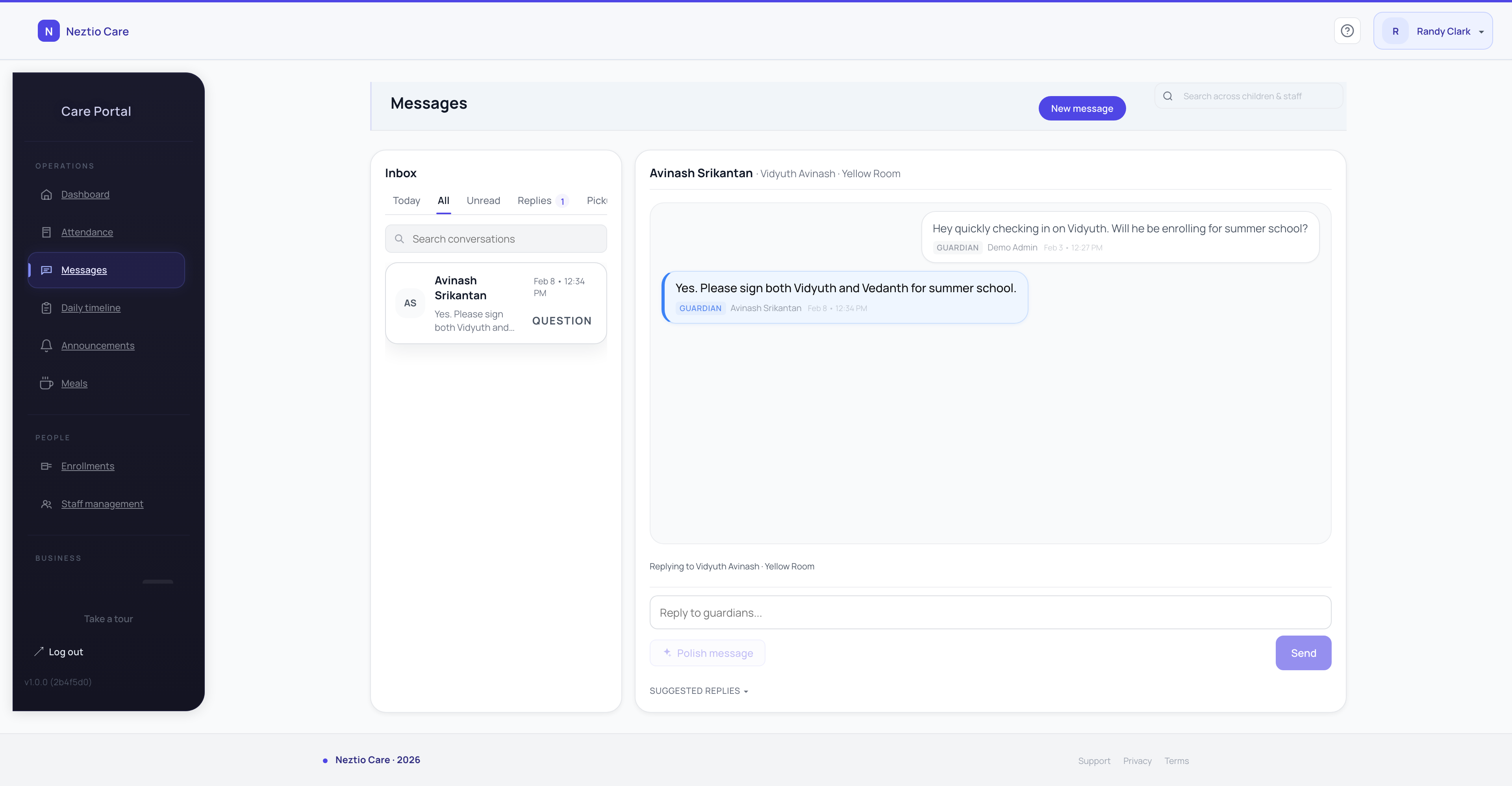
- -Built-in messaging lets you notify both families promptly with a written record of the incident, without exchanging personal phone numbers. Parents receive updates through the Neztio parent app on iOS and Android.
- -Daily reports and activity feeds give parents a full picture of their child's day, so incident communication happens in the context of an ongoing relationship, not as an isolated negative event.
- -Announcements let you share your biting policy, seasonal reminders about developmental behavior, and classroom updates with all families at once via push notification.
- -Enrollment records keep your parent handbook acknowledgment and signed policies organized and accessible, so you always have documentation that families received your biting policy.
Biting is stressful for everyone involved. The right tools help your team respond with consistency and compassion, even on the hardest days.
The Bottom Line
Toddler biting is a developmental behavior, not a discipline problem. The centers that handle it best are the ones with a clear written policy, a calm and consistent incident response, and honest communication with both families. Prevention, documentation, and compassion are your three most important tools.
See how Neztio helps childcare centers manage communication, documentation, and daily operations. Explore all features or get started free.
Related
7 Parent Communication Strategies That Build Trust at Your Childcare Center
Related
What to Include in Your Childcare Parent Handbook
Glossary terms in this article
Incident Report
A written record documenting an injury, illness, or behavioral event at a childcare center, including what happened, how it was handled, and how families were notified.
Parent Communication
The ongoing exchange of information between childcare providers and families about a child's daily experience, development, and center operations.
Licensing
State-level regulations that childcare providers must meet to legally operate, covering staff ratios, health and safety standards, facility requirements, and record-keeping.
Enrollment
The process of registering a child at a childcare center, including collecting family information, health records, and authorized pickup contacts.