7 Parent Communication Strategies That Build Trust at Your Childcare Center
Trust is the foundation of every parent-provider relationship. When families feel informed and included in their child's day, they stay enrolled longer, refer more families, and become true partners in their child's development. Here are seven communication strategies that the best childcare centers use to build that trust.
1. Daily Activity Updates with Photos
Parents dropping off their child in the morning want to know what happens between drop-off and pickup. A short text summary is helpful, but photos make it real. When a parent sees their toddler finger-painting or building a block tower, it transforms an abstract "your child had a good day" into something tangible.
Why it matters:
- -Parents who receive daily photo updates report feeling significantly more connected to their child's care experience. It reduces the anxiety that comes with being separated from their child all day.
- -Photos give parents conversation starters at home. Instead of "What did you do today?" they can say "Tell me about the caterpillar you found on the playground!"
Practical tips:
- -Aim for at least one photo per child per day. It does not need to be a professional shot: candid moments during play, meals, and learning activities work best.
- -Include brief context with each photo. "Liam practiced pouring water during sensory play" is more meaningful than a photo alone.
- -Send updates during the day, not just at pickup. A mid-morning photo can ease a parent's mind, especially during the first few weeks of enrollment.
Common mistake:
Only posting group photos where individual children are hard to spot. Every parent wants to see their child specifically. If you have 12 kids in a classroom, make sure each one shows up in individual or small-group photos throughout the week.
2. Consistent Check-In and Check-Out Communication
The moments of arrival and departure are the two highest-anxiety points of a parent's day. A reliable system for confirming check-in and check-out times gives parents peace of mind and creates an accurate attendance record for your center.
Why it matters:
- -Parents feel reassured knowing their child's arrival was officially recorded. For families where one parent drops off and the other picks up, digital check-in notifications keep both parents in the loop.
- -Accurate attendance records protect your center during licensing audits and help with billing accuracy.
Practical tips:
- -Use a digital check-in system rather than paper sign-in sheets. Digital records are easier to search, harder to falsify, and automatically timestamped.
- -Send automated notifications when a child is checked in or out. Parents who are not the ones doing drop-off or pickup especially appreciate this.
- -Have a clear policy for late pickups and communicate it in writing during enrollment. Surprises about late fees erode trust quickly.
Common mistake:
Relying on informal verbal handoffs without any record. If a substitute teacher is at the door and does not know a family, there is no way to verify authorized pickups without a system in place.
3. Proactive Incident Reporting
Nothing damages trust faster than a parent discovering a bruise or scrape at bath time that nobody mentioned at pickup. Even minor incidents should be communicated promptly and honestly. Parents understand that bumps happen: what they cannot accept is being kept in the dark.
Why it matters:
- -Proactive reporting demonstrates that your staff are attentive and transparent. It turns a potentially negative moment into a trust-building one.
- -It protects your center legally. Documented, timely incident reports are essential if a situation ever escalates.
Practical tips:
- -Notify parents as soon as reasonably possible after an incident, not at pickup. A message saying "Emma bumped her knee on the playground at 10:15. She cried for a minute, we applied ice, and she went back to playing" is far better than silence.
- -Include what happened, what you did about it, and how the child is doing now. These three pieces of information are what every parent needs to hear.
- -Train all staff on your incident reporting process, including substitutes. Consistency matters.
Common mistake:
Downplaying incidents or waiting until pickup to mention them casually. "Oh by the way, he fell off the slide" said while juggling three other pickups does not communicate care or professionalism.
4. Regular Milestone and Developmental Updates
Parents want to know their child is growing, learning, and hitting developmental milestones. Sharing these observations regularly, not just at parent-teacher conferences, makes families feel like genuine partners in their child's development.
Why it matters:
- -Developmental updates demonstrate that teachers see each child as an individual, not just one of many. This is one of the biggest differentiators between centers that retain families and those that lose them.
- -Parents of infants and toddlers are especially eager for milestone updates, since so many "firsts" happen during childcare hours.
Practical tips:
- -Share small wins regularly: "Aria used a spoon independently at lunch today" or "Marcus counted to 10 during circle time." These do not need to be formal assessments.
- -When you notice a developmental concern, bring it up early and sensitively. Parents appreciate a heads-up so they can consult their pediatrician, rather than hearing about it months later at a conference.
- -Tie daily report notes to learning objectives when possible. "During block play, Jayden worked on spatial reasoning by stacking and balancing" shows intentionality.
Common mistake:
Only communicating when there is a problem. If the only time a parent hears from a teacher is when their child had a rough day, they start dreading every notification. Balance developmental observations with positive moments.
5. Two-Way Messaging That Respects Boundaries
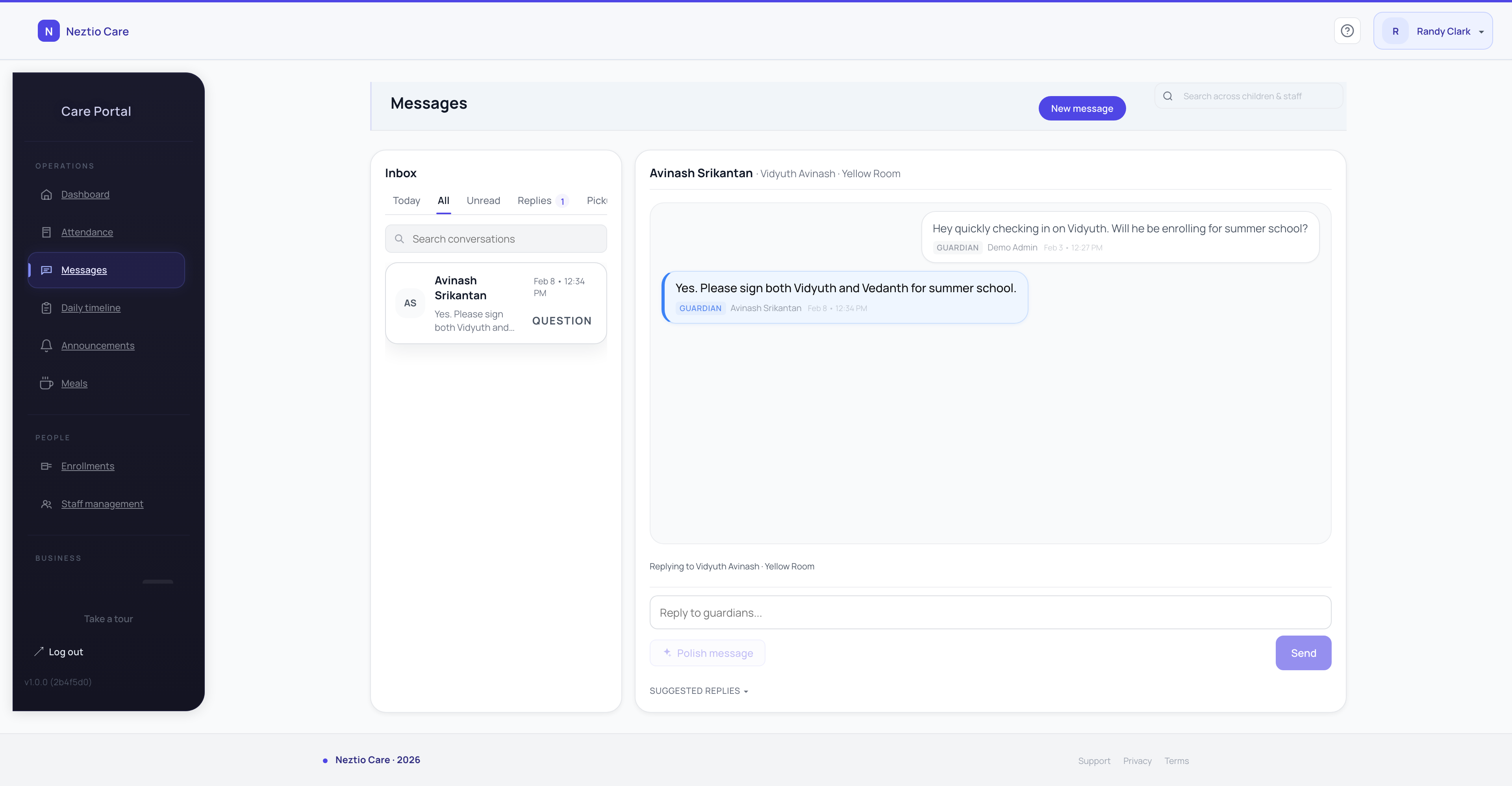
Parents need a way to reach their child's teachers, and teachers need a way to reach parents. But without clear boundaries, messaging can become overwhelming for staff and create unrealistic expectations for families.
Why it matters:
- -Two-way communication makes parents feel heard and respected. It also reduces the number of phone calls and front-desk interruptions your staff deal with daily.
- -Having a dedicated messaging channel (rather than personal phone numbers or social media) keeps communication professional and documented.
Practical tips:
- -Set clear response time expectations during onboarding. For example: "Messages sent during business hours will be responded to within 2 hours. Messages sent after 6 PM will be answered the next morning."
- -Use a platform-based messaging system rather than personal text messages. This protects teacher privacy, creates an audit trail, and ensures messages are not lost when staff turn over.
- -Encourage parents to use messaging for non-urgent matters and phone calls for emergencies. Define what constitutes an emergency clearly in your handbook.
Common mistake:
Giving out teachers' personal phone numbers. This leads to burnout, after-hours messages, and awkward situations when a teacher leaves and a parent still has their number. Keep communication within your center's official channels.
6. Transparent Billing Communication
Money is one of the most sensitive topics in any service relationship. Childcare is expensive, and families are making significant financial sacrifices to enroll their children. Clear, predictable billing communication prevents misunderstandings and shows respect for families' budgets.
Why it matters:
- -Billing disputes are one of the top reasons families leave a childcare center. Most disputes stem not from the amount charged, but from a lack of clarity about what was charged and why.
- -Families who feel surprised by charges lose trust quickly, even if the charges are legitimate.
Practical tips:
- -Send itemized invoices, not lump sums. Break out tuition, registration fees, supply fees, and any additional charges so parents can see exactly what they are paying for.
- -Give at least 30 days' notice before any rate changes, with a clear explanation of why rates are increasing. Parents accept increases more readily when they understand the reason (rising food costs, staff raises, new curriculum materials).
- -Make payment history accessible to parents at any time. Families often need this for tax purposes, employer dependent care benefits, or custody documentation.
Common mistake:
Announcing rate increases with only a week's notice, or burying fee changes in a long email that parents skim past. Important financial changes deserve their own dedicated, clearly-worded communication.
7. Center-Wide Announcements for Closures, Events, and Policy Changes
Every center has information that needs to reach all families at once: holiday closures, weather-related schedule changes, upcoming events, policy updates, or health notices. How you deliver these announcements affects whether families actually read and act on them.
Why it matters:
- -A parent who shows up on a closure day because they missed a flyer on the bulletin board is not going to blame themselves. They are going to blame your communication system.
- -Consistent, reliable announcements train parents to trust that they will always be informed. This reduces the number of "Is the center open tomorrow?" calls your front desk handles.
Practical tips:
- -Use push notifications or in-app announcements for time-sensitive information. Email and paper flyers are easy to miss or forget.
- -Send closure reminders at least twice: once a week ahead and again the day before. Repetition is not annoying when it prevents a wasted trip.
- -For policy changes, explain the reasoning. "Starting April 1, we are updating our illness policy to require 24 hours symptom-free before return. This aligns with our state licensing guidelines and helps keep all children healthy."
Common mistake:
Relying solely on a paper flyer in a child's cubby or a single email sent once. Important announcements need multiple touchpoints: an app notification, a posted notice at check-in, and a verbal reminder from classroom teachers.
How Childcare Software Makes These Strategies Scalable
Every strategy above can be done with paper forms, phone calls, and bulletin boards. But as your center grows beyond a handful of families, manual communication breaks down. Messages get missed, incident reports fall through the cracks, and daily updates become the first thing teachers skip when the day gets hectic.
Childcare management software brings these strategies together in one place. With Neztio, for example:
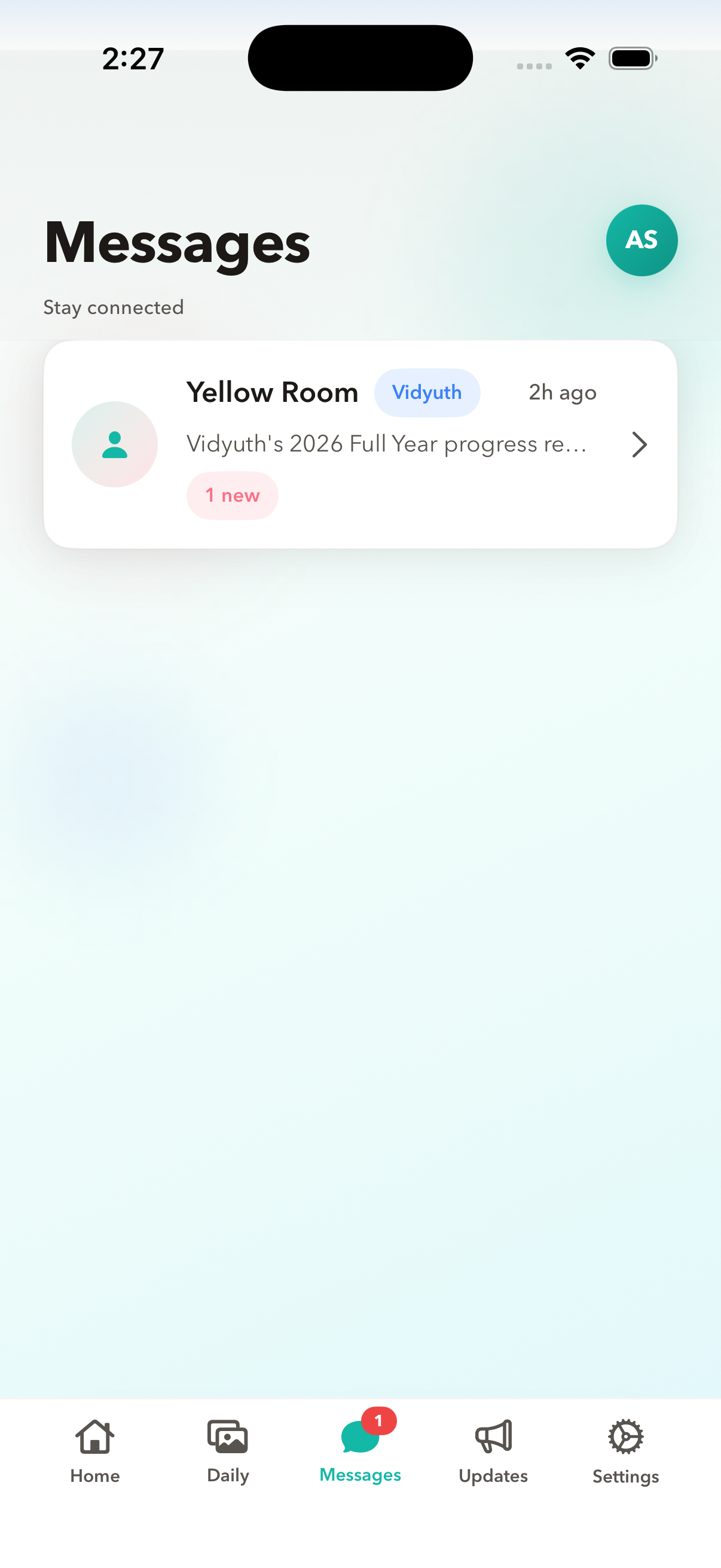
- -Daily reports and activity feeds let teachers share photos, notes, meal information, and nap times throughout the day. Parents see updates in real time on the Neztio parent app (available on iOS and Android).
- -Built-in messaging gives families and staff a professional, documented communication channel without sharing personal phone numbers.
- -Digital check-in and check-out automatically records attendance with timestamps, giving both parents and administrators a clear record.
- -Announcements reach every family instantly through push notifications, so closures, events, and policy updates are never missed.
- -Billing and payments provide transparent invoicing and payment tracking that parents can access anytime.
The goal is not to replace the personal relationships between teachers and families. It is to give your team the tools to communicate consistently, even on the busiest days.
The Bottom Line
Parent communication is not a nice-to-have. It is the single most important factor in whether families feel confident in your center and choose to stay year after year. The seven strategies above are not complicated, but they require consistency, and consistency requires systems.
See how Neztio helps childcare centers communicate with families effortlessly. Explore parent communication features or get started free.
Related
Daycare Attendance Tracking: The Complete Guide
Related
How to Automate Childcare Billing and Get Paid Faster
Glossary terms in this article
Parent Communication
The ongoing exchange of information between childcare providers and families about a child's daily experience, development, and center operations.
Daily Report
A summary of a child's day at the center, typically including activities, meals, naps, and notable moments shared with parents.
Enrollment
The process of registering a child at a childcare center, including collecting family information, health records, and authorized pickup contacts.
Attendance Tracking
Recording when children arrive at and depart from a childcare facility, used for safety, billing accuracy, and licensing compliance.