Childcare Waitlist Management: Best Practices for Growing Centers
A full program is a good problem to have, but only if you manage your waitlist well. Families who feel forgotten will find another center. Here is how to build a waitlist system that keeps families engaged and fills spots fast when they open.
Why a Waitlist Is a Growth Engine, Not Just a List
Most childcare directors think of their waitlist as a backup list of families they will call when a spot opens. That mindset leaves revenue on the table and families feeling neglected. A well-managed waitlist is actually your enrollment pipeline: a structured sequence of touchpoints that keeps interested families warm, prioritizes them fairly, and converts them into paying enrollments the moment capacity allows.
According to industry surveys, the average childcare center receives 2-5 inquiries per week from prospective families. Without a system, those leads get jotted on sticky notes, forgotten in email threads, or lost entirely. A structured waitlist ensures that every inquiry is captured, tracked, and followed up on.
The difference between a waitlist that converts and one that leaks is communication. Centers that stay in regular contact with waiting families see significantly higher conversion rates when spots open. Those that go silent lose families to competitors. For a complete look at the enrollment process from inquiry to first day, see our childcare enrollment process guide.
When to Start a Waitlist
You should start a waitlist before you actually need one. Here are the signals that it is time:
Your classrooms are at 80% capacity or higher
At this point, you are only a few enrollments away from being full. Starting a waitlist now gives families a clear path instead of just hearing "we are almost full."
You are turning away inquiries
If you have told even one family that you do not have a spot, you should have offered them a waitlist position. Every turned-away family is a missed future enrollment.
Seasonal patterns predict full enrollment
Most centers see enrollment peaks in late summer (back-to-school) and January (new year resolutions). If your historical data shows you will be full during these periods, start building your waitlist months ahead.
You want to grow strategically
Even if you have openings now, a waitlist for specific age groups (like infants, where ratio requirements mean fewer spots) lets you plan staffing and classroom configurations ahead of demand.
Setting Up a Waitlist System
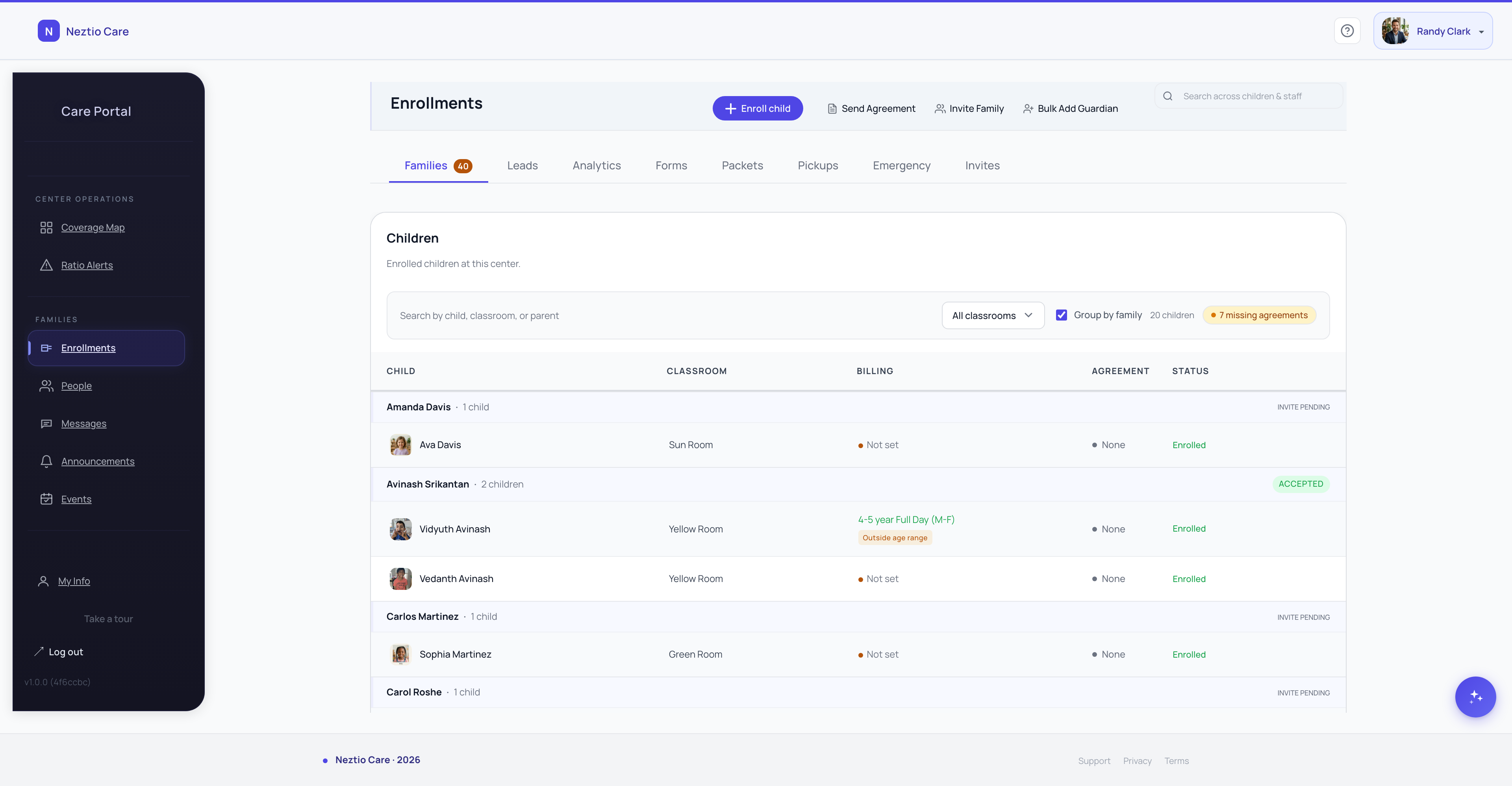
A functional waitlist system captures the right information, organizes families in a trackable way, and makes it easy to move them through the enrollment pipeline when a spot opens.
- 1
Capture essential information at intake
At minimum, collect: parent name, phone, email, child name, date of birth, desired start date, schedule preference (full-time, part-time, specific days), and how they heard about your center. This information tells you which classroom the child belongs in, when they need a spot, and where your marketing is working.
- 2
Organize by age group and start date
A family looking for an infant spot in September has very different needs than a family looking for a preschool spot next week. Segment your waitlist by classroom or age group so you can instantly see who is next when a specific spot opens.
- 3
Define your priority rules
How do you decide who gets the next spot? Common approaches include first-come-first-served, siblings of enrolled children get priority, or full-time families get priority over part-time. Whatever you choose, document it and communicate it to waiting families so the process feels fair.
- 4
Decide on waitlist fees
Some centers charge a non-refundable waitlist fee (typically $25-$100) to hold a family's spot. This filters out families who are not serious and provides a small revenue stream. Others keep the waitlist free to maximize the pool of interested families. Either approach works - just be transparent about the policy.
Communicating with Waiting Families
The biggest mistake centers make with waitlists is going silent. A family joins your waitlist excited about your program, then hears nothing for months. By the time you call with an opening, they have enrolled somewhere else. Here is a communication cadence that keeps families engaged:
Immediate confirmation
As soon as a family joins your waitlist, send a confirmation email or message. Confirm what you received, explain what happens next, and give them a timeline for when they can expect to hear from you. This sets expectations and shows professionalism.
Monthly or quarterly updates
Even if nothing has changed, reach out at regular intervals. A short message saying "You are still on our waitlist, and we estimate an opening in the toddler room around [month]" is far better than silence. It takes two minutes and keeps the family invested.
Invite them to events
Open houses, holiday events, or parent workshops are opportunities to invite waitlisted families. This builds a relationship before the child even starts, making the transition smoother when a spot opens. It also reinforces your center's value.
Fast outreach when spots open
When a spot becomes available, contact the next family on the list within 24 hours. Give them a clear deadline to respond (typically 48-72 hours). If they pass or do not respond, move to the next family immediately. Empty spots cost you revenue every day they sit unfilled.
For more strategies on building strong parent relationships, see our guide on parent communication strategies.
Converting Waitlist to Enrollment
The moment a spot opens is when your waitlist process is tested. A smooth, fast conversion process means less revenue lost to empty spots. Here is the ideal flow:
- 1
Notify the next family immediately
Call first, then follow up with a written message. Include the details: which classroom, the start date, tuition rate, and what paperwork they need to complete.
- 2
Set a response deadline
Give families 48-72 hours to accept or decline. This is fair to them and fair to the families behind them on the list. Make the deadline clear in your message.
- 3
Collect enrollment paperwork and deposits
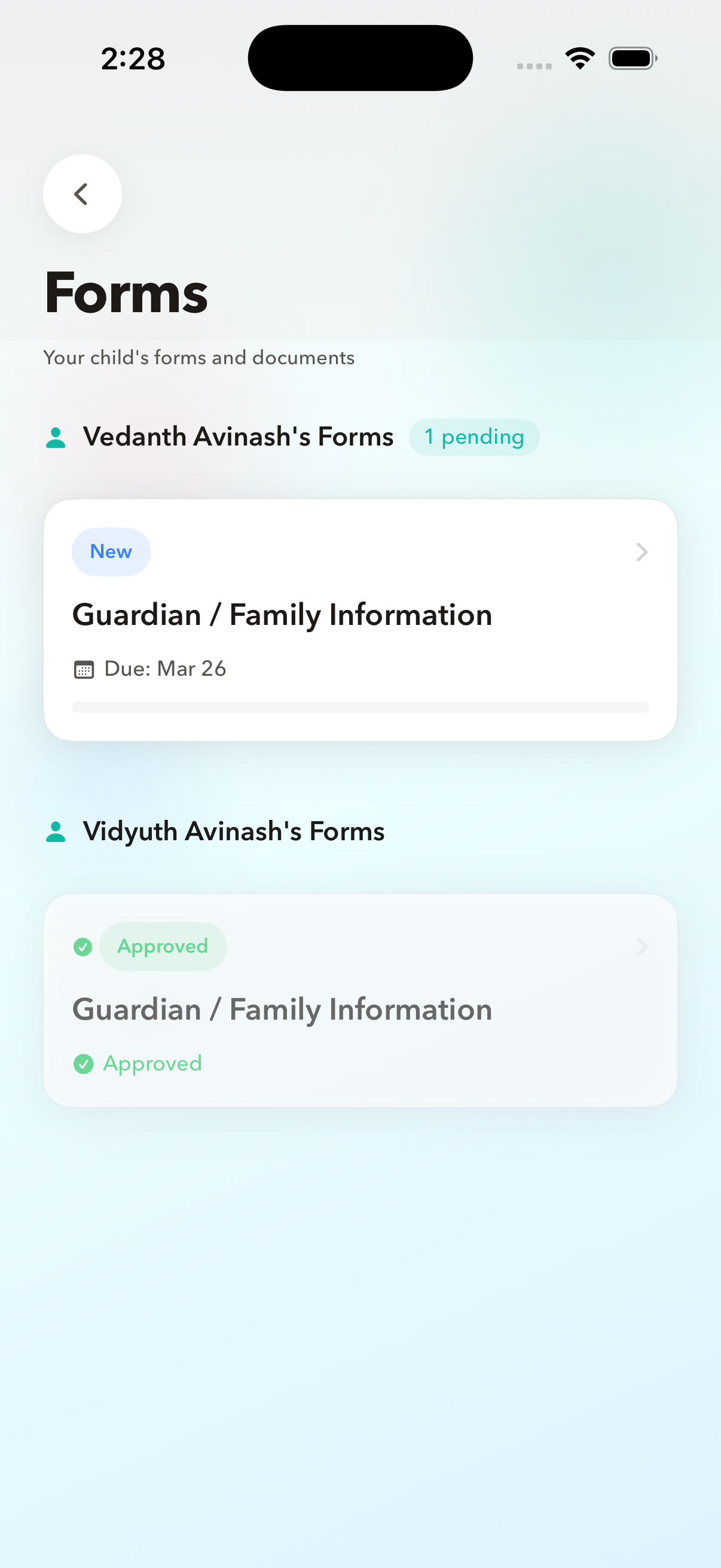
Have your enrollment packet ready to send digitally. Collect a registration fee or deposit to secure the spot. The faster you can complete this step, the less likely the family is to change their mind.
- 4
If they decline, move immediately to the next family
Do not wait days hoping they will change their mind. Every day a spot sits empty costs you money. Move down your list promptly.
Managing Priority and Fairness
Waitlist priority can be a sensitive topic. Families want to feel that the process is fair, and your staff needs clear rules to follow. Here are common priority frameworks:
| Priority Method | How It Works | Best For |
|---|---|---|
| First come, first served | Families are offered spots in the order they joined the waitlist | Simplicity and perceived fairness |
| Sibling priority | Siblings of currently enrolled children move to the front | Family retention and convenience |
| Full-time priority | Full-time enrollment requests take priority over part-time | Revenue optimization |
| Staff children priority | Children of staff members get first access | Staff recruitment and retention benefit |
Tip
Whatever priority system you use, put it in writing and share it with every family when they join the waitlist. Transparency prevents conflicts and builds trust. Include it in your parent handbook as well.
Using Software to Automate Your Waitlist
Managing a waitlist on spreadsheets or paper notebooks works when you have five families waiting. When you have 30, 50, or 100 families across multiple age groups, manual tracking becomes a liability. You miss follow-ups, forget who was next, and lose track of which families are still interested.
Childcare management software turns your waitlist into a proper enrollment pipeline. Neztio's enrollment pipeline, for example, uses eight lead stages to track every family from initial inquiry through enrollment. Leads move through stages like New Inquiry, Tour Scheduled, Tour Completed, Application Submitted, Waitlisted, Offer Extended, Enrolled, and Started. The drag-and-drop Kanban board gives you a visual snapshot of your entire pipeline at a glance.
With a pipeline approach, you can see exactly how many families are at each stage, which ones need follow-up, and where families tend to drop off. This data helps you refine your enrollment process over time. You can also filter by age group, desired start date, or lead source to get targeted views of your waitlist.
The key advantage of software over manual tracking is that nothing falls through the cracks. Every lead has a status, every follow-up has a record, and every conversion or drop-off is tracked. See Neztio's enrollment and waitlist features to learn more.
Measuring Waitlist Performance
A waitlist is only as good as its results. Track these metrics to understand how well your waitlist is performing:
Conversion rate
What percentage of waitlisted families eventually enroll? If this number is below 30-40%, your communication or follow-up process may need work.
Time on waitlist
How long does the average family wait before getting a spot? If wait times are consistently long, it may signal demand that justifies expanding capacity or opening a new classroom.
Drop-off rate
What percentage of families leave the waitlist before getting an offer? High drop-off may indicate that your wait times are too long, your communication is too infrequent, or families are finding better alternatives.
Offer acceptance rate
When you offer a spot, how often does the family accept? If families frequently decline, they may have already enrolled elsewhere, which means your waitlist communication needs to be more frequent.
Lead source tracking
Where are your waitlisted families coming from? Website, referrals, social media, drive-by visits? This helps you allocate your marketing budget toward the channels that produce the most interested families.
The Bottom Line
Your waitlist is not a passive list of names. It is an active enrollment pipeline that, when managed well, keeps your classrooms full, your revenue predictable, and your families happy. Capture every inquiry, communicate consistently, define clear priority rules, and use software to keep everything organized.
Ready to turn your waitlist into a growth engine? See how Neztio's enrollment pipeline helps childcare centers manage leads, waitlists, and enrollments all in one place.
Related
Childcare Enrollment Process: From Inquiry to First Day
Related
Childcare Marketing Guide: Strategies That Fill Your Program
Glossary terms in this article
Waitlist
A list of families waiting for an available enrollment spot, organized by priority and age group.
Enrollment
The formal process of registering a child into a childcare program, including paperwork and deposits.
Lead Pipeline
A structured system for tracking prospective families from initial inquiry through enrollment.
Capacity
The maximum number of children a center or classroom can serve, determined by licensing and ratio requirements.