Summer Program Ideas for Childcare Centers: Themes, Activities, and a Simple Plan
Summer is when childcare centers get to loosen up and have fun, but it still needs a plan. Here is a simple framework for themes, activities, staffing, and safety that works from the infant room to school-age.
Why summer programming is its own thing
Summer changes the shape of a childcare center. School-age children who were in class all year now need full days of care, so enrollment and group sizes shift. Families take vacations, so daily attendance swings from one day to the next. The weather pushes more of the day outdoors. And children, especially the older ones, get bored fast when the year-round routine simply repeats itself for twelve more weeks.
A good summer program answers all of that with structure that still feels playful. The most common approach is a weekly theme that gives the whole center a shared focus, with age-appropriate activities layered underneath. Themes make planning faster for teachers, make the week easier to explain to parents, and give children something to look forward to. What follows is a framework you can adapt to any center, plus the summer-specific safety details that matter most.
Eight weekly summer themes
You do not need a different theme every single week for a three-month summer, but rotating themes keep energy high and give teachers a planning anchor. Here are eight themes that work across every age group. Mix, reorder, or repeat them to fit your calendar.
Week 1: Ocean and Water
Sea creatures, sink-or-float experiments, sponge painting, and a water table station. A strong opener because water play doubles as cooling off on hot days.
Week 2: Bugs and Backyard Science
Magnifying-glass nature hunts, ladybug and butterfly crafts, planting seeds, and a worm or ant observation station. Great for outdoor exploration.
Week 3: Around the World
A different country or culture each day: music, foods, flags, simple words, and dress-up. Naturally inclusive and easy to connect to the families in your program.
Week 4: Space and Sky
Rocket crafts, star and planet art, cloud watching, and a cardboard-box spaceship. Pairs well with a nighttime-themed dress-up day.
Week 5: Art and Colors
A featured color or medium each day: chalk murals, bubble-wrap prints, nature collage, and process-art stations that value making over the finished product.
Week 6: Sports and Movement
Relay races, parachute games, obstacle courses, and simple team games. Burns energy and builds gross motor skills. Keep it non-competitive for younger groups.
Week 7: Community Helpers
Firefighters, mail carriers, doctors, and farmers. Dramatic play, dress-up, and if you can arrange it, a visit from a local first responder or a mail carrier.
Week 8: Camp Classics
Tents and pretend campfires, s'mores as a snack, nature crafts, sing-alongs, and a flashlight day. A cozy way to close out the summer.
Activities for every age group
A theme means something different in the infant room than it does for school-agers. Here is how to translate any weekly theme down to each age group so no classroom is doing an activity that is too advanced or too simple.
Infants (0 to 12 months)
Keep it sensory and calm. Themed sensory bottles, high-contrast picture cards, textured fabrics, supervised water-tray touching in the shade, and songs tied to the week. Infants take part through sight, sound, and touch, not projects. Always provide shade and never place an infant in direct sun.
Toddlers (1 to 2 years)
Big movement and big mess. Water tables, sponge and finger painting, sensory bins tied to the theme, simple planting, and short group songs. Toddlers explore with their whole bodies, so plan for spills and keep pieces large enough to be choke-safe.
Preschoolers (3 to 5 years)
This is the sweet spot for theme weeks. Dramatic play, process art, simple science experiments, scavenger hunts, and beginning group games with light rules. Preschoolers love a job, so let them help set up stations and lead simple activities.
School-age (5 and up)
Give them ownership and a challenge. Multi-day projects, cooking activities, team sports, building with loose parts, and a say in planning the week. School-age children who spent the year in structured classrooms need summer to feel genuinely different, or they check out. Let them help design a theme day.
Summer staffing, ratios, and safety
Summer fun does not lower the compliance bar. In fact, the season adds risks that are easy to underestimate: heat, water, and time away from the building. Build these into your plan from the start.
Ratios still apply, and the mix changes
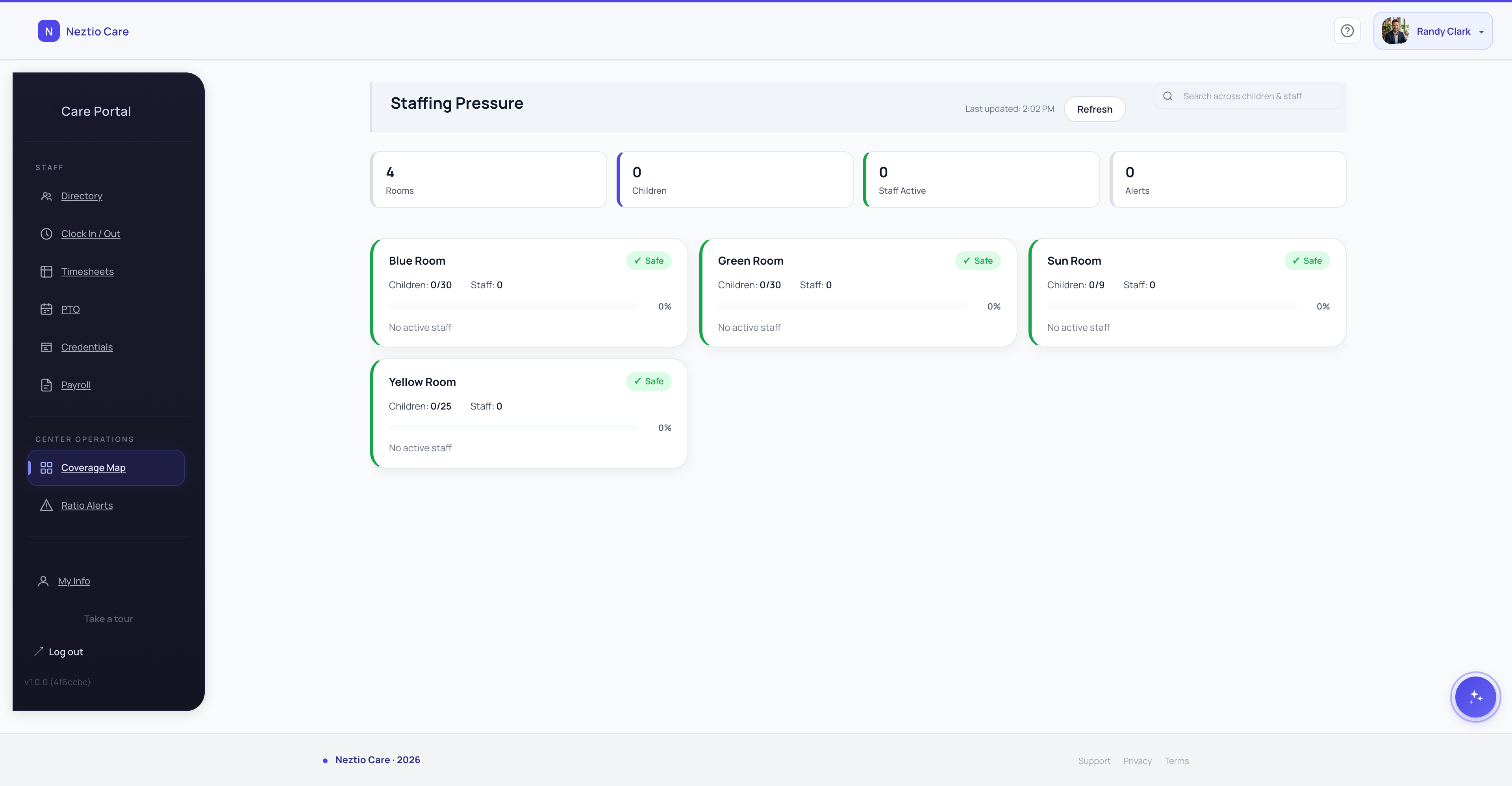
Your state licensing ratios do not relax in summer. The school-age influx and mixed-age grouping common from June through August can quietly push a room over ratio. Rebuild your classroom groupings for the summer roster and watch ratios closely during the morning arrival window, when attendance is least predictable. Field trips have their own, often stricter, ratio requirements.
Heat and outdoor timing
Many programs pause outdoor play when the heat index reaches about 90 degrees Fahrenheit, since young children overheat faster than adults. Schedule outdoor blocks for the cooler morning hours, keep afternoons lighter or indoors, and know the early signs of heat exhaustion: flushed skin, fatigue, headache, and unusual fussiness.
Hydration
Offer water frequently, not just at scheduled breaks. Bring water bottles or cups outside, prompt children to drink before they say they are thirsty, and increase fluids on hot and high-activity days. Infants should continue their normal feeding routine rather than being given plain water.
Water play safety
Water play is a summer highlight and a serious drowning risk. A child can drown in the small amount of water in a wading pool or a bucket. Maintain constant, undistracted touch supervision, empty containers immediately after use, and follow your state rules on water activities, which often require extra staff and written parent permission. Sprinklers and shallow water tables are lower-risk alternatives to pools.
Field trips and walking trips
Confirm the trip ratio your state requires, and take an accurate headcount before you leave, on arrival, before you leave the destination, and back at the center. Carry emergency contacts, permission forms, a first aid kit, and any medications. Assign each staff member a named list of children rather than a loose arrangement to watch everyone.
Sun protection
Apply sunscreen with written parent permission about fifteen minutes before going out, and reapply on long outdoor days. Provide shade, encourage hats, and where you can, schedule the most sun-exposed activities outside the peak hours of roughly 10am to 2pm.
Keeping children engaged all summer
Twelve weeks is a long time. A few habits keep the program from going stale by August.
Balance active and calm
Alternate high-energy blocks with quieter ones. A morning of water play and running should be followed by a shaded story, art, or rest, especially in the heat.
Build in choice
Offer two or three activity stations children can pick from rather than one whole-group task. Choice reduces conflict and keeps mixed-age, mixed-interest groups engaged.
Protect rest and downtime
Longer, more active days make rest more important, not less. Keep nap and quiet time on the schedule even when the summer energy tempts you to skip it.
Keep a low-prep backup list
Weather, a late bus, or a canceled visitor will blow up a plan. Keep a short list of no-prep activities like freeze dance, an obstacle course, or a nature hunt so a gap never becomes chaos.
Communicating your summer program to parents
Parents make summer decisions early, and a clear program is a real enrollment driver. Share the theme calendar before summer starts so families know what to expect and what to pack, whether that is a swimsuit, closed-toe shoes for a field trip, or an extra water bottle. A simple weekly note on the upcoming theme and any special days goes a long way.
During the summer, keep families in the loop day to day. A quick photo of a water play morning or a camp-craft afternoon tells a working parent more than any newsletter can, and it reassures them that the fun is supervised and purposeful. Timely messages matter more in summer, when a heat day, a field trip time, or a sunscreen reminder can change on short notice.
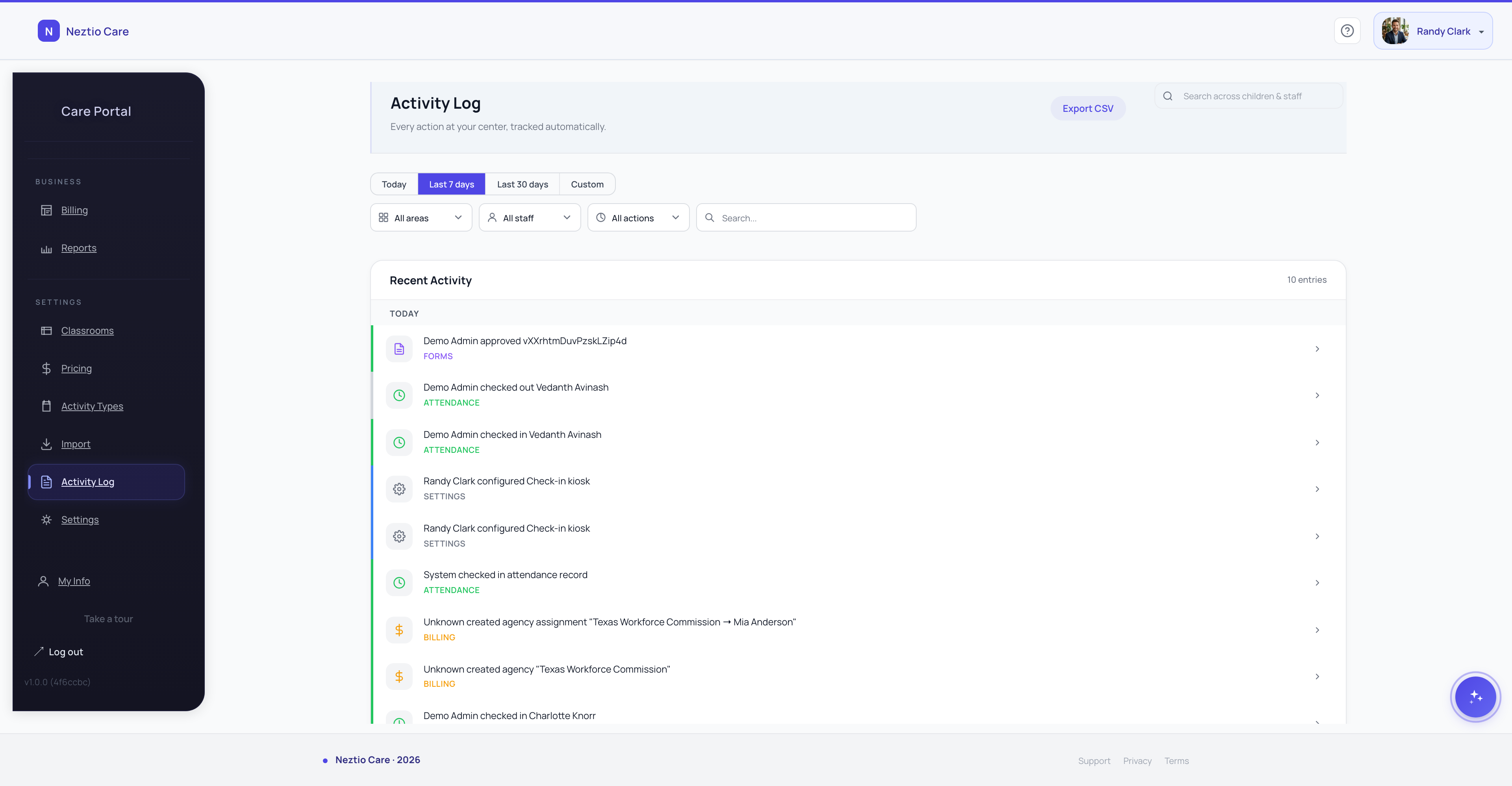
This is where childcare software earns its keep in summer. Neztio's activity feed lets teachers log the day and share photos with families in real time, real-time attendance and check-in give you an accurate headcount before a field trip leaves, messaging pushes weather and schedule updates to every family at once, and meal tracking helps you keep summer meals and hydration on record, including for CACFP. The tools stay the same, but summer is when parents notice them most.
The bottom line
A great summer program is not about doing something brand new every day. It is a light structure, a rotating theme, age-appropriate activities under it, and honest attention to heat, water, and field trip safety, that lets children have a genuinely fun summer while your center stays in ratio and in compliance. Plan the themes once, translate them for each age group, and communicate clearly with families.
Want to see how the day-to-day runs in one place? Explore Neztio's features or start a free 30-day trial and set up your center before summer begins.
Glossary terms in this article
Staff-to-Child Ratio
The number of children one staff member can supervise, set by state licensing rules per age group.
Group Size
The maximum number of children allowed in a single classroom or care group, as defined by state licensing regulations.
Attendance Tracking
Recording children's daily attendance at a childcare facility, required for licensing, billing, and CACFP claims.
Licensing
State-issued permission to operate a childcare facility, requiring compliance with health, safety, and staffing standards.