PTO Management for Childcare Centers: Balancing Staff Needs with Coverage
In most workplaces, approving a vacation request is straightforward. In childcare, every absence directly affects classroom ratios and coverage. Here is how to build a PTO system that is fair to your staff while keeping your center fully operational.
Why PTO Management Is Harder in Childcare
In an office, when someone takes a day off, the team absorbs the work or it waits until they return. In a childcare center, there is no absorbing and no waiting. Every classroom must be staffed at the required staff-to-child ratio for every hour the center is open. When a teacher is on PTO, someone else must physically be in that classroom.
This creates a fundamental tension. Your staff need time off to avoid burnout, recover from illness, and attend to personal needs. In an industry with some of the highest burnout rates in the workforce, generous and accessible PTO is a real retention tool. But every approved PTO day creates a coverage gap that must be filled, either by a substitute, a floater, or by rearranging other staff schedules.
The challenge intensifies at certain times of year. The weeks before and after school breaks, summer vacation season, and flu season can all create situations where multiple staff request time off simultaneously. Without a system in place, the director is left making difficult judgment calls with incomplete information.
Building a Fair PTO Policy
A good PTO policy for a childcare center needs to be clear, consistent, and honest about the constraints of the business. Here are the key elements to define:
How PTO is earned
Define whether staff accrue PTO per pay period, receive a lump sum at the start of the year, or earn based on hours worked. Accrual-based systems are more common in childcare because they scale naturally with part-time and full-time employees. A typical accrual rate is 1 hour of PTO per 30-40 hours worked.
Separate sick and vacation or combined PTO bank
Some centers offer separate sick and vacation buckets. Others use a single PTO bank. A combined bank is simpler to administer but check your state law: several states now have mandatory paid sick leave laws that require a minimum number of hours for illness specifically.
Maximum accrual cap
Set a maximum number of hours that can be banked. This prevents staff from hoarding PTO and then requesting several weeks off at once. A common cap is 1.5 to 2 times the annual accrual amount. When staff approach the cap, encourage them to use their time off.
Request and approval process
Require PTO requests to be submitted a minimum number of days in advance (14 days is common for vacation; same-day for sick time). Define who approves requests and what criteria they use. The most important criterion is coverage: can the classroom be properly staffed on the requested day?
Blackout dates
Some centers designate certain high-demand periods (the first two weeks of the school year, licensing inspection windows) as blackout dates when vacation PTO is not available. Be transparent about these dates from the start so staff can plan accordingly.
Retention insight
Centers that offer paid time off have significantly lower turnover than those that do not. Even modest PTO benefits, such as 5 paid vacation days and 5 paid sick days, signal to staff that their well-being matters. Given the cost of replacing a childcare worker (recruiting, background checks, training), PTO pays for itself as a retention strategy.
Tracking Balances and Accrual
One of the biggest sources of PTO disputes is inaccurate balance tracking. When a teacher believes they have 3 days available but the director's spreadsheet shows 2, trust erodes. Accurate, transparent balance tracking is essential.
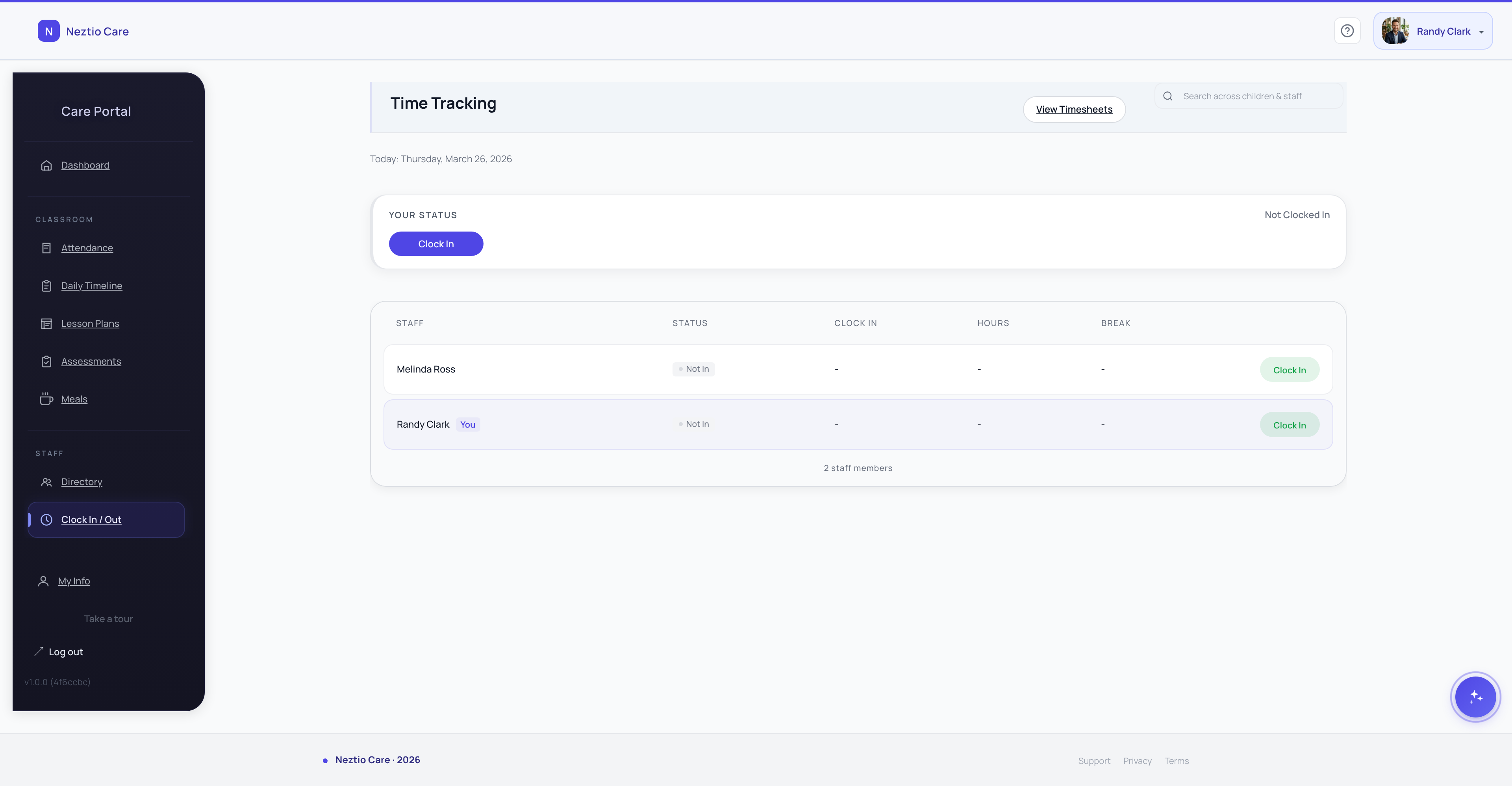
Ideally, your PTO system calculates balances automatically based on your accrual rules. Every pay period, the correct number of hours is added to each employee's balance. When PTO is used, it is deducted. Staff can check their current balance at any time without having to ask the director.
Here is what good PTO tracking looks like in practice:
| Feature | Benefit |
|---|---|
| Automatic accrual calculation | No more manual spreadsheet updates; balances are always current |
| Staff self-service balance view | Teachers can check their own balance anytime, reducing questions to the director |
| Cap warnings | Alerts staff when they are approaching the maximum accrual cap so they can plan time off |
| Year-end carryover or forfeiture rules | Automatically applies your carry-over policy at year end (check state laws on use-it-or-lose-it) |
| Payroll integration | PTO hours flow directly into payroll alongside worked hours |
Managing Requests Around Coverage Needs
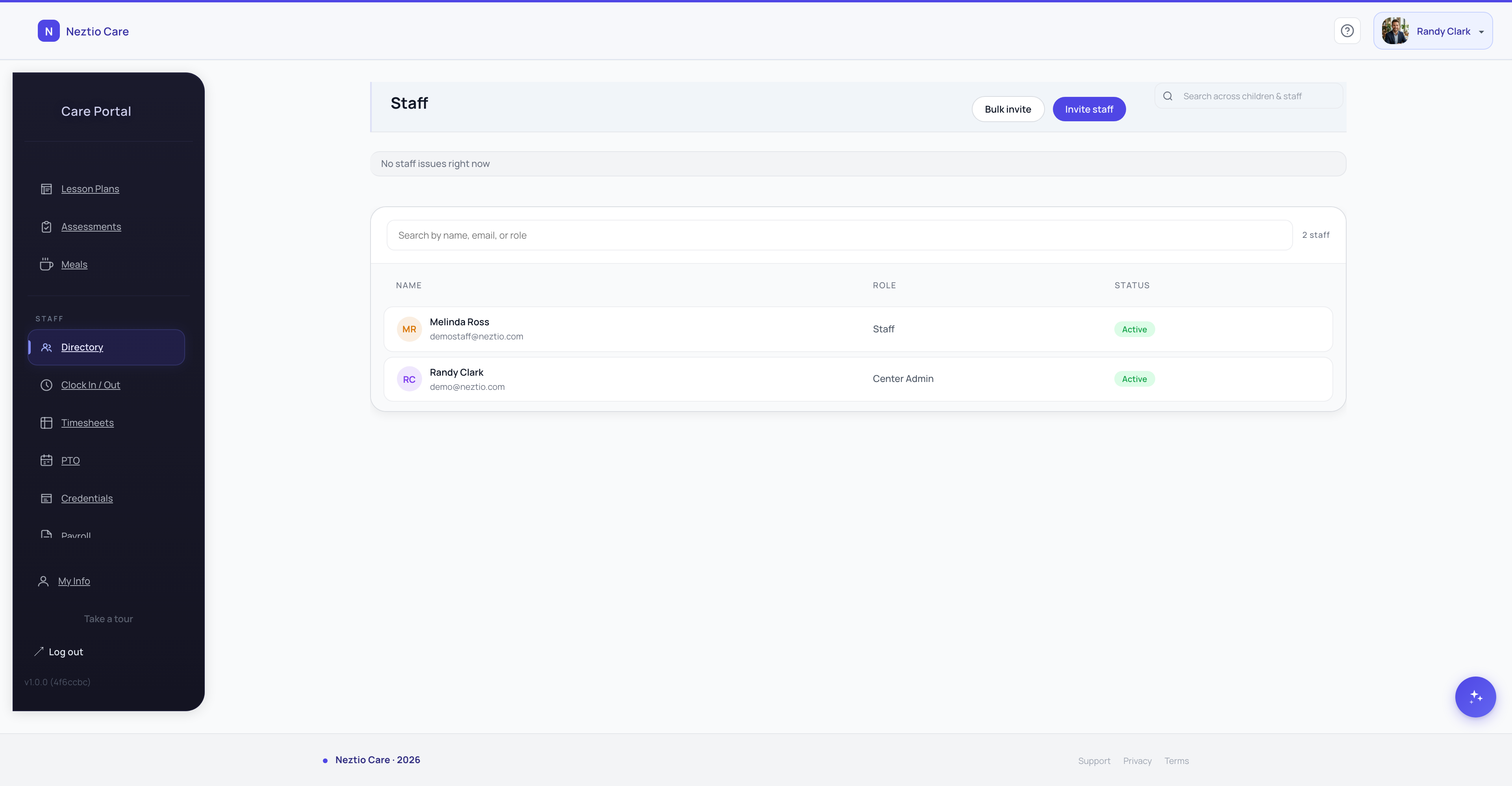
The approval decision for any PTO request at a childcare center comes down to one question: can we maintain ratio compliance in every classroom while this person is out? To answer that question quickly and fairly, you need visibility into your coverage plan.
- 1
Check the coverage map for the requested day
Before approving or denying, look at who else is scheduled for that day, who else is already approved for PTO, and whether your floater or substitute list can fill the gap. A digital coverage map makes this a 30-second check instead of a 15-minute puzzle.
- 2
Limit concurrent PTO per classroom
Set a rule for maximum staff on PTO per classroom per day. For example, if a classroom has two teachers and one aide, only one can be on PTO on any given day. This prevents situations where coverage is impossible.
- 3
First-come, first-served with transparency
When multiple staff want the same day off, use a first-come, first-served policy. This is straightforward and perceived as fair. Make sure all staff know the policy and can see when popular dates are already claimed.
- 4
Communicate decisions promptly
Approve or deny PTO requests within 48 hours. Leaving requests in limbo prevents staff from making personal plans and creates frustration. If you need to deny a request, explain why and suggest alternative dates that have better coverage.
How PTO Software Streamlines the Process
Managing PTO with a spreadsheet works when you have 5 employees. When you have 15 or 20, it breaks down. PTO software designed for childcare centers connects the dots between balance tracking, request management, coverage planning, and payroll.
Staff submit requests from their phone
No more sticky notes or verbal requests that get forgotten. Staff open the app, select their dates, and submit. The request goes directly to the director for review.
Coverage conflicts flagged automatically
The system checks the schedule and warns the director if approving a request would create a coverage gap. Instead of mentally calculating who is where, you get an instant coverage check.
Approved PTO flows into the schedule and payroll
Once approved, the PTO day is automatically reflected on the staff schedule (so the coverage map updates) and included in the payroll export for that pay period. No double entry.
Historical reporting
See patterns over time. Which months have the most PTO usage? Which classrooms are hardest to cover? This data helps you plan staffing and substitute budgets more accurately.
The Bottom Line
PTO management in childcare is a balancing act. Your staff need and deserve time off. Your classrooms need to be staffed. The solution is not to limit PTO but to manage it with better visibility and smarter tools. When you can see your coverage map before approving a request, track balances automatically, and connect PTO to both your schedule and your payroll, the process becomes fair, fast, and sustainable.
Ready to simplify PTO at your center? See how Neztio's PTO management integrates with scheduling and payroll to keep your staff happy and your classrooms covered.
Related
Childcare Coverage Planning: How to Staff Every Classroom, Every Hour
Related
Childcare Staff Management: Hiring, Scheduling, and Retention
Glossary terms in this article
Staff-to-Child Ratio
The number of caregivers required per group of children, set by state licensing regulations based on age.
Group Size
The maximum number of children allowed in a single classroom or care group, regulated by state licensing.
Lead Teacher
The primary educator responsible for a classroom, typically holding a CDA or degree in early childhood education.