How to Build an Effective Daily Schedule for Your Preschool Classroom
A well-designed daily schedule is one of the most powerful tools in an early childhood classroom. It shapes how children experience their day, how teachers manage their time, and how smoothly your center operates from open to close. Here is how to build one that works for your program, your staff, and the children in your care.
Why Schedules Matter in Early Childhood
Young children thrive on predictability. When the day follows a consistent rhythm, children know what to expect next, and that sense of security reduces anxiety, tantrums, and behavioral challenges. A child who knows that outdoor play comes after circle time can look forward to it rather than constantly asking "When do we go outside?"
Consistent routines also support developmental milestones. Repeated daily experiences, like sitting together for a morning meeting or washing hands before meals, build self-regulation, social skills, and independence over time. Children internalize the routine and begin to move through it on their own, which frees teachers to focus on instruction and individual attention rather than constant redirection.
From a compliance standpoint, licensing agencies in most states require childcare programs to post a daily schedule and follow a structured routine. Inspectors look for evidence that children are getting a balanced mix of active and quiet time, indoor and outdoor play, teacher-directed and child-initiated activities, and adequate time for meals and rest. A thoughtful schedule is not just good practice: it is often a regulatory requirement.
Key Components of a Preschool Day
Every quality preschool schedule includes the following blocks. The order and duration may vary by program, but each one serves an important purpose.
- -Arrival and free play. A low-pressure start to the day that lets children ease into the classroom at their own pace. Free play during arrival also gives teachers time to greet each family and handle check-in.
- -Circle time or morning meeting. A whole-group gathering that builds community. Teachers use this time for greetings, calendar, weather, songs, read-alouds, and introducing the day's activities. It sets the tone for the morning.
- -Structured learning activities and learning centers. This is where intentional instruction happens: art, blocks, dramatic play, science exploration, literacy activities, and math manipulatives. Children rotate through centers or engage in small-group projects guided by teachers.
- -Outdoor play. Gross motor development, fresh air, and unstructured physical activity are essential. Most state licensing standards require a minimum amount of daily outdoor time for all age groups.
- -Meals and snacks. Breakfast, lunch, and one or two snacks provide nutrition and teach social skills like sitting together, trying new foods, and cleaning up. Meals are also natural transition points that give structure to the day.
- -Rest and nap time. Young children need downtime, and most states require a rest period for children under five in full-day programs. Even children who do not sleep benefit from quiet time with books or soft music.
- -Transitions. The time between activities is often overlooked, but it is where behavioral issues are most likely to happen. Planned transitions with songs, finger plays, or simple routines (lining up by shirt color, for example) keep children engaged and reduce chaos.
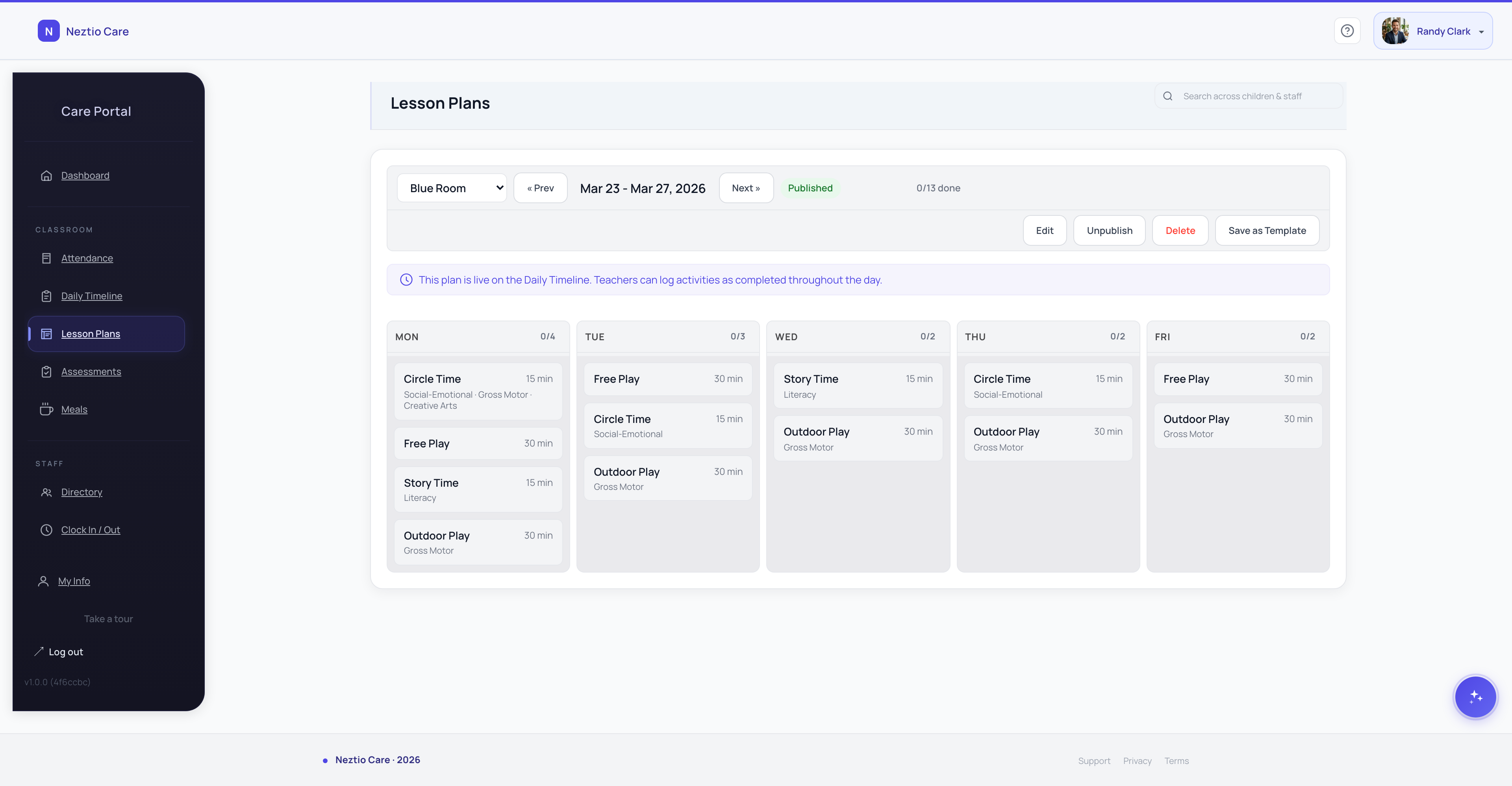
Sample Full-Day Preschool Schedule
Here is a realistic daily schedule for a full-day preschool program serving children ages 3 to 5. Adjust timing based on your center's hours, staffing, and licensing requirements.
| Time | Activity |
|---|---|
| 7:00 - 8:30 AM | Arrival and free play |
| 8:30 - 9:00 AM | Breakfast |
| 9:00 - 9:30 AM | Circle time / morning meeting |
| 9:30 - 10:30 AM | Learning centers (art, blocks, dramatic play, science, literacy) |
| 10:30 - 11:15 AM | Outdoor play |
| 11:15 - 11:30 AM | Wash up and transition |
| 11:30 AM - 12:00 PM | Lunch |
| 12:00 - 2:00 PM | Rest / nap time |
| 2:00 - 2:30 PM | Snack |
| 2:30 - 3:30 PM | Afternoon activities (small group, music, sensory) |
| 3:30 - 4:15 PM | Outdoor play |
| 4:15 - 6:00 PM | Free play and departure |
Notice the rhythm: active periods alternate with calmer ones. Morning outdoor play is followed by a quiet wash-up and lunch. The long nap block is followed by a snack and gentle afternoon activities before a second outdoor session. This pattern prevents overstimulation and gives children natural moments to recharge.
Adapting Schedules by Age Group
A schedule that works for four-year-olds will not work for infants. Each age group has different attention spans, physical needs, and developmental priorities. Here is how to adjust.
Infants (0-12 months):
Infant schedules are flexible and demand-based. Babies eat when they are hungry and sleep when they are tired. Rather than following a fixed timetable, infant rooms follow each child's individual rhythm for feeding, diaper changes, and naps. The "schedule" is really a set of daily routines (tummy time, sensory exploration, outdoor stroller time) woven around each baby's needs.
Toddlers (1-2 years):
Toddlers can follow a loose schedule, but activity blocks should be short: 10 to 15 minutes for focused activities. Toddlers need more frequent transitions, more movement opportunities, and shorter group times. Circle time for toddlers might last 5 to 10 minutes rather than 30. Build in extra time for transitions, because putting on shoes and walking to the playground takes significantly longer with one-year-olds.
Preschoolers (3-5 years):
Preschool-age children can handle longer focused activities of 20 to 30 minutes. They benefit from learning centers with multiple choices, small-group instruction, and projects that span several days. Circle time can extend to 15 to 20 minutes with engaging content. This age group also begins to internalize the schedule and take ownership of routines like cleanup and handwashing.
School-age (5+ years):
Before- and after-school programs for older children should include time for homework, structured recreation, and free choice activities. These children can handle longer activity blocks and benefit from having input into the schedule. Offering choices between activities gives school-age children the autonomy they need.
Balancing Structure and Flexibility
The best schedules are consistent but not rigid. Children need to know what comes next, but the schedule should serve the children, not the other way around. Here are practical ways to maintain that balance.
- -Plan for weather. Have indoor alternatives ready for outdoor play blocks. A rainy day should not throw off the entire day. Indoor gross motor activities, dance, or obstacle courses in the gym can substitute.
- -Allow special events to shift the routine. A visiting firefighter, a birthday celebration, or a field trip will disrupt the normal schedule, and that is fine. Children learn to adapt when the overall rhythm is usually consistent.
- -Follow children's energy. If a group is deeply engaged in a building project during learning centers, extending that block by 10 minutes and shortening the next transition is a better choice than cutting off the activity because the clock says so.
- -Alternate active and quiet times. A schedule with two high-energy activities back to back leads to overstimulated, overwhelmed children. Follow every active block with a calmer one: outdoor play then lunch, learning centers then storytime.
- -Accommodate individual needs. A child who did not sleep well the night before may need an earlier nap. A child with sensory processing challenges may need a quiet corner during loud group activities. Build enough flexibility into your schedule that teachers can make these adjustments without derailing the class.
Meal Timing and CACFP Compliance
If your center participates in the USDA's Child and Adult Care Food Program (CACFP), your meal schedule is not just a guideline: it is a compliance requirement. CACFP provides reimbursement for meals and snacks served to eligible children, but the program has specific rules about when and how meals are served.
- -Meal service windows. Breakfast, lunch, and snack must be served at the times listed on your approved meal service schedule. Serving meals outside your approved windows can result in disallowed claims.
- -USDA meal pattern requirements. Each meal must include the required food components in the correct portions for the age group being served. For example, a CACFP lunch for 3 to 5 year olds must include a grain, a meat or meat alternate, two different vegetables or fruits, and milk.
- -Record keeping. You must document what was served, when it was served, and how many children were present. These records are reviewed during CACFP audits.
- -Minimum time between meals. CACFP requires that meals and snacks be served at least two hours apart but no more than three hours apart for young children. Build your schedule around these windows.
Even if your center does not participate in CACFP, following these timing guidelines is a good practice. Regular, predictable mealtimes help children regulate their hunger and reduce mealtime behavior issues. For a deeper look at managing CACFP with software, see our guide on CACFP software for childcare centers.
Communicating the Schedule to Families
Your daily schedule is not just an internal tool for teachers. It is something families want to see and understand. Parents who know how their child's day is structured feel more confident in the care their child is receiving.
- -Post the schedule in every classroom. Most licensing agencies require this, and it is one of the first things parents look at during tours and inspectors check during visits.
- -Share it during enrollment orientation. Walk families through the daily routine so they understand what their child's day will look like. This is especially important for families who are new to childcare.
- -Include it in your parent handbook. Having the schedule in writing gives families a reference they can return to when they have questions about when lunch is served or when nap time ends.
- -Send daily reports showing what actually happened. A posted schedule shows what is planned. Daily reports showing meals, activities, naps, and outdoor time show what actually occurred. This level of transparency builds trust with families. Neztio's daily reports and activity feed let teachers share updates, photos, and meal information throughout the day, and parents see it all in real time on the Neztio parent app for iOS and Android.
When families can see how the day unfolded, they feel connected to their child's experience even when they are at work. It also gives parents conversation starters at home: "I saw you painted with watercolors today. What did you make?" is far more engaging than the usual "How was your day?"
Common Scheduling Mistakes to Avoid
Even well-intentioned programs fall into scheduling traps. Here are the most common mistakes and how to fix them.
- -Too much structured time, not enough free play. Children learn through play. A schedule packed with teacher-directed activities from morning to afternoon leaves no room for the open-ended, child-initiated exploration that drives creativity, problem-solving, and social development. Aim for a balance where free play and choice time make up a meaningful portion of the day.
- -Not enough outdoor time. Most states require programs to provide daily outdoor play unless weather conditions are dangerous (extreme heat, thunderstorms, or hazardous air quality). Some programs skip outdoor time to squeeze in more academics, but young children need physical activity for healthy development. Many quality rating systems also look at the amount and quality of outdoor time.
- -Back-to-back transitions without buffer time. Moving from breakfast to circle time to centers to outdoor play with no breathing room creates stress for both children and teachers. Build 5 to 10 minute buffers between major blocks for handwashing, cleanup, and transitional activities like songs or fingerplays.
- -Skipping rest time for older preschoolers. Some programs eliminate nap time for four and five year olds, assuming they have outgrown it. While not every child will sleep, all young children benefit from a quiet rest period during a long day. Offer quiet activities like books or puzzles for children who do not sleep, but keep the lights low and the room calm. Rushing children back into high-energy activities without a rest break leads to afternoon meltdowns.
- -Keeping an identical schedule for all age groups. A toddler room should not follow the same timing as a pre-K room. Adjust activity length, transition time, and nap duration based on the developmental stage of the children in each classroom.
Building a Schedule That Works
A great daily schedule is not about filling every minute. It is about creating a predictable rhythm that supports children's development, keeps teachers organized, satisfies licensing requirements, and gives families confidence in your program. Start with the core components, adjust for your age groups, build in flexibility, and communicate the plan to families.
See how Neztio helps childcare centers manage daily operations, from attendance tracking and meal logging to daily reports that keep families informed. Explore all features or get started free.
Related
Staff-to-Child Ratios: What Every Childcare Provider Needs to Know
Related
7 Parent Communication Strategies That Build Trust at Your Childcare Center
Glossary terms in this article
Curriculum
A structured framework of learning goals, activities, and teaching strategies designed to support children's development across all domains.
Daily Report
A summary of a child's day at the center, typically including activities, meals, naps, and notable moments shared with parents.
Staff-to-Child Ratio
The required number of qualified adults per group of children, set by state licensing agencies based on the age of the children.
Licensing
The regulatory process by which state agencies certify that childcare programs meet minimum health, safety, and operational standards.